Showing posts with label Performance. Show all posts

Wednesday, 18 November 2015

SWIMPLATFORM EXTENTIONS


http://boatnutmagazine.com/


           SWIMPLATFORM EXTENTIONS


It is popular now a days to modify our boats and add the accessories that we see on new boats, to change the issues that older boats were plaiged with in the 80s and 90s. Boat owners are doing things as simple as changing to LED lights right through to adding oversize swim platform extensions and everything in between. Trying to create a more up to date and usable boat, is this a good idea? Will these type of modification affect the performance of the boat (both mechanical and ride performance). I have operated a few boats where the addition of accessories had completely destroyed the performance of the boat. Unfortunately it always seems to be the first time boat buyer who ends up owning these boats, the seller knows the boat is no longer performing but the new boater has nothing to compare the boat to and assumes the ride is natural.

What are the problems associated with installing accessories like swim plat forms, radar arches, generators, extra batteries and other weight and load changing items to our boats. All boats that come to market are designed with several important standards and measurements in mind, these include floatation, center of gravity and load weight balance. The boats are engineered and weighed with full loads this includes fuel, fresh water, batteries all of the systems that the boat was designed to have and use from the factory. Changes to any of these measurements will change the way the boat handles and performs.

 By adding weight you affect the way the boat sits in the water when at the dock. This can include a list to one side, a drop in the water line (aft, forward or over all). These change can and will affect exhaust flow, safe height for thru hull locations from the water line, proper operation of bilge pumps, and of course the ability for floatation that the manufacturer installs to work correctly or at all. In the case of a list many boaters try to counter act it by adding more dead weight to the high side making the situation worse. The moment that you have changed the load enough to create a change at the water line you have changed the way the boat will perform. Keeping in mind I have not allowed for all your personal items you keep on the boat and for some boaters this can be the equivilent of a pick up truck load of items of all shapes, weight and description.

  Lets go over the main items we add to our boats now a days to make them more up to date:


Swim platform extension: The first question you need to ask is did my boat come with this option what was the size and how was it mounted. Am I running the correct engine package combination to accept this accessory. Quite often the boat you have did not have the platform added at the factory due to the fact that the boat has V6 power rather than V8 power or you may have a single engine rather than a twin engine combination. Possibly the boat came optioned with a bundle of accessories that you don't have and this could include counter weight items that are moved forward such as a generator in front of the motors to offset a heavier transom load. If you are planning to add a platform to a boat that did not come with this option here are the things you need to consider.
  • What is a reasonable size. You may want a patio back there but can you see it from the helm, how much extra in slip fees will this cost you as you are changing the length over all. What are you really using the swim platform for, is it just to make boarding the boat easier and are you looking to mount a BBQ. How will this change the way I tie my boat up during bad weather
    .
  • How much does it weigh. Load weight right on the transom is one of the evasive changes to a boat you can make. The reason for this is you are directly affecting the center of gravity. This will change the way the boat planes, the affect of the trim tabs and drive trim. The depth of water the drives are in at the dock, and the exhaust flow. If you have thru hull exhaust you can sink the ports under the water completely or only part way either is not a good thing. this can increase the back pressure on the motor, and possibly leave the mufflers full of water at all times. In the case of and inboard out board it will change the height of the exhaust water in the bull horn ( the exhaust outlet at the back of the motor) outing stress on the flapper valves and increasing the opportunity to hydrolic the motor on shut down or while backing up. Both of these situations are expensive to repair and can blow a motor.  

  • How will the hull run after. A swim platform can create several bad situations if it is not designed to match the boat correctly. If the platform is mounted down low two important effects can happen. the first is suction this is when the bow of the boat starts to lift and the platform is right down in or at the surface of the water, this creates a vacuum effect were the boat has to power past and pull the platform out of the water. When this happens the boat lays bow up for way to long and with out enough power will not plane at all. The second is the following sea scenario were the platform act like a trim tab and lifts the back of the boat out of the water. As the waves roll up behind they get under the platform and have no were to break so it just lifts the boat up and can create a situation were you can no longer control the boats direction. This same situation will show itself while trying to back down or if you are floating or at anchor. The boat can actually come right around on you and you will be facing the direction you were coming from in a second!

  • What will it be mounted to. There are three ways to mount an extension, over the platform, under the platform or directly to the transom. Most over platforms mount this way to prevent the trim tab effect, the silly part of this is the platform is useless as the platform sits a foot or more out of the water. they look more like a back deck than a swim platform. The second is under mount this is generally how the factory installs platform extensions. it is clean neat and functional, But you need to restrict the size try to stay close to the factories sizes any more and you will probably find it floating past you one day. You must be sure that all the interior support structure is in the boat to do this as the bolts go up through the bottom of the platform hull area. Just because the boat was designed for this does not mean that the support structure is in the boat. The third is way is to mount right to the boat transom, picking the right height and being sure that the structure of the transom is solid is important. You do not want to half ass this mounting set up. Quite often there are issues with this set up as a larger platform will require different bolt patterns and support bars. Check the engine compartment first you may have steering bars, pumps, or your motors may be so close that placing support bars were they need to be maybe impossible. Try to remember that in some cases the reason for the factory installing small platforms is an engineering issue not just due to the fact that they were not wanting to do more.

  • What do you want the extension for. If you want a functioning platform than you probably will not like the over mount platform at all, the platform can be unusable for swimming and re boarding. This falls into a safety issue as well if you have high decks or deck sides you need to be able to get down to the water in the case of an accident. It would be ridiculous to attempt to get a hurt person up more than a foot out of the water on this type of platform. In some cases that the re boarding issue, if you feel over board was the only reason the factory put any platform at all on the boat. Not all accessories were created for there good looks they just had to function. If you are just trying to add length seriously sell the boat and buy a bigger one.
Just do not assume that the extension you buy or have built will work you need to consider a lot of things before you slap three feet of floor on the back of your boat!   It can turn out fantastic or be the biggest failure and destroy the performance characteristics of a great boat.
    Davit Systems fall under the same rules as adding a platform they are both transom load weight additions. You must make the same considerations to the boat in either case, The difference with a davit system is that you can calculate the weight load and have a marine engineer or the manufacturer inform you of its feasibility and the effects of the weight. If you buy a boat with a davit system be sure you find out the recommended load before you just load your sea doo or tender.

      To guarantee access to all of  Boat Nut Magazine articles, pictures and featured services visit the official Boat Nut Magazine ©™ website. Be sure to reply to the Boat Nut Association registration on our site for the latest Boat Nut weekly and monthly news letters and opportunities.


      Copyright 2015 © Boat Nut Media, Toronto, Ontario. All rights reserved. No part of this information/publications may be stored in a retrieval system, transmitted, or reproduced in any way, including but not limited to photocopy, magnetic, or other record, without prior agreement and written permission of the publisher, Boat Nuts Media ©™ No liability is assumed with respect to the information provided. 
       

    Wednesday, 25 March 2015

    History Of Power Boats


    http://boatnutmagazine.com/

     Power Boats 1955 Thru 2015 how things have changed


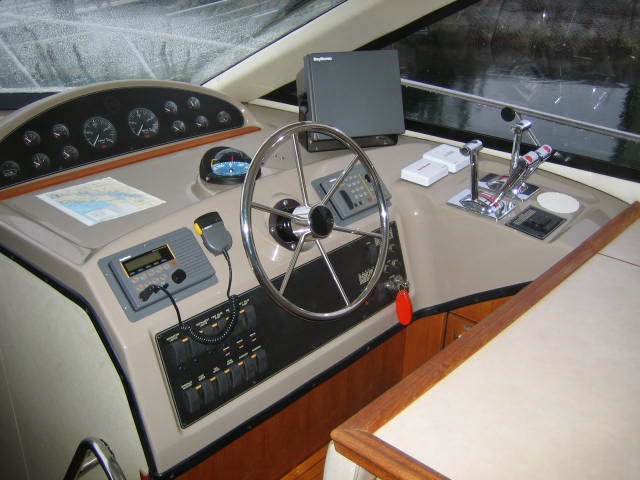
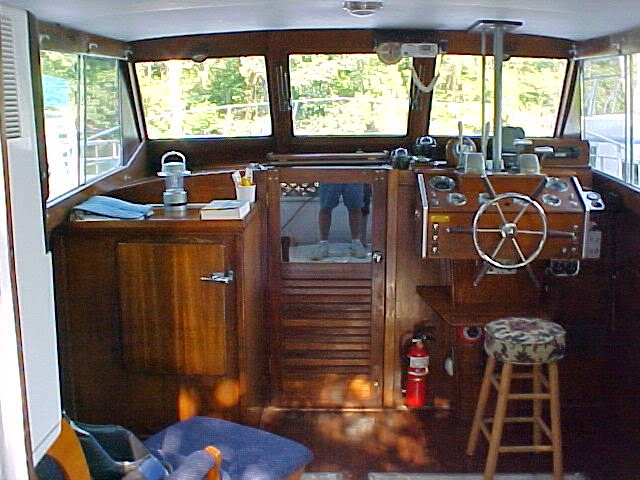
    1955 through 1965. This period of time was the final age of the classic woody, which brought us some beautiful classics. Simple and elegant boats, at this time in our boating history a 30 foot cruiser was a big boat. Helms were simple, basic gauges, a captains wheel, only a few switches and controls as electronics were in their infancy. The ride of a wood boat is totally different than a fiberglass boat, the wood boat ran more flat in the water as you go faster the water just seems to rise up the bow. Wood boats did not really climb up on top like today's boats do. No lifting strake. They have unique design features, and you can easily pick out a Trojan, Chris Craft or an Owens. This is where I started boating. Our boat was at BBYC and we moved to Albert's Marina were my father had a ships store, these marinas seemed large but compared to today they were not. Spring was a month of preparation, loads of work and there were launch "DAYS", the boats would take on water until the wood swelled.
    1955 Cruiser
    1965 Example of helm station
    1955 Chris Craft Runabout


    1975 Enter fiber glass in mass, glass boats that would last forever, boy that was wrong. I guess they did not know that fiberglass will rot away. Boats are now getting faster 25 to 30 MPH, this was really fast. I remember seeing the first two Fiber Form's they were different in design than anything that came before them, now you could cross the lake in minutes rather than hours. Inboard Outboard technology was advancing you could actually trim the drive even if that meant you trimmed the whole motor up and down and you had a 2 foot square hole in the transom with a huge rubber boot to keep out the water. The Trojan Tri Cabin was so futuristic and so fast, the designs started moving forward and ergonomics now coming into play. The dash was finally starting to morph toward where we are today. Boating was heading for the masses!


    1975 Trojan Tri Cabin
    1975 Sea Ray Runabout
    1975 Larson Runabout
    1975 Example of helm station


    1985  Boats we see all over still today! The tanks and the fatties, seriously built to last. Sea Ray hits it's stride and boats started growing in size. Now the 30 foot boat is mid range, there is more and more disposable income and it's showing in the marinas every where. Advancements in electronics were starting to move forward and boats now have all the comforts of home. Boat builders are starting to build boats in large volumes and design is starting to move quickly as the builders could change model design almost every year. Boating was now here for the masses. Boats are wide beam and have a presence, the dashes can be four foot wide and packed full of gauges and switches, and the captains wheel is gone now we are headed for an automotive style helm.

    1985 Bayliner Runabout

                                           
    1985 Sea Ray Sundancer
    1985 Example of helm station


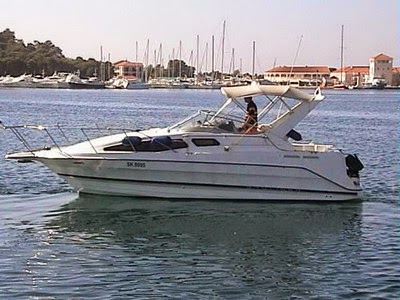
    1995 The power boating industry is in full swing! Boats are quickly changing and really becoming modern in design. You can now buy any size and any design, options are everywhere. Brought to you by more large boat builders in North America than at any other time before or after. You now see new model designs every single year. European style has crept in and traditional design is on its way out, ergonomics are playing a bigger and bigger role. The marketing is the inside for her and the outside for him. However these boats still require a lot of after purchase additions to be fully loaded. There is lots of plastics, vinyl and creative fake wood. Still 90's boats really were basic compared to today's boats. Your investment did not end at the sale, you would have to install your electronics but not for long.


    1995 Bayliner Motor Yacht

    
    1995 Bayliner Runabout
    1995 Example of helm station


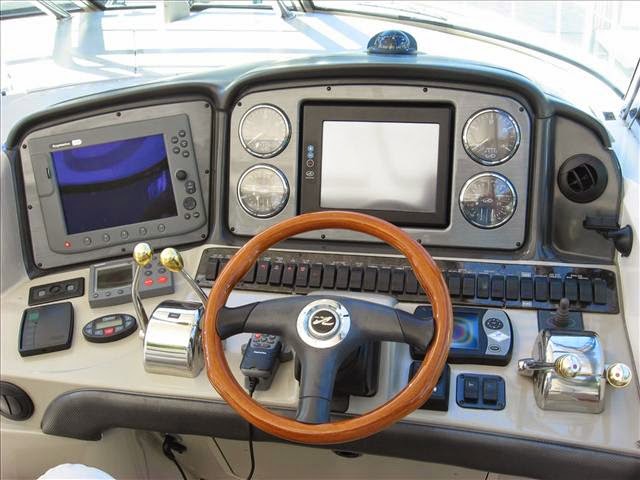
    2005 We are starting to arrive! The boats are radically changing but if you look at the dash the controls are traditional, however you may have a bow thruster from the factory now. Boats are sleeker, full of dock jewellery and the hull sizes are marked out on the side like a bill board. It's become all about how many feet you own. These boats are just starting to see new technology, and are packed full of fake wood and vinyl. There are a few die hard boat builders who install real wood but it's starting to get really expensive to build. I was never sure if I liked the new materials that the boats were boasting. If you have one of these boats you know why new technology like joy stick control came fast. A lot of these designs are not the best for seeing were the dock is, and the horsepower is on its way up, making for fast movements and high speed. It no longer matters the size you can really move on the water.


    2005 Sea Ray Sundancer
    2005 Campion Runabout
    2005 Example of helm station


    2015 We have arrived new technology is here to stay and changes are going to happen quickly! Electronic steering, new designs of drives and joy stick piloting are all now standard options. Being a captain has for ever changed, out with the old in with the new. Design of boats is following suite they have shaved down the decks and cabin tops and added a pile of windows in the hull. These new features and designs do not come cheap I noticed that an MSRP on a new 22 foot boat was $88,000.00 at this years boat show. Every nook and cranny of the new boat design seems to have a function and those builders who survived the resent economic crash are on their way back. The draw back to this recent design craze is that it is hard to tell one make and model from another. This new integration of technology is the death of the DIY repair owner, you require special software and tools to service these boats, the basics are still there but beyond a socket set. The repair bills for these boats will be equivalent to a new BMW. This will change the used boat market you will not be able to buy one of these boats cheap later and expect to be able to keep it running and reliable. The boats that fall into disrepair will probably plummet in value and the really good ones will remain high in value.

    2015 Sea Ray Sundancer
    2015 Sea Ray Runabout
    2015 Helm station example


    Is 2015 the death of the boat which can be purchased used in 10 years and be maintained by an average income earner? Absolutely it is! These boats will be very very expensive to own, so if your going to buy a used boat that is not going to be very expensive to own better buy one previous to 2015 with no new technology in the controls. A good example of this is a Four Winns I know of, with IPS the boat is at least 10 years old last year it had a failure in the electronic steering, the last time I had checked the repair bill was $25,000 and was still not finished. This boat was down for several months last year and this year. So this idea of the last affordable boat is no joke! So keep in mind when buying one, MONEY WILL BE AN OBJECT.

    To guarantee access to all of  Boat Nut Magazine articles, pictures and featured services visit the official Boat Nut Magazine ©™ website. Be sure to reply to the Boat Nut Association registration on our site for the latest Boat Nut weekly and monthly news letters and opportunities.


    Copyright 2015 © Boat Nut Media, Toronto, Ontario. All rights reserved. No part of this information/publications may be stored in a retrieval system, transmitted, or reproduced in any way, including but not limited to photocopy, magnetic, or other record, without prior agreement and written permission of the publisher, Boat Nuts Media ©™ No liability is assumed with respect to the information provided.

    Sunday, 22 March 2015

    Gas or Diesel? A Follow Up.


    More detailed information on the boats in response to a readers questions 


     Diesel boat details are as follows:
    1- Twin Cummins Diamond  Series Inboard 8400 with diesel generator
    2-  Vessel weight 28495 lbs
    3- 799 hrs
    Boat had 1/2 Tank of fuel when departing, and was empty of all but safety gear, no water and pumped out.

    Gas boat details
    1-Twin 8.1  Crusader motors with gas generator
    2-Vessel weight 27495 lbs
    3- 65 hours

    Boat had 1/2 tank of fuel when departing and was empty of all but safety gear, no water and pumped out

    Both boats where side by side when they left and arrived the same way, this was a rare occasion where the two boats where ran side by side all the way. The gas boat set the pace at 4500 RPM.and the diesel matched the pace. The price per gallon of fuel was not critical to the discussion, as we were not trying to determine gallons per hour of fuel burn. It was a general note that the a diesels cruising range based on the same amount of fuel far exceeds gas, as the diesel burnt just about half of the gas boat period. These two boats are rigged with identical size single center mounted fuel tanks.

    Water line difference question:

    One of the questions was in regard to water line at the dock with no one on board it is obvious that there is a difference as the diesel boat weight is 1000 lbs more than the gas boat.

    Does the diesel motor work as hard as the gas motor:

    No diesel motors do not the gas motor develops a huge amount of torque when pulling through the RPM range yes, but does not maintain the torque  and hp at the prop any were near were a diesel motor does. Diesels love to be under a constant load.  All boats have hull speed limitations that are available, if you are hitting the max RPM well before the recognized hull speed then you may have the wrong prop package on the boat. That is not the case in this comparison.

    What Does it mean when you say diesels are not affected by boat load as gas motors do:

    This is in reference to the fact that many times on a boat this size you will add a tender on a bracket of one type or another and the fact is the diesel will not hardly be affected. A gas motor will feel the load difference. Every boat in Canada has a load capacity plate do you know where it is on your boat, if you ignore this plate load limit it will affect any boat with any power plant not just due to motor lag but the hull design can be affected which is a safety issue, so Know your load limit and stay within it. One of the ways to know the true boat weight is at the travel lift most boat owners do not ask the weight of the boat when hauled out.


    These boats were brought up to RPM and left there for four hours, and the diesel did need a service, Had it have had the service the smoke may have been reduced however it would have burned cleaner and got better fuel burn. Not all diesels are smokey and smelly as many have under water exhaust this is why I stated that the exhaust set up on this particular boat is poor, but if you think that a diesel has no odor at an idle at the dock you are wrong. Out on the lake or in the open the exhaust can escape away, but against a dock in that trapped space they smell. You know when a diesel starts and is idling if it is backed into the dock which is the way 99 percent of the boats that I attend are moored.


    This was a comparison done of two identical boats from the same manufacturer out of the same factory, all original no modifications, Boat Nut Media could get out of control with prop sizes and pitches and wet load weight, but that is not our goal. We try to provide information that is based on facts the way we see the boats and the way they run. This is the way the manufacturer delivered them and that is what boaters really have to deal with.

    You can always break a boats running information down into a significant amount of detail, but at the end of the day the boat will do what it is going to do, and I tell it as I see it not every one will like it or agree with it.


    Original response from one of our readers:

    I only know what I have seen in diesel boats and what I have been involved with on discussion boards such as this.
    This is one of the most common ways leading to people ruining their diesels.....
    "The last benefit to a diesel is they do not seem to care what you load on your boat they seem to perform pretty much the same way with or without the tender and all your gear on board"
    they load the boat heavily over time and overload the diesel engines.
    And this way as well....
    "This makes for a much smoother ride in the diesel as the running gear is larger you just do not feel like you are pushing the diesel hard at all."
    They feel like the diesel are not working hard so they run them to fats and way to near their max rpm's when over propped.
    "Both boats were ran side by side down the lake for four hours on plain. The gas boat burnt $400.00 worth of fuel and the diesel burned approximately half of that $220.00."
    This tells us nothing about fuel burn rates as fuel prices are different in various places. around here the price of gas is typically 10-15% more than diesel fuel at marina docks. The 41 Silverton we cruise with typically gets about 0.5 nmpg at its cruise of 15-16 knots burning over 30 gph at those speeds.
    "So the weight difference is mainly in the motors themselves. However we will say the gas boat sits approximately two inches higher than the diesel boat at the water line."
    There is no way to know which diesels are in this boat but we know they do weigh more - even if they weigh a combined 1,000#'s more than the big block gas engines there is something really wrong with a 2" difference in hull height. As a comparison I can take on 400 Gallons of fuel and 200 gallons of water and that only affects my height be about 1" (about 4,500#'s). What 41" boat goes down 2" at the water line when 6 adults or so have boarded?
    " At an idle at the dock the diesel can be dirty and smelly, as a matter of fact other boaters were not happy with long term idling"
    We have commonly been on raft-up where more than half a dozen larger diesel gensets were running and there was no noticeable smell.
    Similarly when the boats come in to tie up and the mains are running (various brands) there is very little noticeable smell.
    I am guessing there are some other issues with each of these boats which may affect comparisons of individual differences. Engine condition, prop sizing, prop and running gear condition and boat loading all can make a very large difference. Running any side by side comparison is hard even wen you know the boats engines are well tuned and each boat is evenly loaded and in good shape.
    Hope this helps

    Thanks again for the comments they are great. Again I am not an expert but I would ask the following:they load the boat heavily over time and overload the diesel engines. Is this overloading only an issue with diesel owners or is this more of a problem of boater education ?They feel like the diesel are not working hard so they run them to fats and way to near their max rpm's when over propped. Same question as above. Does this really invalidate the comparison or is this more an issue of boater education ?
    ]
    This tells us nothing about fuel burn rates as fuel prices are different in various places. around here the price of gas is typically 10-15% more than diesel fuel at marina docks. The 41 Silverton we cruise with typically gets about 0.5 nmpg at its cruise of 15-16 knots burning over 30 gph at those speeds. Since the claimed fuel consumption is about 50% less to travel at the same speed and distance does it really matter what the cost of the fuel was. What if the test was done when the prices were exactly the same ?There is no way to know which diesels are in this boat but we know they do weigh more - even if they weigh a combined 1,000#'s more than the big block gas engines there is something really wrong with a 2" difference in hull height. As a comparison I can take on 400 Gallons of fuel and 200 gallons of water and that only affects my height be about 1" (about 4,500#'s). What 41" boat goes down 2" at the water line when 6 adults or so have boarded? A good observation and you are right more information would have been good. But the same question. Does this invalidate the comparison ?We have commonly been on raft-up where more than half a dozen larger diesel gensets were running and there was no noticeable smell.
    Similarly when the boats come in to tie up and the mains are running (various brands) there is very little noticeable smell.
    I am guessing there are some other issues with each of these boats which may affect comparisons of individual differences. Engine condition, prop sizing, prop and running gear condition and boat loading all can make a very large difference. Running any side by side comparison is hard even wen you know the boats engines are well tuned and each boat is evenly loaded and in good shape.
    I guess everyone has their own experience's in terms of the smell of diesel boats. But you make a very valid point that if they are not properly cared for the issue can be much worse.

    We would like to thank our readers for their comments and questions, as this is exactly what we were hoping for. We wanted other boaters, technicians, and manufacturers to voice their opinions, and share their experiences. After all we are a boating community and should all have a voice in it. We are simply trying to bring the BOAT NUTS together.


    To guarantee access to all of  Boat Nut Magazine articles, pictures and featured services visit the official Boat Nut Magazine ©™ website. Be sure to reply to the Boat Nut Association registration on our site for the latest Boat Nut weekly and monthly news letters and opportunities.


    Copyright 2015 © Boat Nut Media, Toronto, Ontario. All rights reserved. No part of this information/publications may be stored in a retrieval system, transmitted, or reproduced in any way, including but not limited to photocopy, magnetic, or other record, without prior agreement and written permission of the publisher, Boat Nuts Media ©™ No liability is assumed with respect to the information provided.

    Spring start up / Boat Restoration 1998 280 Bayliner


     http://boatnutmagazine.com/

    BOAT RESTORATION  Project #1 1998 BAYLINER 280


    Boat Nut Media thought it would interesting to follow several spring start up boats this year, we have tried to select a cross section of different boats and budgets. Saving the dream! Boat Nut Media has selected a 2001- 410 Silverton Yacht (Sport Bridge),1998-280 Bayliner (Cruiser), 2001- 260 Sea Ray (Small Cruiser) and a 2010- Center Console fishing boat (Fully Rigged with Kicker, Radar, Down Riggers, all the toys)


    2015 Spring Project Boat  1998 Bayliner 28 Cierra

    List of spring work to be completed: 
    1- Restore the exterior of the alpha drive
    2- Replace the universal joints
    3- Alpha Drive spring service - Gear Oil, Water Pump, Prop Repair, etc.
    4- Gel coat repairs to hull on Port and Starboard sides and the back edge of swim platform
    5- Replace hull graphics
    6- Polish and wax the whole boat
    7- Repaint the wiper arm components
    8- Replace the haws pipe at anchor locker
    9- Replace the horn
    10- Replace the VHF radio
    11- Repair the wood grain dash all the printing is gone
    12- Replace the fridge
    13- Clean up the interior like new (remove mildew stains)
    14- Clean up and restore exterior upholstery
    15- Spring start up on 5.7 liter motor. Fluids, paint the works.
    16- Replace the dockside water fitting
    17- Replace the Bimini and install tonneau cover
    18- Full systems check and repair any failures 
    19- New bottom paint
    20- New prop

    After all work is completed there will be a sea trial and delivery to a new marina. The reason for all this work is the boat has only had 1 hour of operation time in the last 3 years. Boat Nut Media will video the boat at the start of the project, and take you through the project to completion. Work will begin late this week, we will upload videos every two days. If you have a similar projects on your boat you will see the products and procedures that are used to make this boat look like new again.

    Bringing this boat back to its former pride and glory will be a lot of work. This is one of those boats that begs the question, what do you do and were do I start? Do you let it go cheap or spend the time and money and bring the boat back to a clean reliable boat. There are a lot of these types of project boats out there and not all of them are worth repairing. Why do boats end up in this condition? Well for whatever reason the owner has not had time, has lost interest in the boat, or cannot afford the boat. How do you determine which boats to save? Boats like this one reach a tipping point, and this one is right on the cusp. Another year of no use and no interest would have pushed it over the edge. This is when the cost to repair starts to exceed the value.

    Here is an example of a 2010 Bayliner 260 after one season abandoned at the dock


    This boat was chained to the dock with a smashed out port cabin side window all of last summer. The boat literally was frozen when Boat Nut was asked to get it to the ramp! This boat will be for sale this year would you want to be the next owner? There are always tell tail signs of a boat that was abandon or let go. For information on how to detect this type of boat check out Telemarinetech Services from Boat Nut Media.

     If you get to this point you should have sold the boat the first year that you were not using it. If you do not have the budget, the time or the want to repair your boat sell it ASAP take the loss and walk away. Even one year of no use or hours really hurts a boat. This 28 Bayliner will take weeks of time and a large budget to bring it back to where it should be, the fortunate part about this story is the boat has been put away every year correctly. Boats that have been left by owners who have lost all interest rarely seek the correct seasonal services. So luckily in this case the important parts of this boat are still in good shape, the motor, the structure etc. So with the right planning this boat will be one to be proud of again. This boat is going to receive this work not for a profit but for the love of the boat.

    Fixing and flipping can be a risky proposition and you can be with the boat for some time. There is no sure thing. I have seen sure fire flip boats be for sale for three years you must be prepared for this or cut your losses.

    At the end the boat will either be loved again or it will be sold. No matter what the out come this boat is going to enter the second stage of its life.

     If you are a do it yourself boater this 28 Bayliner would have been a great candidate for a fixer upper, and that cannot be said for too many loss of interest boats out there. Do not be fooled by the story, the boat has had no use in the last couple of years so this boat will be in better shape than a boat that has been used regularly. That is bull, the boat that has been used and maintained will ninety percent of the time the better boat. If you are considering buying a fixer upper this project will be one to follow. You will certainly get a feel for what it takes to restore a mid size cruise.

    Boat Nut Media will include the costs of labor and parts for each step, giving you an idea of how much of a budget is necessary, and how to manage this type of project.

    Telemarinetech information is available on our next blog and at boatnutmedia@gmail.com

    To guarantee access to all of  Boat Nut Magazine articles, pictures and featured services visit the official Boat Nut Magazine ©™ website. Be sure to reply to the Boat Nut Association registration on our site for the latest Boat Nut weekly and monthly news letters and opportunities.


    Copyright 2015 © Boat Nut Media, Toronto, Ontario. All rights reserved. No part of this information/publications may be stored in a retrieval system, transmitted, or reproduced in any way, including but not limited to photocopy, magnetic, or other record, without prior agreement and written permission of the publisher, Boat Nuts Media ©™ No liability is assumed with respect to the information provided.
    Wednesday, 18 March 2015

    Gas or Diesel, whats the better fit for you?


    http://boatnutmagazine.com/


    Gas or Diesel the age old question when buying a yacht?

    Identical 410's
    Gas- Tan Canvas (Top) Diesel- Black Canvas (Bottom)


    Boat Nut Media had a chance last fall to run identical 410 Silverton Sport Bridge Yachts one with twin big block gas motors and the other with a pair of cat diesels, so what were the differences? Does it make a difference when you are puttering along or cruising long distances, the answer is it does.

     The gas boat is powered with two big block 454 ci low hour motors, and is set up virtually identical to the diesel boat. The only difference is a washer dryer in the gas boat, which is countered in the diesel boat with an automatic shore power cord system, So the weight difference is mainly in the motors themselves. However we will say the gas boat sits approximately two inches higher than the diesel boat at the water line.

    Both boats were ran side by side down the lake for four hours on plain. The gas boat burnt $400.00 worth of fuel and the diesel burned approximately half of that $220.00. The boats were evenly matched for speed as a matter of fact the diesel boat could out run the gas boat if you pushed the throttle down and let the boats go. Why is this ? Well the gas boats props are at least 3 inches smaller in diameter, and the shafts on the diesel are a half an inch larger. This makes for a much smoother ride in the diesel as the running gear is larger you just do not feel like you are pushing the diesel hard at all. The diesel motors run at least 1700 RPM less at high speed than the gas motors.

    I must say the extra weight of the diesel motors make the ride very stable overall, boat movement is reduced. The gas boat has more transom lift this would be due to weight and the extended RPM range this 1700 RPM is translated into more water at higher speed passing the props thus creating more transom lift. Transom lift creates more roll from front to back in the gas boat than the diesel boat. The diesel boat just punches a big hole through the water it provides the same bow rise it just squats in the water at the aft. Thus creating a much larger wake out the back

    When departing the dock the diesel has substantially more push and more positive low speed control by the shifter's, this is directly related to the size of the props. Idle speed is also much faster with the diesel for the same reason, there is a larger volume of water passing the diesel boats props. The gas boat is also very manageable as well, but the reaction time from shift to movement is much tamer and slower. The gas boat will require more corrections for side wind or current. The first time you shift the diesel you may feel a little intimidated as it moves right away and quick. Neither one of these boats are equipped with thrusters so all docking moves must be made with the motors. When docking the gas boats gives you more reaction time to prepare for movement which can be a real plus for first time boaters, however this can bite you if you have an off the dock wind or current. At an idle at the dock the diesel can be dirty and smelly, as a matter of fact other boaters were not happy with long term idling . This though was partly due to the diesel motors requiring a general service. Although even with optimum fuel burn a diesel is a smelly proposition backed into the dock. This becomes worse in a diesel if you have the generator running also. On this model boat running the generator would probably all but eliminate the ability of sitting in the back cockpit or keeping the large sliding door open. A real draw back while at anchor. The gas does not seem to have this same effect on the usage of the aft deck or cabin door.

    When it comes to service these two boats are likely very close in maintenance costs, however if you had a starter or alternator go out the diesel, it would punch a hole in your wallet. Serious breakdowns will cost more with a diesel. Do not let this sway your decision making if a diesel receives regular run hours and correct maintenance then they will out last the gas motors two to one. The other upside to a diesel is there are less mechanical items to fail you there are no spark plugs no wires and no ignition system.

    I believe that the choice between gas and diesel comes down to running hours and and what performance you are looking for in a larger boat. A gas boat is ideal if you are not putting on a lot of hours and not going far, in other words a floating cottage. If you had a diesel in these conditions it would cost you more to keep it running, diesels need to run they do not do well sitting around they are more difficult to get running if they do not see time then gas engines. If you are an avid traveler and cruise your boat all the time and like to go distances than buy a diesel the fuel burn rate will give you extended range and they love to run under load for days at a time. You have to take a look at how you are going to use the boat, access to fuel, the cost of fuel, can you get service on a reliable basis and how fast you want to get there, I must say a good diesel turbo set up will blow the doors of a gas boat the same size all day. The last benefit to a diesel is they do not seem to care what you load on your boat they seem to perform pretty much the same way with or without the tender and all your gear on board, where you will surely notice the difference with gas motors they just do not develop he same torque, and torque is push!

    To guarantee access to all of  Boat Nut Magazine articles, pictures and featured services visit the official Boat Nut Magazine ©™ website. Be sure to reply to the Boat Nut Association registration on our site for the latest Boat Nut weekly and monthly news letters and opportunities.


    Copyright 2015 © Boat Nut Media, Toronto, Ontario. All rights reserved. No part of this information/publications may be stored in a retrieval system, transmitted, or reproduced in any way, including but not limited to photocopy, magnetic, or other record, without prior agreement and written permission of the publisher, Boat Nuts Media ©™ No liability is assumed with respect to the information provided.