Showing posts with label Boat Value. Show all posts

Sunday, 24 July 2016

CAN YOU BUY AND RESTORE AN OLD PRODUCTION POWER BOAT

CAN YOU BUY AND RESTORE AN OLD PRODUCTION POWER BOAT


Restoring an old production boat such as a Bayliner or a Sea Ray has been a question that Boat Nut Magazine has been asked many times by Email in the last month.(There is no magic formula) Boat Nut has received requests to assist and inform potential boat buyers on the possibilities of buying and fixing or restoring early 1990s and late 1980s power boats.

So how do you decide if a boat is worth the money and effort to restore?

First of you must understand the environment that the boat was operated in and the environment the boat has been stored in. If you don't understand or take these two details into account don't buy the boat!

Unlike the automotive market the boat market does not seem to have a market for these boats at all. Production boats that have been without attention for some years are basically worthless. If you take the time to restore these boats they will get to and only hold the value that the market evaluators place on them. Possibly at some point soon we will see a restoration market appear, this will be due to the dramatic increases in new boat values. But not yet, you can always try to restore one of these boats for the love of the boat or to see what you can muscle out of the buyers market.(such as storm damaged boats) One of the two main problems that exist with these boats is the over all cost to repair and the fact that new boat technology has most boat buyers looking for bells and whistles. Many new boaters are looking for joy stick control, they have been sold on the idea that older technology boats are difficult to operate. " NO Thanks To All The Companies Who Push This Idea Onto The Market". (I personally like the idea that there is a mechanical tie between the shifters and the motor and the steering and the drive , rudders or motor.)

New Power Boat technology does not make for a better boat!


There are three core issues that rear their heads when it comes to older production boats and they are:

1- The mechanical systems. This is the motors, drives and other mechanical items that make the boat move and react in the water


2- The structure of the boat. This is all the stringers bulkheads transom, any of the structure that gives the boat strength and allows all the items and systems in the boat to be mounted.


3-Upholstery and canvas. This portion of a repair or restoration can set you back a spectacular amount of cash. It is not unusual for a replacement bimin top and curtains to cost more than the used operational boat does.


You need to understand the condition of and the possibility of repairing what you are looking at buying. There are outdrives for example that you flat out do not want to even own due to parts availability, failed engineering or flat out lack of production replacement parts available at all. What you must do is a complete self survey Boat Nut Media supplies this as a package to you based on the year model and make of boat. There is only a very small amount of information from the boat that Boat Nut needs to provide you with a system to educate yourself as to what the hell the boat you are looking at has left to give you. 

Every boat that has been denied service and maintenance for an extended period of time presents a different series of issues that you must be aware of. This also applies to different models and model years. No matter what decision you make be sure that you know you know do not think you know! Thinking you know will end up costing you too much money and ruin your boating dreams!


Contact Boat Nut Magazine @ boatnutmedia@gmail.com to find out how to order your custom self survey program so you don't get burned!


To guarantee access to all of  Boat Nut Magazine articles, pictures and featured services visit the official Boat Nut Magazine ©™ website. Be sure to reply to the Boat Nut Association registration on our site for the latest Boat Nut weekly and monthly news letters and opportunities.


Copyright 2015 © Boat Nut Media, Toronto, Ontario. All rights reserved. No part of this information/publications may be stored in a retrieval system, transmitted, or reproduced in any way, including but not limited to photocopy, magnetic, or other record, without prior agreement and written permission of the publisher, Boat Nuts Media ©™ No liability is assumed with respect to the information provided
Connect with the Magazine web site 

Monday, 1 February 2016

WHERE DID ONE MILLION REGISTERED BOATS IN THE US GO? IS THE DECLINE DUE TO MSRP


ARE THE PRICES OF BOATS CREATING A DECLINE IN BOATS REGISTERED IN THE US ?

Number of registered recreational boating vessels in the U.S. from 1980 to 2014 (in millions)
The statistic shows the number of registered recreational boating vessels in the U.S. from 1980 to 2014. In 2010, there were about 12.44 million registered vessels in the U.S.

Recreational boating - additional information

According to the U.S. Coast Guard, there were just short of 12 million registered recreational boating vessels in the United States in 2014. The number of registered vessels grew steadily from 8.58 million in 1980, reaching peaks of 12.88 million in 2001 and 12.94 million in 2005, before gradually starting to decline. Recreational boating is the use of a boating vessel for leisure purposes. This often only involves travel on the water itself but can also include water related activities such as fishing. It is a popular activity in the U.S., with rising participation in recent years. In 2013, more than 88 million U.S. adults participated in recreational boating.

The most popular type of boat used for recreational boating in the U.S. is the outboard boat. Outboard boats are usually small watercraft with a motor attached to the outside of vessel. While they are the most common type of boat in use, the number of outboard boats sold annually in the U.S. has declined significantly since 2000. In 2013, around 135 thousand outboard boats were sold at an average unit price of 22 thousand U.S. dollars. Between 2000 and 2013, the average unit price increased markedly, which is perhaps a reason for the declining sales volume during those years.

Information from STATISTA

As boat builders focus more and more on the fully loaded boats. The product we see at the 2016 Boat Shows. This need to provide all the bells and whistles combined the new technology and costs associated with the change over to fly by wire control. The price of new boats, the costs of maintenance, insurance and mooring are pushing boat ownership out of reach for many. Boat builders, dealers and organizations brag about big numbers from sales volumes. They may brag about the numbers but there is a lack of open discussion about the fact that these numbers seem to be based on the growing MSRP on a lower volume of boats being sold in the US. The number of registered vessels in the US is down right around one million boats since 2005.
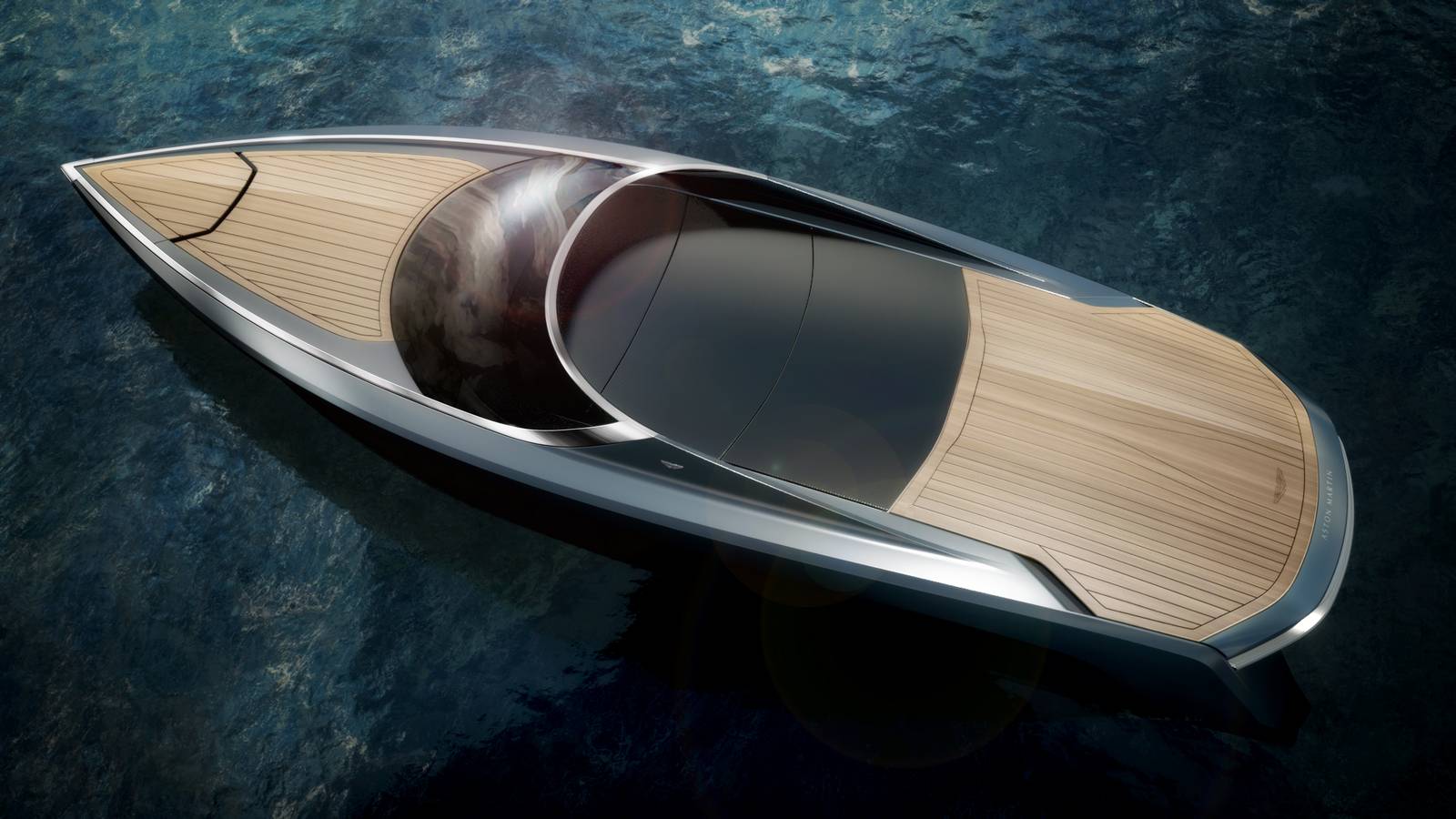
I wrote an article awhile ago in which I said that boating was making a return to the top percentage of income earners again. And that the boating for the masses was moving else were in the world. There are very few starter boats out there today. Increases in North American sales numbers are the highest in PWC and Aluminum Boats. And by the way were did those one million boats go that dropped of the US Boat Registry? They did not all end up in the scrap heap, a little food for thought. I have stressed the fact that the rest of the world had picked up the North American appitite to boat and if nothing brings that home more than the fact that one million boats had left the us market.  When these stats were released. Boating truly is international and it is in the International market place we will have to keep an eye for new design, trends and ideas in the Power Boat Industry. How about a boat designed by ASTON MARTIN, this is the second boat I have seen in the last few weeks designed by a car company in Europe

Information from NMMA:


Top 20 Markets by FAS Value


(Annual + Year-To-Date Data from January–October, USD Thousands)


Country


2009


2010


2011


2012


2012 YTD


2013 YTD


Change YTD 2012–13


Canada


477,544


601,814


637,418


690,246


588,933


617,224


4.80%


Australia


116,350


240,985


249,639


196,722


155,412


157,462


1.30%


Mexico


76,527


97,573


84,595


113,357


92,289


80,400


-12.90%


Belgium


81,806


104,003


92,086


106,472


93,319


97,328


4.30%


Brazil


37,789


66,131


72,240


84,255


65,144


58,004


-11.00%


Japan


25,826


25,055


35,088


61,033


49,111


36,531


-25.60%


Italy


85,007


92,861


70,197


53,814


50,244


51,065


1.60%


Germany


46,248


54,879


51,137


49,880


43,518


37,546


-13.70%


UAE


47,409


38,627


29,916


45,905


33,145


29,826


-10.00%


Venezuela


30,261


32,992


34,544


41,126


32,344


22,839


-29.40%


Costa Rica


26,820


31,653


33,560


40,027


10,323


8,998


-12.80%


China


13,029


24,104


36,860


37,369


34,796


37,290


7.20%


Argentina


10,789


28,867


24,504


36,275


23,346


22,788


-2.40%


New Zealand


15,463


19,132


24,288


35,849


17,022


22,281


30.90%


Netherlands


46,917


49,105


57,220


35,664


31,003


27,434


-11.50%


Sint Maarten


0


0


13,626


33,099


27,821


17,114


-38.50%


Russia


14,033


12,862


17,974


30,673


29,770


24,337


-18.20%


Spain


27,260


34,587


41,467


29,616


25,722


40,794


58.60%


UK


56,101


44,969


38,645


29,589


25,696


19,604


-23.70%


France


30,606


34,192


29,383


26,671


23,972


23,317


-2.70%


Subtotal


1,265,785


1,634,388


1,674,388


1,777,643


1,452,929


1,432,182


-1.40%


All Other


507,807


559,427


518,637


492,761


386,067


370,623


-4.00%


World Total


1,773,592


2,193,815


2,193,024


2,270,404


1,838,996


1,802,805


Competitors
 In 2012, the United States ranked among the top three market suppliers with an approximate 25 percent market share. Other competitor countries include Japan, Germany, France and Italy.


Pleasure Boat International Resource Guide

A REFERANCE FOR US EXPORTERS 2014


The International Markets that the US Department of Commerce / NMMA has noted in the publication that guide US Boat Builders on International markets, below is the list of countries :

ARGENTINA, BELGIUM, CANADA, CHINA, COLUMBIA, CROATIA, CZECH REPUBLIC, DENMARK, EGYPT, FRANCE, GERMANY, ITALY, JAPAN, MEXICO, NETHERLANDS, NIGERIA,NORWAY, POLAND, SOUTH AFRICA, SPAIN, SWEDEN, TAIWAN, TURKEY, and the UK 


I really hope the American Builders start to look at the trends and consider the rising costs of new boats requires the need to have an entry level boat that is in the same MSRP neighbor hood as PWC and Aluminum Pontoon Boats. Quite possibly this will be Bayliner again!  


Copyright 2015 © Boat Nut Media, Toronto, Ontario. All rights reserved. No part of this information/publications may be stored in a retrieval system, transmitted, or reproduced in any way, including but not limited to photocopy, magnetic, or other record, without prior agreement and written permission of the publisher, Boat Nuts Media ©™ No liability is assumed with respect to the information provided

Monday, 25 January 2016

MARINE SURVEY / SELF APPOINTED /SELF REGULATED/ DO YOU HAVE ANY FAITH?


MARINE SURVEY SELF GOVERNING / UNREGULATED


I HAVE STARTED THIS RANT PROBABLY SIX TIMES, THIS IS JUST ONE OF THOSE TOPICS. SOME WILL DISAGREE WITH ME. BUT I WILL BET MORE WILL AGREE.

When you hire a marine surveyor what are you getting, and does he / she know anymore than you? Did they get a copy of another survey and copy your information into the appropriate areas? Forget about the fact that this person probably doesn't know how to calibrate or use a moisture meter correctly (the surveyors favorite tool). The fact is most surveyors probably cannot tell you or even understand how the most expensive and crucial parts of a new boat actually work. Do they know how to assess servomechanisms and electronic controls for corrosion. Surveys today must go way beyond the boat and its structure and hit the heart of were a boats value really lies, the propulsion system. I am aware that if a boat is rotten or falling apart that it will not pass a survey, However not passing a survey does not stop a sales deal or a boat owner from getting insurance. As a matter of fact the structural repairs on a new technology boat will be cheaper to fix than a mechanical failure will be. Case in point: a boat last year with an early generation IPS (yes there are multiple generations of almost every fly by wire control system) steering failure cost over $20,000 Canadian Dollars to fix and its still not out of the woods yet. Corrosion has set into all the delicate sensors and electronics that make the system work, yet this boat has flown thru survey after survey. Traditional marine surveys don't even require the boat to run never mind the fact that a survey is completed at the dock or on land (if you have a marine surveyor who takes out the boat please let me know). So what is a survey and why the hell even have one done anymore. They are expensive and provide not one guarantee. The list of deficiencies are usually past on from owner to owner. A lot of insurance companies are not even requesting one any more, and I understand why!

I copied this from SAMS the organization most surveyors cling to when justifying their rate and background.

SAMS


Frequently Asked Questions
 
How Do I Choose a Marine Surveyor?
SAMSAnyone can title him or herself as a Marine Surveyor and start a business. Certain marine surveyors are permitted to use a designation denoting membership in accrediting organiza- tions that require members to meet strict professional, technical and ethical standards.
Surveyors should provide you with a professionally prepared report that can be accepted by your bank and/or insurance company. Talk with prospective surveyors and ask questions! What does the survey include and what type of reporting format is used? Do they use ABYC, NFPA and USCG standards in their surveys? How much will the inspection cost? How long will the on-board inspection take?
SAMSA thorough inspection will not be rushed and will depend on the type of survey required based on vessel size, equipment and on-board systems. There may be additional services available such as engine surveys, oil analysis, galvanic and stray current corrosion testing, ultrasonic testing, moisture testing and other non-destructive tests. There may be additional charges for these and other services.
Well conducted surveys can provide good infor-mation on the vessels' condition, but they are not guarantees. The surveyor reports the condition in accessible areas only as it exists at the time of inspection.
Why should you have a vessel surveyed? Most insurance companies and banks will require them on older vessels. They will need to know her condition and fair market value in order to finance and/or underwrite the vessel. Knowing her condition and fair market value before you purchase is also important. However, the most important reason to survey your vessel is for the safety of the passengers and crew


What Type of Survey Do I Need?


Marine Surveys are performed for a number of reasons,
and the procedures for each vary to best suit your needs:
 
Pre-Purchase Survey
This is the most comprehensive type of inspection, and is strongly advised when purchasing a new or used vessel. Condition and overall operation of the vessel should be examined. This covers structural integrity, electrical systems, the propulsion system, the fuel system, other machinery, navigation equipment, miscellaneous on-board systems, cosmetic appearance, electronics, and overall maintenance as well as an out-of-water inspection and a sea trial.
SAMS
Insurance Survey
This inspection is performed so that the insurance company can determine whether or not the vessel is an acceptable risk. They are interested in structural integrity and safety for its intended use. Most insurance companies require a survey on older boats. They will also want to know the vessel's fair market value.
SAMS
Appraisal Inspection
This inspection is performed to gather enough information to justify or determine the fair market value of the vessel. This is normally needed for financing, estate settlements, donations and legal cases.
SAMS
Damage Inspection
The surveyor can be retained by an insurance company to determine the cause of a loss and determine the extent of loss related damage and may be asked to recommend repairs, review estimates, and determine the pre-loss value of a vessel.  A vessel owner can retain a surveyor for the same purposes, but for the owner's behalf.


How Should I Prepare for a Marine Survey?

Time and additional expense can be saved by preparing the
vessel for inspection and making her more accessible.

SAMSArrange to present a clean, shipshape boat, and have all papers and miscellaneous gear ready. If applicable, you will need to make arrangements with the marina to haul the vessel for bottom inspection, and retain a captain for sea trials. Lockers and cabin areas should be cleared of all miscellaneous gear.
The surveyor should never be asked to prepare a boat for inspection. The surveyor may request minor dismantling of interior ceilings, headliners, flooring, etc. in order to gain access to the suspected areas. Random removal and examination of below-the-waterline fasteners on wood boats may be required. Any dismantling and re-installation of parts should be performed by qualified personnel and is the responsibility of the person ordering the survey.
Written authorization from the owner may be needed to board and/or to remove part of the vessel. 
ONCE YOU RETAIN THE SURVEYOR, HE OR SHE WORKS ONLY FOR YOU AND REPORTS TO NO ONE ELSE. THE SURVEYOR IS THERE TO PROTECT YOUR INTERESTS
 
 
How Do I become A SAMS® Surveyor

SAMS® has two membership classes of marine surveyors. The Accredited Marine Surveyor (AMS®) and the Surveyor Associate (SA). Listed below are the items required to apply for membership. A more detailed description will be included in our Membership Request Packet. If you are interested in becoming a SAMS® member, please send your request to samshq@marinesurvey.org This e-mail address is being protected from spambots. You need JavaScript enabled to view it , and include your full name and mailing address.
If applying as an Accredited Marine Surveyor you will need to submit the following:
  1. SAMS® Application (included in Membership Packet)
  2. SAMS® Admissions Exam (included in Membership Packet)
  3. Submit one survey for each of last five years of active surveying
  4. Resume
  5. Business Card 
  6. Notarized affidavit attesting completion of 12 surveys per year for each of the last five years
  7. $150.00 non-refundable application fee
 If applying as a Surveyor Associate, you will need to submit the following:
  1. SAMS® Application (included in Membership Packet)
  2. SAMS® Admissions Exam (included in Membership Packet)
  3. A minimum of one survey report
  4. Resume
  5. Business Card  
$150.00 non-refundable application fee!

Accredited Marine Surveyor®

1. Candidates must be currently practicing marine surveyors with at least five (5) years surveying experience, accumulated within the past ten (10) years, in the field of expertise which accreditation is desired. Credit of up to three (3) years of the five (5) years required may be granted for related marine experience. Acceptability of related marine experience shall be determined by the membership committee and/or Board of Directors.
2. Applicants must affirm that they will abide by the By-Laws Code of Ethics, Standards, official decisions and amendments to such of the Society of Accredited Marine Surveyors (SAMS®).
3. Candidates must complete an application form, supply a complete resume and submit for review a number of surveys as may be required by the Membership Committee.
4. Candidates must successfully complete a written exam on their selected field of accreditation as prescribed by the Testing Committee and conducted by that Committee or their designated representative. Cost related to administration of said examination shall be born by the candidates. Examinations will be reviewed by the Testing Committee and submitted to the Membership Committee.
5. Applicants must agree to participate in and meet all requirements of the Society of Accredited Marine Surveyors' (SAMS®) program of continuing education as established by the Education Committee and/or Board of Directors

Surveyor Associate

1. Applicants must be marine surveyors who do not yet meet prerequisites for acceptance as Accredited Marine Surveyors.
2. Applicants must affirm that they will abide by the By-Laws, Code of Ethics, Standards, official decisions and amendments to such of the Society of Accredited Marine Surveyors (SAMS®).
3. Applicants must complete an application form, provide a complete resume and submit for review survey reports prepared by the applicants from each year of experience.
4. Applicants must agree to participate in and meet all requirements of the Society of Accredited Marine Surveyors' (SAMS®) program of continuing education as established by the Education Committee and/or Board of Directors.

You read all that I hope. I think that surveys are a necessity more now than ever however the parameters that a survey covers must be expanded and a level of responsibility placed on the surveyor (we should rename the service from survey to safety check). In the automotive industry, aircraft industry and almost every other form of transportation someone, some were has an obligation by law to inform you of the safety of the vehicle. Why not create a similar standard with boats. This would create a safety net for boaters that would protect them from buying unsafe, unfit vessels. As environmental protection closes in on pleasure boats perhaps that will be the spark that will create an official boat certification program. If surveyors (even certified marine technicians) had a legal obligation and laws to back them up then we would see changes in the amount of floating junk out there. I myself have been on several insured vessels that I wanted to declare unfit to be in the water. Surveyors promote themselves as safety advocates yet what have they done as a group protect the vessel owners? These professionals must know we have a problem. 
 
 
Self regulation is always a slippery slope, why not have 100,000 surveyors on the roster all paying dues and SAMS can triple the number of non mandatory courses for them at 1000 dollars a head and create an even bigger group of self appointed experts to take our money. A surveyor today should be just as much a graduate of MIT as a boat guy who has an understanding of boat structure (which to is fast going to be outdated). We need new regulation and new ideas to protect boaters. Other countries around the world are addressing this problem Canada and the US are stuck in the belief that new ideas should be crushed by the old guard, and who ever else is the beneficiary of bulling every one else of the marine industry block. The industry is changing and with this change will come new ideas I hope our officials don't continue to support the old guard any more.

As boating continues to grow and evolve so to should the services boaters pay for. I guarantee you if surveyors had a legal responsibility at least half of them would disappear. Boaters are in the same place the housing industry was in several years ago when house experts crawled out of the wood work to do home inspections. We need to clean up the marine survey industry and create a new survey that will cover the complete boat with more emphasis placed on the systems in the boat that all boaters count on the most, yet know the least about when making a purchase. The engines ,transmissions, drives the propulsion system.

I feel any information a boater or potential new boater can obtain about their boat is great, and I really am not against surveys. But come on when you consider the investment and commitment a boat takes shouldn't we demand more from those who we pay to advise us. After all they are supposed to be the experts. I am tired of walking the docks and seeing slicks in the water. Boats that shouldn't be sold anymore crossing the lake with a load of kids in them. If there is a boat for sale there always seems to be a buyer. All I want to do is somehow be sure that all boats that are out on a weekend are not fire traps or breakdown queens.

 
AUTHOR  BW
 
 Copyright 2015 © Boat Nut Media, Toronto, Ontario. All rights reserved. No part of this information/publications may be stored in a retrieval system, transmitted, or reproduced in any way, including but not limited to photocopy, magnetic, or other record, without prior agreement and written permission of the publisher, Boat Nuts Media ©™ No liability is assumed with respect to the information provided

Tuesday, 8 December 2015

HOW MANY BOAT BRANDS ARE THERE?


 http://boatnutmagazine.com/


WHO'S WHO POWER BOAT MANUFACTURERS / WHAT BRAND SHOULD I BUY/ PT 2 


There are several different groups of power boats in today's market. They include Fishing Boats, Utility Boats, Ski and Wakeboard, PWC, Pontoon, Cruisers and Yachts. Many of the manufacturers have product lines that stretch across all market needs, some even include Sail Boats. However are the boat builders who specialize in one portion of the market better than the builders who try to make the full spectrum. Yes they are these builders have a specific audience, they spend time and money on R and D to capture as many buyers in their niche as possible. These builders also understand the needs and demands that their boats will face (more market feedback and more real world testing).


MY RANT!


When builders start to stray away from their core line up and provide too many models the whole line suffers for it. A great example of this was Bayliner ( to broad a range to many brand names), and today it is Sea Ray a brand that has been known for its cruisers and yachts. When manufacturers like Brunswick start to buy up the competition the boats begin to share technology and become too much alike,(it will be interesting to see what happens to Chapperal) a comparative line to Sea Ray now owned by Brunswick. There are very few Cruiser and Runabout builders that really provide a unique design and boating experience. Chris Craft is one of those production (Production; means volume builders not custom) boat companies that has kept an independent brand design and experience, but your going to pay for it. Cobalt and Mariah market their boats as unique in design and they do have some tells but across the water can you immediately pick one out of a crowd? One disappointing fact is that most Power Boats and PWC are so similar in design its hard to tell them apart, if you took the name off the side and could you really tell them apart? There is nothing more mind numbing than buying a new boat and the only way you can pick yours out is the name on the back, as a technician for years I wandered many a dock trying to find a boat without a name to set it apart. Come on boat builders do we really need the same designs and colors over and over, lets see something that sets you apart from the crowd!!!!!

Who's Who?


 Back to the subject at hand:


In 2011 there were 1394 boat builders registered with Manufacturer Identification Codes

Consider that there have been around 690 car builders around the world now and in the past.

THE BOATS THAT MADE THE BOAT VALUE GUIDE 2011


Alumacraft   = In Production

Arriva  - Out of production

Baja  -  In Production

Bayliner   - In Production

Bennington   - In Production

Boston Whaler  - In Production

Cadorette   -  Out Of Production

Campion  - In Production

Carver  -Now Carver Yachts/ In Production

Celebrity  - Out Of Production

Century  -  In Production

Chaparral   - In Production 

Chris Craft   - In Production 

Cobalt   - In Production

Crestliner    - In Production

Crownline    -  In Production

Cruiser Yachts   -  In Production

Cutter    - Out Of Production

Delta Jet   - Out Of Production

Donzi   -  In Production

Doral   -  Out Of Production

Edson   -  Out Of Production

Excel   -  There is an Excel Boats, This one Out Of Production

Four Winns    - In Production

Generic Trawler

Glastron    -  In Production

Grew   -  Out Of Production

Harbercraft   -  Out Of Production

Invader    -  Out Of Production

KMV   -   Out Of Production

Larson   -  In Production

Legend  -  In Production

Limestone   -  In Production/ Medeiros Boat Works

Lowe    -   In Production

Lund   -   In Production

Mainship   - In Production

Malibu   -  In Production

Mariah    -   In Production / UK

Mastercraft   -   In Production

Maxum    -  Out Of Production

Monterey   -   In Production

Moomba   -  In Production

Nautiques    -  In Production

Nitro  -  In Production

Peterboro   -  Out Of Production

Princecraft   -   In Production

Profisher   -  Out Of Production

Prowler    - Out Of Production

Ranger  -  In Production

Regal   -  In Production

Rinker  -  In Production

Sea-Doo    -  In Production

Sea Ray   -  In Production

Seaswirl   -   Stripper Boats/ In Production

Silverton    -  In Production

Smoker Craft   - In Production

Spectrum    -  Tracker Marine/ In Production

StarCraft    -  In Production

Stingray   - In Production

Sun Runner    -  Out Of Production

Sunbird    -  Out Of Production

Sunray    -  Out Of Production

Sylvan   -   In Production

Tahoe    -  In Production

Tempest  -   In Production

Thompson    -   Out Of Production

Thunderbird    - Formula Boats/ In Production

Thundercraft      -  Out Of Production

Tige     -  In Production

Tracker    -  In Production

Trojan   -  Out Of Production

Vanguard   -  Out Of Production

Vectra      -  StarCraft Boats/ In Production

Wellcraft     -  In Production

Wilker      -   Out Of Production


As of 2011 a full 1/3 of the boat manufacturers who were listed in the Boat Value Book in Canada were out of production. You need a Play by Play book to keep track of the market. The interesting thing is that several of the manufacturers that are on this list that we associate with building cruisers are no longer in that segment. Two great examples are Carver and Wellcraft, Carver is only building five boats and they are all yachts. Wellcraft is a fishing boat line. Actually the fishing boats seem to rule the market.

This has to make you wonder how used cruiser values will be affected by this change. It is this type of shift and continuous market change that has created a place for Boat Nut. Names like Scarab are back but they are jet boats now, Scarab is a line of jet boats that were formerly Sea Doo a couple of years ago. Keeping track of where to get factory replacement parts and manuals will become a full time job. There are a lot of other manufacturers not on this list, however this list reflects the Power Boat market today, Boats are being built in Mexico (Bayliner), Europe (Mariaha) all over the world and imported back to us as the brands we recognize as North American. This along with the entry of Sail Boat builders who have introduced Power Boats. This will create some interesting service issues for owners and technicians who are not used to negative switching for example ( Jeannue Power Cat Yachts) . As we move forward into the future the Power Boat market is and will start to resemble the automotive industry. Boat systems will become a package, warranties will be virtually the same materials and designs similar, you will need to be more than brand loyal to buy a new boat. As the quality and prices amongst the top builders close in factors like ergonomics, ride quality and after purchase cost of ownership will become deciding factors in buying a boat. That is were Boat Nut comes in we will provide the best most accurate information for you the boater. We want you to enjoy your time on the water not stress over uninformed decisions that you will need to make.

BEING INFORMED IS MORE IMPORTANT THAN EVER!


                                   WE WILL MAKE A BOAT NUT OUT OF YOU

                                                                                  Author  CC


To guarantee access to all of  Boat Nut Magazine articles, pictures and featured services visit the official Boat Nut Magazine ©™ website. Be sure to reply to the Boat Nut Association registration on our site for the latest Boat Nut weekly and monthly news letters and opportunities.


Copyright 2015 © Boat Nut Media, Toronto, Ontario. All rights reserved. No part of this information/publications may be stored in a retrieval system, transmitted, or reproduced in any way, including but not limited to photocopy, magnetic, or other record, without prior agreement and written permission of the publisher, Boat Nuts Media ©™ No liability is assumed with respect to the information provided.  

Wednesday, 18 November 2015

SWIMPLATFORM EXTENTIONS


http://boatnutmagazine.com/


           SWIMPLATFORM EXTENTIONS


It is popular now a days to modify our boats and add the accessories that we see on new boats, to change the issues that older boats were plaiged with in the 80s and 90s. Boat owners are doing things as simple as changing to LED lights right through to adding oversize swim platform extensions and everything in between. Trying to create a more up to date and usable boat, is this a good idea? Will these type of modification affect the performance of the boat (both mechanical and ride performance). I have operated a few boats where the addition of accessories had completely destroyed the performance of the boat. Unfortunately it always seems to be the first time boat buyer who ends up owning these boats, the seller knows the boat is no longer performing but the new boater has nothing to compare the boat to and assumes the ride is natural.

What are the problems associated with installing accessories like swim plat forms, radar arches, generators, extra batteries and other weight and load changing items to our boats. All boats that come to market are designed with several important standards and measurements in mind, these include floatation, center of gravity and load weight balance. The boats are engineered and weighed with full loads this includes fuel, fresh water, batteries all of the systems that the boat was designed to have and use from the factory. Changes to any of these measurements will change the way the boat handles and performs.

 By adding weight you affect the way the boat sits in the water when at the dock. This can include a list to one side, a drop in the water line (aft, forward or over all). These change can and will affect exhaust flow, safe height for thru hull locations from the water line, proper operation of bilge pumps, and of course the ability for floatation that the manufacturer installs to work correctly or at all. In the case of a list many boaters try to counter act it by adding more dead weight to the high side making the situation worse. The moment that you have changed the load enough to create a change at the water line you have changed the way the boat will perform. Keeping in mind I have not allowed for all your personal items you keep on the boat and for some boaters this can be the equivilent of a pick up truck load of items of all shapes, weight and description.

  Lets go over the main items we add to our boats now a days to make them more up to date:


Swim platform extension: The first question you need to ask is did my boat come with this option what was the size and how was it mounted. Am I running the correct engine package combination to accept this accessory. Quite often the boat you have did not have the platform added at the factory due to the fact that the boat has V6 power rather than V8 power or you may have a single engine rather than a twin engine combination. Possibly the boat came optioned with a bundle of accessories that you don't have and this could include counter weight items that are moved forward such as a generator in front of the motors to offset a heavier transom load. If you are planning to add a platform to a boat that did not come with this option here are the things you need to consider.
  • What is a reasonable size. You may want a patio back there but can you see it from the helm, how much extra in slip fees will this cost you as you are changing the length over all. What are you really using the swim platform for, is it just to make boarding the boat easier and are you looking to mount a BBQ. How will this change the way I tie my boat up during bad weather
    .
  • How much does it weigh. Load weight right on the transom is one of the evasive changes to a boat you can make. The reason for this is you are directly affecting the center of gravity. This will change the way the boat planes, the affect of the trim tabs and drive trim. The depth of water the drives are in at the dock, and the exhaust flow. If you have thru hull exhaust you can sink the ports under the water completely or only part way either is not a good thing. this can increase the back pressure on the motor, and possibly leave the mufflers full of water at all times. In the case of and inboard out board it will change the height of the exhaust water in the bull horn ( the exhaust outlet at the back of the motor) outing stress on the flapper valves and increasing the opportunity to hydrolic the motor on shut down or while backing up. Both of these situations are expensive to repair and can blow a motor.  

  • How will the hull run after. A swim platform can create several bad situations if it is not designed to match the boat correctly. If the platform is mounted down low two important effects can happen. the first is suction this is when the bow of the boat starts to lift and the platform is right down in or at the surface of the water, this creates a vacuum effect were the boat has to power past and pull the platform out of the water. When this happens the boat lays bow up for way to long and with out enough power will not plane at all. The second is the following sea scenario were the platform act like a trim tab and lifts the back of the boat out of the water. As the waves roll up behind they get under the platform and have no were to break so it just lifts the boat up and can create a situation were you can no longer control the boats direction. This same situation will show itself while trying to back down or if you are floating or at anchor. The boat can actually come right around on you and you will be facing the direction you were coming from in a second!

  • What will it be mounted to. There are three ways to mount an extension, over the platform, under the platform or directly to the transom. Most over platforms mount this way to prevent the trim tab effect, the silly part of this is the platform is useless as the platform sits a foot or more out of the water. they look more like a back deck than a swim platform. The second is under mount this is generally how the factory installs platform extensions. it is clean neat and functional, But you need to restrict the size try to stay close to the factories sizes any more and you will probably find it floating past you one day. You must be sure that all the interior support structure is in the boat to do this as the bolts go up through the bottom of the platform hull area. Just because the boat was designed for this does not mean that the support structure is in the boat. The third is way is to mount right to the boat transom, picking the right height and being sure that the structure of the transom is solid is important. You do not want to half ass this mounting set up. Quite often there are issues with this set up as a larger platform will require different bolt patterns and support bars. Check the engine compartment first you may have steering bars, pumps, or your motors may be so close that placing support bars were they need to be maybe impossible. Try to remember that in some cases the reason for the factory installing small platforms is an engineering issue not just due to the fact that they were not wanting to do more.

  • What do you want the extension for. If you want a functioning platform than you probably will not like the over mount platform at all, the platform can be unusable for swimming and re boarding. This falls into a safety issue as well if you have high decks or deck sides you need to be able to get down to the water in the case of an accident. It would be ridiculous to attempt to get a hurt person up more than a foot out of the water on this type of platform. In some cases that the re boarding issue, if you feel over board was the only reason the factory put any platform at all on the boat. Not all accessories were created for there good looks they just had to function. If you are just trying to add length seriously sell the boat and buy a bigger one.
Just do not assume that the extension you buy or have built will work you need to consider a lot of things before you slap three feet of floor on the back of your boat!   It can turn out fantastic or be the biggest failure and destroy the performance characteristics of a great boat.
    Davit Systems fall under the same rules as adding a platform they are both transom load weight additions. You must make the same considerations to the boat in either case, The difference with a davit system is that you can calculate the weight load and have a marine engineer or the manufacturer inform you of its feasibility and the effects of the weight. If you buy a boat with a davit system be sure you find out the recommended load before you just load your sea doo or tender.

      To guarantee access to all of  Boat Nut Magazine articles, pictures and featured services visit the official Boat Nut Magazine ©™ website. Be sure to reply to the Boat Nut Association registration on our site for the latest Boat Nut weekly and monthly news letters and opportunities.


      Copyright 2015 © Boat Nut Media, Toronto, Ontario. All rights reserved. No part of this information/publications may be stored in a retrieval system, transmitted, or reproduced in any way, including but not limited to photocopy, magnetic, or other record, without prior agreement and written permission of the publisher, Boat Nuts Media ©™ No liability is assumed with respect to the information provided.