Showing posts with label Boating Education. Show all posts

Sunday, 7 August 2016

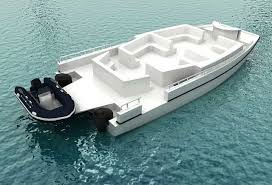
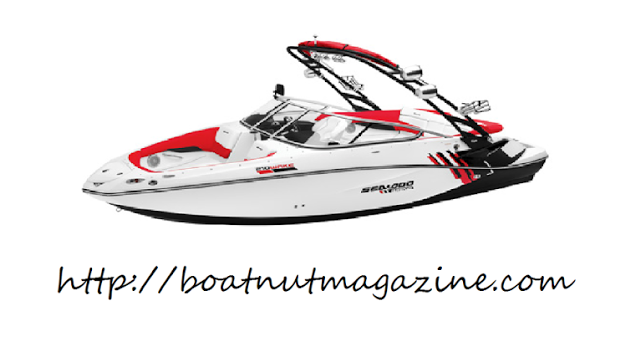
IS THIS THE FUTURE FOR THE DECK BOAT?

DECK BOATS ARE HERE TO STAY


WHAT WILL THE FUTURE DESIGN BRING ?


To guarantee access to all of  Boat Nut Magazine articles, pictures and featured services visit the official Boat Nut Magazine ©™ website. Be sure to reply to the Boat Nut Association registration on our site for the latest Boat Nut weekly and monthly news letters and opportunities.


Copyright 2015 © Boat Nut Media, Toronto, Ontario. All rights reserved. No part of this information/publications may be stored in a retrieval system, transmitted, or reproduced in any way, including but not limited to photocopy, magnetic, or other record, without prior agreement and written permission of the publisher, Boat Nuts Media ©™ No liability is assumed with respect to the information provided
Connect with the Magazine web site 

Wednesday, 3 August 2016

COMMERCIAL & NON COMMERCIAL MARINE EDUCATION


COMMERCIAL & NON COMMERCIAL MARINE EDUCATION


COURSES ARE AVAILABLE IN TORONTO CANADA


ALL COMMERCIAL MARINE COURSES WILL BE OFFERED WITH A TRANSPORT CANADA APPROVED CURRICULM AND INTSRUCTORS. THE EDUCATION CENTER HAS ALSO BEEN APPROVED BY TRANSPORT CANADA
 
Commercial courses are designed for persons who have desire to work in the commercial marine industry. If you are using your boat for charters you must educate yourself to meet the legal requirements for legal operation.
 
 
ALL NON COMMERCIAL BOATING COURSES WILL BE OFFERED BY A TRAINED EXPERT IN THE REQUIRED FIELD. COURSES HAVE BEEN VETTED BY INDUSTRY AND OR GOVERNING BODIES.
 
Non commercial courses are designed to educate vessel owners or operators in various subjects related to vessel ownership. All graduates will receive a diploma and an opportunity to save on parts and insurance.
 
 
CLASS SIZES ARE LIMITED / NON COMMERCIAL COURSES WILL BE AVAILABLE ON LINE FOR INTERNATIONAL VESSEL OWNERS.
 
Please Link to  http://boatnuteducation.freeblog.site/  for all the information you will need.


To guarantee access to all of  Boat Nut Magazine articles, pictures and featured services visit the official Boat Nut Magazine ©™ website. Be sure to reply to the Boat Nut Association registration on our site for the latest Boat Nut weekly and monthly news letters and opportunities.


Copyright 2015 © Boat Nut Media, Toronto, Ontario. All rights reserved. No part of this information/publications may be stored in a retrieval system, transmitted, or reproduced in any way, including but not limited to photocopy, magnetic, or other record, without prior agreement and written permission of the publisher, Boat Nuts Media ©™ No liability is assumed with respect to the information provided
Connect with the Magazine web site 

Tuesday, 2 August 2016

WATER IN THE FUEL PT3/ MECHANICAL EFFECTS


WATER IN THE FUEL PT3/ MECHANICAL EFFECTS


DISCLAIMER:  BOAT NUT IS POSTING THIS INFORMATION AS AN ADDITION TO PART1/ PART2:
MECHANICAL FAILURES CAN OCCUR FOR MANY REASONS BESIDES CONTAMINATED FUEL....

Once you have removed the contaminated fuel: By running a motor with contaminated fuel you have created an increase in the probability of mechanical failures which will relate to the performance of your motor. The length of time you have been burning contaminated fuel will have a direct relationship on the seriousness of these mechanical failures. Some or all of these effects can show themselves immediately, progress slowly or lay seemingly dormant waiting for you to leave the vessel for an extended period of time. This downtime will likely be off season storage or simply an extended period of time were the motor is not started. Your motor may have seemed to run reasonably after the contaminated fuel has been removed however mechanical issues or failures may have already started to set in. Once you begin to run the vessel again theses failures can and usually do start to effect the motors performance. These mechanical failures can include ignition system failures, carburetor failures, fuel pump failures, injector failures, spark plug failures, sensor failures to name a few. This may help you understand how water or contaminated fuel can sneak up on you and suddenly or slowly (dictated by the amount of contamination) over a period of time create performance issues with your motor(s).

You can be out enjoying a day of cruising, all seems fine with the motor performance and suddenly it just will not start or the motor begins to loose power. If you have had or do have contaminated fuel be prepared to spend some time and money having to deal with related mechanical failures. If you have had the motor tuned up while burning contaminated fuel, which is a common error. Technicians and vessel owners quite of treat the immediate problem and miss the symptom. You may find that resetting idle and timing is necessary after you clean the contaminated fuel out of the system. The year and type of motor that your vessel has will set the base line for what systems will fail and why. A vessel which is all analog and does not have an ECM has a different less components to fail then that of a digital motor with an ECM this is due to the fact that the ECM constantly requires information from all over the motor through a series of sensors to change the parameters of the fuel air mixture and the spark to compensate for the contaminated fuel. These digital motors are either fuel injection and there is nothing harder on an injector than water contamination. So lets break down the failures you can expect on these two different types of motors.


Motors without an ECM and are carbureted:


Initial mechanical failures may include the following (all mechanical parts can fail on there own due to heat and other factors. You must keep in mind: you have either had contaminated fuel or have had a combination of these failures which will point you toward contaminated fuel tank)

1- Ignition Cap and Rotor: To burn the contaminated fuel the Ignition Coil, Distributor Cap, and Rotor will eat themselves up from attempting to create enough spark to ignite the contaminated fuel in the combustion chamber.

This mechanical failure can show up initially with a burnt coil wire, failed ignition coil or combination of both. The result of this is a no start.

2-Carburetor Failure: The carburetor has ingested so much contaminated fuel that the interior components are starting to corrode and stick.

This mechanical failure will begin with hard starting and stalling at an idle. The stalling will be a particular problem when shifting as the shift interrupter stalls the engine for a second to unload the motor from the drive or transmission.

3-Spark Plug Failure: The spark plugs have had to fire and ignite contaminated fuel.

This mechanical failure will begin with the motor missing and possible backfire when running. Bad plugs will also create a hard start or no start situation. You may also notice excessive fuel burn and will definitely see a fuel slick from the exhaust on top of the water. As the plugs fail they will no longer be able to burn all the raw fuel being sent to the cylinder.


Motors with ECM Fuel Injection and Throttle Body Injection:


1A- Fuel Pump Failure: An electronic fuel pump will suffer horribly from the water that passes through it.

This mechanical failure will begin to show itself as start issues and motor cutting out until finally the motor will not start.

2A- Ignition Cap and Rotor Failure: The cap and rotor fail for the same reasons as the above list 2  with the addition of the failure of the timing advance module

This mechanical failure will begin with the motor being hard to start, continuing toward running issues that will include power loss and bumpy idling. This is called hunting once ignition systems and motor sensors begin to fail, the computer (ECM) will try to compensate. This can lead to failure codes held in the ECM. Clearing codes will require the use of a software program to access the ECM memory. Failure codes can hinder normal operating modes, by restricting full operational parameters. Locking the motor in a safe operation mode, this restricts the motors ability to reach RPM rates over a fixed level.

3A- Spark plug failure: is the same with or without an ECM. See list 3 above.

4A- Fuel Injector Failure: Fuel injectors become damaged when water is introduced into them.

Fuel Injectors can show several signs of damage by contaminated fuel, you will  notice flooding as the injector will not create a nice spray but instead turn into a small fire hose. this will flood the cylinder with fuel and create a hard start condition, fowling the plug(s)
\
5A- Sensor Failure: sensors that provide the computer with the information it requires to make decisions with the way the motor starts and runs.

The main sensors that can fail from contaminated fuel are the MAP sensor or the manifold air pressure sensor, TPS throttle position sensor and the IAC. The reason that these sensors fail is that it is exposed directly to the flow of air in the intake manifold and can get contaminated with water or other contamination. Or in the case of the TPS can become damp with water around the throttle body itself. If a sensor begins to fail the motor can flood with fuel, or begin to react in strange ways eventually creating start issues. If a sensor is completely shot it can lead to a no start.

Water or contaminated fuel is not the only reason why some or all of these mechanical components  fail, however if you know that your fuel has been contaminated and the motor has been run with bad fuel. Or a series of failures have happened and you have repaired Ignition parts, plugs, fuel filter and the motor ran better but has started to run rough soon after "then take a look at the fuel". When hiring a service technician for motor running issues, the technician should always ask how old the fuel in the tank is. Be honest and let the mechanic know if there is old fuel or old fuel mixed with new. This can save time and money.


This is not a how to guide but rather meant to be informative for the vessel owner who has had contaminated fuel or has had a motor that has been difficult to get running correctly and has over looked the possibility of contaminated fuel.


To guarantee access to all of  Boat Nut Magazine articles, pictures and featured services visit the official Boat Nut Magazine ©™ website. Be sure to reply to the Boat Nut Association registration on our site for the latest Boat Nut weekly and monthly news letters and opportunities.


Copyright 2015 © Boat Nut Media, Toronto, Ontario. All rights reserved. No part of this information/publications may be stored in a retrieval system, transmitted, or reproduced in any way, including but not limited to photocopy, magnetic, or other record, without prior agreement and written permission of the publisher, Boat Nuts Media ©™ No liability is assumed with respect to the information provided
Connect with the Magazine web site 

Tuesday, 19 July 2016

DIY PROJECT # 101 / REMOTE FUEL GAUGE


                                                                Image result for do it yourself


PROJECT REMOTE FUEL GAUGE


Every time power boaters frequent the gas dock they have a decision to make based on liters/ gallons, or the decision is based on a dollar value. Ultimately determining how much fuel you are planning to purchase. Either decision will make matching volume in a dual tank boats difficult. When we do ask for the fuel tank(s) to be topped up, boaters and  gas dock attendants are creating the risk of over flowing the cap or burping gas out the vent or the filler cap.

So what would be the simplest way to try and prevent this from happening?


Image result for marine fuel filling


There is a simple way to keep track of volume during fueling and to understand what is going on in your gas tank (rather than the attendant trying to read the level at the gas filler cap) as the tank gets close to full. Add a remote fuel gauge, placed in a location on the vessel were the gas dock assistant and the boat owner can see how much fuel is being pumped into your boat fuel tank. Boaters will want to mount the remote fuel gauge in a location where it will allow you to view the remote gauge clearly, and not be in the way of other accessories mounted on the vessel.


Image result for marine fuel gauge
This project will require a fuel gauge, a rocker switch at the dash and a few feet of wire sized and colored to match your fuel gauge sender wires (almost always pink, black and blue) and a little imagination when it comes to placement of the remote fuel gauge. This simple addition will allow you to watch the fuel level rise as the attendant pumps the fuel. The boater can make a decision when to stop. No more getting on and off the boat during the fueling process (which is unsafe and in a lot of cases not allowed). If your boat has dual tanks you can match the volume side to side more accurately. The cost in labor to complete this small project is 1 hour of your time plus a modest budget, for electrical supplies and a fuel gauge (which is not an expensive item to buy). To complete this project you do not need to open up the fuel tank. This project simply requires piggy backing onto the sender wires only.(Remember that this is per side if you have dual gas tanks.)

Image result for marine fuel gauge wiring


This project that will provide both the boat owner and the gas dock attendant convenience, with the added bonus of protecting the environment from spills into our lakes, rivers and oceans. For you gas can boaters you can be more accurate with your fuel fill. If you want to go all out you can attach the gauge light to your courtesy light circuit and provide light at night in the general area that you locate the remote fuel gauge (this will require running the blue wire).


On a do it yourself scale this is moderate, not at all hard you will have to have basic 12volt electrical experience. Tools to complete this job are very straight forward, you will require :


Small hole saw to match the gauge install instructions
Wire cutters
Stripper/ crimp tool
Socket set or small wrench set
Having some basic hand tools will always be a necessity boat (screw drivers and pliers etc).
Label maker if you wish
Wire ties


What you end up with is a remote fuel gauge that you can turn on and off when fueling up, as a bonus gets you another curtsy light in the location you choose to mount the remote gauge. As the installer you must have enough space  behind the chosen install area to accept the gauge and the wiring that you are adding.


No more guess work at the fuel dock,( if an attendant begins to fill the wrong tank, such as the water tank he or she will notice before the incorrect tank is full)

This is a do it yourself project that will provide the boater with a great deal of convenience at the gas dock


Order the How To Video from Boat Nut all you pay is shipping! 

 Order at: boatnutmedia@gmail.com

DIY PROJECT 101


To guarantee access to all of  Boat Nut Magazine articles, pictures and featured services visit the official Boat Nut Magazine ©™ website. Be sure to reply to the Boat Nut Association registration on our site for the latest Boat Nut weekly and monthly news letters and opportunities.


Copyright 2015 © Boat Nut Media, Toronto, Ontario. All rights reserved. No part of this information/publications may be stored in a retrieval system, transmitted, or reproduced in any way, including but not limited to photocopy, magnetic, or other record, without prior agreement and written permission of the publisher, Boat Nuts Media ©™ No liability is assumed with respect to the information provided
Connect with the Magazine web site 


Monday, 1 February 2016

BOAT SHOW IN COLUMBIA Pictures and Market Information


BOAT SHOW IN COLUMBIA


COLUMBIA is listed in the NMMA Power Boat International Resource Guide


Image result for cartagena boat show

Image result for cartagena boat show


Overview

The Republic of Colombia is the fourth largest economy in Latin America, and has the third largest population. It is the only country in South America with two coasts, on the Pacific Ocean and the Caribbean Sea, which provides tactical shipping advantages in today’s global market. Aided by major security improvements, steady economic growth, and moderate inflation, Colombia has expanded its free market economy with major commercial and investment ties to the United States, Europe, Asia and Latin America. Colombia is the third largest market for U.S. exports in Latin America.


Currently, the country has 26 marine docks and marinas with a total docking capacity of 2,700 boats in the Caribbean Sea, between the city of Santa Marta and the Morrosquillo Gulf, but no marinas are yet available on the Pacific Ocean. The government is currently developing plans for the construction of several marinas and associated infrastructure with the objective of attracting marine tourism in several location in the Caribbean Sea, including San Andrés Island, Santa Marta, and Cartagena, and expand the number of travelers that look to enjoy activities such as snorkeling, fishing, water sports, and the like and generate a demand for new and more capable boats than the ones currently in use.


Copyright 2015 © Boat Nut Media, Toronto, Ontario. All rights reserved. No part of this information/publications may be stored in a retrieval system, transmitted, or reproduced in any way, including but not limited to photocopy, magnetic, or other record, without prior agreement and written permission of the publisher, Boat Nuts Media ©™ No liability is assumed with respect to the information provided