Sunday, 22 March 2015

TeleMarineTech


http://boatnutmagazine.com/

Your TeleMarineTech Appointment


Contact:
BoatNutMedia@gmail.com


Overview of a Marine TeleMarineTech appointment
. . . just like a regular Marine Technician service inquiry appointment


You have got to the boat on Sunday and it won't start, you are on the lake and have an alarm going off, you have a service question or need advice about the boat, your boat has broken down and you want to verify the information a service provider has given you, is the estimate for repair accurate, you are looking at buying another boat? You will meet using Boat Nut Telemarinetech Network, BNTN uses video conferencing to connect you so that you will not have to worry about were you will receive non bias assistance. This will reduce the time, cost and stress associated with a sorting out a service issue and boat ownership.

What is a TeleMarineTech visit?

Telemarinetech uses video cameras, and Skype/Zoom services to connect you to marine specialists who are not located near you, reducing the need to locate and wait for a service appointment and receive assistance the assistance you urgently need. You will be able to see, hear and talk to a certified technician or other marine repair professional. (not all marine trades are recognized with certifications, "specialist")
How does a Telemarinetech service visit work? 

A telemarinetech appointment is just like a regular service appointment; only the specialist you will be seeing and speaking with is on your monitor.


Before you call, the specialist will require the hull ID number and the Serial numbers for your motors, drives, relevant information about your boat to support your telemarinetech visit. However you may be asked to provide assistance with tests for results. The video conference connection is made with the specialist at a different location and the visit begins.


The marine specialist may request your assistance or assistance with your camera to provide video, to complete the examination. The specialist on the monitor can hear an alarm, see broken parts and use your assistance to diagnose service questions the same as if he/ she were standing on the boat with you.


Is there a cost for a telemarinetech appointment? 
NO, You will not be billed for this service, if you are a registered Boat Nut. It is covered under the Boat Nut Membership Benefit Program "I AM A BOAT NUT".
Is Telemarinetech private?
Just like a regular service appointment, your Telemarinetech visit will be private and confidential. It can only be seen and heard by the specialist involved.
Where can I get more information about Boat Nut Media?
If you have any questions, please speak to a  boat  nut representative at 1-416-418-7433. You can also visit Boat Nut Media at www.boatnutmedia.blogspot.ca or Email BoatNutMedia@gmail.com.
As a non bias power boat information and education provider in Canada, we feel by creating Telemarinetech service we are helping boaters get more out of their boat ownership experience. Providing more boaters with the care they need, were and when they need it. Our innovative use of todays and tomorrow's technology streamlines the service process, eliminating unnecessary wait times, assisting in an emergency and giving all boaters the same access to marine technicians and other marine professionals (specialist). Through our experience and insight, we have expanded the way knowledge is shared and how the marine community interacts. The information gained enables boat ownership budgets to go farther. For more information go to www.boatnutmedia.blogspot.ca


BNTN  BOAT NUT TELEMARINETECH NETWORK  2015


How to be a Boat Nut?
Telemarinetech Service are available for Boat Nut Members; 7 days a week 7 AM to 9PM Central Time in Canada. You will be assigned a professional to assist you with your service question(s). 2015 Membership Fee are as follows: The same price as a screw driver set at Canadian Tire, BNTN Service is the most valuable tool you will have on your boat!

One year Membership Fee $25.00 Canadian for the first 200 Members to sign up.

After the first 200 members the full fee rate will apply $55.00 "I am a Boat Nut"

Telemarinetech Services will be available starting April 7 2015, Services are only available in English.

You will receive a BNTN Membership Card and access phone number (App is being developed will be available when complete)

You will have to complete the application which will ask you basic questions Name, Address, Email, Boat ID number, Motor and Drive, and systems. We do this so we can develop base line information on your boat to make answering your questions quicker and more accurate.


To guarantee access to all of  Boat Nut Magazine articles, pictures and featured services visit the official Boat Nut Magazine ©™ website. Be sure to reply to the Boat Nut Association registration on our site for the latest Boat Nut weekly and monthly news letters and opportunities.

Copyright 2015 © Boat Nut Media, Toronto, Ontario. All rights reserved. No part of this information/publications may be stored in a retrieval system, transmitted, or reproduced in any way, including but not limited to photocopy, magnetic, or other record, without prior agreement and written permission of the publisher, Boat Nuts Media ©™ No liability is assumed with respect to the information provided.


Spring start up / Boat Restoration 1998 280 Bayliner


 http://boatnutmagazine.com/

BOAT RESTORATION  Project #1 1998 BAYLINER 280


Boat Nut Media thought it would interesting to follow several spring start up boats this year, we have tried to select a cross section of different boats and budgets. Saving the dream! Boat Nut Media has selected a 2001- 410 Silverton Yacht (Sport Bridge),1998-280 Bayliner (Cruiser), 2001- 260 Sea Ray (Small Cruiser) and a 2010- Center Console fishing boat (Fully Rigged with Kicker, Radar, Down Riggers, all the toys)


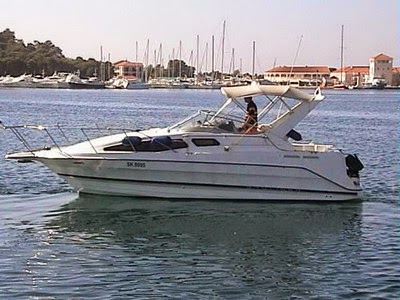
2015 Spring Project Boat  1998 Bayliner 28 Cierra

List of spring work to be completed: 
1- Restore the exterior of the alpha drive
2- Replace the universal joints
3- Alpha Drive spring service - Gear Oil, Water Pump, Prop Repair, etc.
4- Gel coat repairs to hull on Port and Starboard sides and the back edge of swim platform
5- Replace hull graphics
6- Polish and wax the whole boat
7- Repaint the wiper arm components
8- Replace the haws pipe at anchor locker
9- Replace the horn
10- Replace the VHF radio
11- Repair the wood grain dash all the printing is gone
12- Replace the fridge
13- Clean up the interior like new (remove mildew stains)
14- Clean up and restore exterior upholstery
15- Spring start up on 5.7 liter motor. Fluids, paint the works.
16- Replace the dockside water fitting
17- Replace the Bimini and install tonneau cover
18- Full systems check and repair any failures 
19- New bottom paint
20- New prop

After all work is completed there will be a sea trial and delivery to a new marina. The reason for all this work is the boat has only had 1 hour of operation time in the last 3 years. Boat Nut Media will video the boat at the start of the project, and take you through the project to completion. Work will begin late this week, we will upload videos every two days. If you have a similar projects on your boat you will see the products and procedures that are used to make this boat look like new again.

Bringing this boat back to its former pride and glory will be a lot of work. This is one of those boats that begs the question, what do you do and were do I start? Do you let it go cheap or spend the time and money and bring the boat back to a clean reliable boat. There are a lot of these types of project boats out there and not all of them are worth repairing. Why do boats end up in this condition? Well for whatever reason the owner has not had time, has lost interest in the boat, or cannot afford the boat. How do you determine which boats to save? Boats like this one reach a tipping point, and this one is right on the cusp. Another year of no use and no interest would have pushed it over the edge. This is when the cost to repair starts to exceed the value.

Here is an example of a 2010 Bayliner 260 after one season abandoned at the dock


This boat was chained to the dock with a smashed out port cabin side window all of last summer. The boat literally was frozen when Boat Nut was asked to get it to the ramp! This boat will be for sale this year would you want to be the next owner? There are always tell tail signs of a boat that was abandon or let go. For information on how to detect this type of boat check out Telemarinetech Services from Boat Nut Media.

 If you get to this point you should have sold the boat the first year that you were not using it. If you do not have the budget, the time or the want to repair your boat sell it ASAP take the loss and walk away. Even one year of no use or hours really hurts a boat. This 28 Bayliner will take weeks of time and a large budget to bring it back to where it should be, the fortunate part about this story is the boat has been put away every year correctly. Boats that have been left by owners who have lost all interest rarely seek the correct seasonal services. So luckily in this case the important parts of this boat are still in good shape, the motor, the structure etc. So with the right planning this boat will be one to be proud of again. This boat is going to receive this work not for a profit but for the love of the boat.

Fixing and flipping can be a risky proposition and you can be with the boat for some time. There is no sure thing. I have seen sure fire flip boats be for sale for three years you must be prepared for this or cut your losses.

At the end the boat will either be loved again or it will be sold. No matter what the out come this boat is going to enter the second stage of its life.

 If you are a do it yourself boater this 28 Bayliner would have been a great candidate for a fixer upper, and that cannot be said for too many loss of interest boats out there. Do not be fooled by the story, the boat has had no use in the last couple of years so this boat will be in better shape than a boat that has been used regularly. That is bull, the boat that has been used and maintained will ninety percent of the time the better boat. If you are considering buying a fixer upper this project will be one to follow. You will certainly get a feel for what it takes to restore a mid size cruise.

Boat Nut Media will include the costs of labor and parts for each step, giving you an idea of how much of a budget is necessary, and how to manage this type of project.

Telemarinetech information is available on our next blog and at boatnutmedia@gmail.com

To guarantee access to all of  Boat Nut Magazine articles, pictures and featured services visit the official Boat Nut Magazine ©™ website. Be sure to reply to the Boat Nut Association registration on our site for the latest Boat Nut weekly and monthly news letters and opportunities.


Copyright 2015 © Boat Nut Media, Toronto, Ontario. All rights reserved. No part of this information/publications may be stored in a retrieval system, transmitted, or reproduced in any way, including but not limited to photocopy, magnetic, or other record, without prior agreement and written permission of the publisher, Boat Nuts Media ©™ No liability is assumed with respect to the information provided.

Wednesday, 18 March 2015

Gas or Diesel, whats the better fit for you?


http://boatnutmagazine.com/


Gas or Diesel the age old question when buying a yacht?

Identical 410's
Gas- Tan Canvas (Top) Diesel- Black Canvas (Bottom)


Boat Nut Media had a chance last fall to run identical 410 Silverton Sport Bridge Yachts one with twin big block gas motors and the other with a pair of cat diesels, so what were the differences? Does it make a difference when you are puttering along or cruising long distances, the answer is it does.

 The gas boat is powered with two big block 454 ci low hour motors, and is set up virtually identical to the diesel boat. The only difference is a washer dryer in the gas boat, which is countered in the diesel boat with an automatic shore power cord system, So the weight difference is mainly in the motors themselves. However we will say the gas boat sits approximately two inches higher than the diesel boat at the water line.

Both boats were ran side by side down the lake for four hours on plain. The gas boat burnt $400.00 worth of fuel and the diesel burned approximately half of that $220.00. The boats were evenly matched for speed as a matter of fact the diesel boat could out run the gas boat if you pushed the throttle down and let the boats go. Why is this ? Well the gas boats props are at least 3 inches smaller in diameter, and the shafts on the diesel are a half an inch larger. This makes for a much smoother ride in the diesel as the running gear is larger you just do not feel like you are pushing the diesel hard at all. The diesel motors run at least 1700 RPM less at high speed than the gas motors.

I must say the extra weight of the diesel motors make the ride very stable overall, boat movement is reduced. The gas boat has more transom lift this would be due to weight and the extended RPM range this 1700 RPM is translated into more water at higher speed passing the props thus creating more transom lift. Transom lift creates more roll from front to back in the gas boat than the diesel boat. The diesel boat just punches a big hole through the water it provides the same bow rise it just squats in the water at the aft. Thus creating a much larger wake out the back

When departing the dock the diesel has substantially more push and more positive low speed control by the shifter's, this is directly related to the size of the props. Idle speed is also much faster with the diesel for the same reason, there is a larger volume of water passing the diesel boats props. The gas boat is also very manageable as well, but the reaction time from shift to movement is much tamer and slower. The gas boat will require more corrections for side wind or current. The first time you shift the diesel you may feel a little intimidated as it moves right away and quick. Neither one of these boats are equipped with thrusters so all docking moves must be made with the motors. When docking the gas boats gives you more reaction time to prepare for movement which can be a real plus for first time boaters, however this can bite you if you have an off the dock wind or current. At an idle at the dock the diesel can be dirty and smelly, as a matter of fact other boaters were not happy with long term idling . This though was partly due to the diesel motors requiring a general service. Although even with optimum fuel burn a diesel is a smelly proposition backed into the dock. This becomes worse in a diesel if you have the generator running also. On this model boat running the generator would probably all but eliminate the ability of sitting in the back cockpit or keeping the large sliding door open. A real draw back while at anchor. The gas does not seem to have this same effect on the usage of the aft deck or cabin door.

When it comes to service these two boats are likely very close in maintenance costs, however if you had a starter or alternator go out the diesel, it would punch a hole in your wallet. Serious breakdowns will cost more with a diesel. Do not let this sway your decision making if a diesel receives regular run hours and correct maintenance then they will out last the gas motors two to one. The other upside to a diesel is there are less mechanical items to fail you there are no spark plugs no wires and no ignition system.

I believe that the choice between gas and diesel comes down to running hours and and what performance you are looking for in a larger boat. A gas boat is ideal if you are not putting on a lot of hours and not going far, in other words a floating cottage. If you had a diesel in these conditions it would cost you more to keep it running, diesels need to run they do not do well sitting around they are more difficult to get running if they do not see time then gas engines. If you are an avid traveler and cruise your boat all the time and like to go distances than buy a diesel the fuel burn rate will give you extended range and they love to run under load for days at a time. You have to take a look at how you are going to use the boat, access to fuel, the cost of fuel, can you get service on a reliable basis and how fast you want to get there, I must say a good diesel turbo set up will blow the doors of a gas boat the same size all day. The last benefit to a diesel is they do not seem to care what you load on your boat they seem to perform pretty much the same way with or without the tender and all your gear on board, where you will surely notice the difference with gas motors they just do not develop he same torque, and torque is push!

To guarantee access to all of  Boat Nut Magazine articles, pictures and featured services visit the official Boat Nut Magazine ©™ website. Be sure to reply to the Boat Nut Association registration on our site for the latest Boat Nut weekly and monthly news letters and opportunities.


Copyright 2015 © Boat Nut Media, Toronto, Ontario. All rights reserved. No part of this information/publications may be stored in a retrieval system, transmitted, or reproduced in any way, including but not limited to photocopy, magnetic, or other record, without prior agreement and written permission of the publisher, Boat Nuts Media ©™ No liability is assumed with respect to the information provided.


Basic Bravo Three and Volvo Duo Prop Service


 http://boatnutmagazine.com/

Basic Bravo Drive Service / Volvo Duo Prop Service


Be sure to also read the Alpha Basic service blog as there are details that will cross over and apply.
Bravo  drives are easily identified  by their size, Bravo drives are much larger in size and are most identified with duo prop configuration. There are three common generations of Bravo drives. The first is the single prop bravo drive most common on boats from the 1980's, single prop drives are similar in service to the alpha drive only larger in size. It is the two Duo prop generations that we want to focus on in this service information. The reason why I have included the Volvo Duo Prop drive with the Bravo Three duo Prop are they are very similar to complete a basic service on.

There are some specialty tools you will need to purchase from your mercury or Volvo dealer to complete service. this is because the gear oil drain is located behind the props.

1-  Prop Nut socket kit from Mercury Marine (Mercury will not fit Volvo)
2-  Prop Nut Socket kit from Volvo Marine (Volvo will not fit Mercury)
3-  Large straight screw driver for vent screw (Mercury)
4-  Large set of metric Alan wrench's for drain screw (Volvo Marine)
5-  5 one liter bottles of High Performance gear lube (Mercury Marine)
6-  Volvo synthetic Gear lube from Volvo, you must use the synthetic gear lube in your Volvo drive        do not use Mercury High Performance
7- Mercury Zinc Chromate primer (Mercury Marine)
8- Mercury Phantom Black Spray paint (Mercury Marine)
9- Volvo zinc Chromate primer (Volvo Marine)
10- Volvo silver color match drive paint( Volvo Marine)
11- Anode replacement kit for either Mercury Bravo Three Drive or Volvo Duo prop drive( you may require the drive serial number to be sure you get the correct parts. For Bravo Three you will locate the drive serial number on the top motor cover. On a Volvo you will locate the serial number for the drive on the motor cover.
12- Mercury 2-4-c grease this can be used on either drive.
13- Grease gun with underwater grease by either Mercury or Volvo.

In either drive service case you will need a oil recovery container (oil drain pan). You will also need a one foot cut length of 2x4 to use as a prop wedge. The first step is to remove the props. Trim the drive down to a comfortable position to access the prop nuts and remove the props. Place the 2x4 wedge in between the edge of the large prop and the anti cavitation plate above the prop so the props cannot turn when you apply pressure with the correct prop nut socket on the small prop. These nuts may be very, very tight, they loosen by turning to the left. Once the small nut is removed you may find the prop tight to pull off, place a wooden block against the back of the prop on of the back of the blades and give the block a hit with a mallet, do not smash the block simply work your way around the blades until the prop pops off. Do not let the prop fall on the ground they are finally tuned stainless and can be bent with a fall onto concrete or hard surface. This will expose nut number two the large prop nut . Place the 2x4 in the same location between the end of the blade and the anti cavitation plate and loosen the same way. Once nut is removed take off the prop.

You will now be able to see the drain screw in the very bottom of the bullet or gear case facing you. You will now need to trim the drive all the way down with the oil change tray under the drive, with the skeg set over the middle of the pan. You will then remove the drain screw which will have a small ring gasket on it. Then you will remove the vent screw which will be on the side of the gear case up high on the right hand side of the case. If you have a Volvo Duo Prop drive you can also remove the dip stick which is in the top middle of the gear case it looks like a large bolt with a slot for a screw drive in it. Now you will need to leave the drive for a couple of hours to completely drain down, this will also drain the reservoir bottle on the engine at the same time. Do not rush this.

While this is going on its time to inspect the condition of the drive and the anodes. If the anodes show any bad break down or are missing install new ones, the kit will provide you with details of were to look for all the anodes that can be serviced. If you have areas were the paint is damaged then you will need to re spray and paint in these areas . Do not unless absolutely necessary sand and paint the whole drive. If you do this you are starting a process that will never end you will be painting the drive every year., the products that the drive was coated with from the factory are the best and are almost impossible to reproduce. Once you sand the drive you are immediately promoting corrosion. Do not paint any anodes they will not work if they are coated with paint. If you paint the anodes the props will become your anodes!

When you are sure that all the gear lube is drained it is time to refill. Hook the gear oil pump up to the drain screw hole and begin to slowly pump gear oil into the drive with the large duo prop drives stop every five minutes and let the air get on top of the lube, a two min break is good enough and then continue to pump slowly until the gear lube is showing at the vent. Now leave every thing hooked up and take a ten minute break, come back and pump a little more until the slow flow out of the vent screw hole is steady with no air sputtering. Now you are full. Grab the drain screw and install a new seal ring and do the same to the vent screw. Install the vent screw (and in the case of a Volvo put the dip sick back in finger tight). Now remove the gear lube pump and replace the drain screw.
and the vent screw. In the case of the Volvo Duo Prop you can confirm the gear oil level with the dip sick and then replace and tighten the dip stick.

With the drive full of gear oil you must now go into the boat and fill up the reservoir on the engine . On the first trip you must recheck the level in this reservoir and if it drops some top it up. This is important and like the alpha reservoir there is a sensor and alarm on this bottle, if the gear oil level goes down to a low level it will send you a signal by providing a constant beeping at the dash when the ignition is on. I noted in the alpha service blog that the reservoir must be connected through the wire harness, if the sensor is not plugged in or the wires are modified get them fixed. Without this warning you will not know that the drive is consuming gear oil and the worst case the drive will blow up. If through the year you need to keep filling the reservoir then contact your authorized service provider and have them do a pressure test on the drive, and have the drive fixed if gear oil can escape then water can get in. This is a recipe for disaster.

                                                   
On a Bravo Three Drive or the Volvo Duo Prop it is important that the trim up and down is smooth and even , If the drive trim is slow to react or the drive jolts on the way up or down you will need to grease the trim ram pins there are two one at thee front of the rams and one at the back, the way to do this is to remove the plastic end fitting on the ram pin, under this you will find either a nut or a clip remove one side and slide the pin out of one ram side only place some grease in the hole and slide the ram back in and reverse the procedure for the other side. try to do one side at a time if you remove the whole pin then you need to man handle the drive back into place to slide the pin through all the holes. In the case of a Mercury Bravo Three there is a yellow plastic spacer in the drive itself that must be re installed the correct way or your drive will not trim all the way down. In most cases this job can be a little intimidating and you may want to let your service provider handle this.

There is no sea water pump in a Bravo Three or Volvo duo prop. So gear oil change, placing some grease on the prop shafts, a little paint, anodes and your basic service is done. If you see any zirk fittings for a grease gun to hook on give them a couple of pumps of grease and away you go.

Things you must be aware of with Bravo Drives:

1- Do not operate the shift unless the motor is running, all you are doing is stretching the shift cable
    this will cause shift problems.
2- If you have Bravo Three drives and are a fishing nut then you are likely stressing the universal           joints and should have the drive pulled every year to keep an eye on the universal joints.
3- Gear oil changes are key to the drives ability to sift because of the cone clutch.
4- If you run fast a lot with the Bravo Drive the bearing at the very top of the drive gets hot and will       burn up, there is a kit you can buy that pick up water and dumps it on the top of the drive to cool         the housing and bearing, if you are running long distance it is a good idea to slow down and let the     top of the case wet down and cool occasionally.


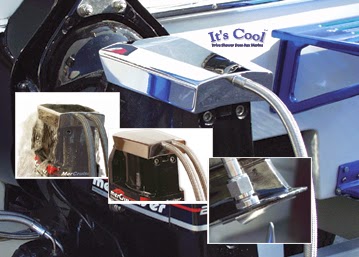
Example of a Bravo Shower

5- Keep your props in good shape if you run with banged up props it is hard on the prop seals.
6- Set out a service schedule were you have the drive pulled at regular hourly operation times or             annually for drive shaft, bearing and bellows inspection and service.
7- If you have damage to the skeg or cavitation plate get this fixed, the aerate water around the props       will be disturbed and you will loose performance (this is true for any drive)
8- If when you drain the gear lube the gear lube looks like a milk shake or has any water in it call            your service provider and have them pressure check the drive.
9- Always replace the ring seals at the drain and vent screws after any service.

                                         
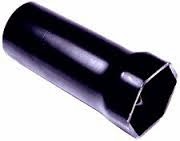
Mercury Duo Prop Tool


Things to be aware of with Volvo Duo Props:

1- You actually loose less horse power through a Volvo drive.
2- You have a dip stick in the top of the drive to check fluid level after you change the gear oil.
3- Under the front cap of the drive There is the shift shaft this are should be lubed up to prevent corrosion, as there is a seal here that can allow water into the drive and if it is not lubed can create stiff shifts.
4- You must use Volvo synthetic fluids appropriate for your application.
5- If you are buying parts for your Volvo Duo Prop be sure of the serial number, and only by genuine    Volvo parts as after market parts quite often will fit but are not exactly right and you will be                 repairing again in a season,
6- Do not try to remove the props without the right tool if you knock off any of the raised bumps on       the nut you will end up having to cut the nut off.
7- Arrange with your service provider regular dive pull service to inspect the drive shaft, bearing and     the bellows this should be based on hours of operation or annually.

                                       
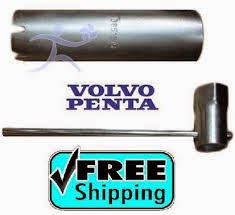
Volvo Duo Prop Tool


When we discuss service based on hours the standard is usually every 100 hours of operation or every year. A key fact is that most Inboard /Outboard boats that sink ,the cause is the bellows. The bellows are the rubber boots which surround the drive shaft and the shift shaft, some drives have exhaust bellows also. With age these bellows begin to crack and water starts to trickle in, a dead give away for bellows that are going bad is when the drive is pulled and there is water in the bellows and or the drive shaft is all rusty. Because of the proximity of the bellows to the water (under water) this is a repair you should have an insured and certified service provider complete the installation can be tricky and requires experience . Done wrong and your boat is on the bottom. This is why it is recommended not to store the boat with the drive trimmed up for long periods of time, if you have muskrats in your area they love to chew on the exposed bellows. So keep your drive in the all the way down position as much as you can.

                                           
Example of Bellows Kit


Never attempt a repair that you feel is over your head if you require detailed service information Email: boatnutmedia@gmail.com  and we will help you with any questions you may have.


To guarantee access to all of  Boat Nut Magazine articles, pictures and featured services visit the official Boat Nut Magazine ©™ website. Be sure to reply to the Boat Nut Association registration on our site for the latest Boat Nut weekly and monthly news letters and opportunities.


Copyright 2015 © Boat Nut Media, Toronto, Ontario. All rights reserved. No part of this information/publications may be stored in a retrieval system, transmitted, or reproduced in any way, including but not limited to photocopy, magnetic, or other record, without prior agreement and written permission of the publisher, Boat Nuts Media ©™ No liability is assumed with respect to the information provided.


Monday, 16 March 2015

Spring Boating : How to know if the boat is running the way it should


http://boatnutmagazine.com/

How do you know if your boat is operating right?


There are a set of simple test tricks to know if your boat is performing the way it is expected to.
Your boat has a basic set of parameters dictating performance expectations that the builder released when the boat was originally sold new, these numbers are an idea in most cases. These parameters would have or could have included information such as top speed, RPM at full throttle, weight of the vessel with full fuel and water, fuel burn expectations, etc. However after some engine operation hours your horsepower numbers will begin to drop off, the weight numbers will vary from boat to boat simply because some boaters will keep a lot of gear and items on their boat , other owners will have next to nothing. If you start to add accessories like a tender, radar arch, swim platform extension, a replacement swim platform or adding a big generator. Then you have definitely changed the weight of the vessel and could possibly have changed the center of gravity and created a load shift backward/forward or side to side of the vessels center line.

Changing the load from the center line or changing the center of gravity will totally change the expected performance of the hull and the way the boat rides on the water. Large loads can create changes that the hull cannot recover from, an example of this is when the load shift from center line will no longer allow the hull to get on a natural plain position. The bow will simply not drop. The only way to fix this type of problem is to start changing props, modifying or installing a hook in the hull, this is a type of permanent trim tab. You can also add more weight to the fore ward hull. All of these modifications can bring the bow down, however all these modifications will mean that your fuel bill will climb substantially. A really good accessory designer will keep this information in mind and recommend installation location instructions specific to your make and model of boat. Adding accessories like extended swim platforms can really affect the performance of the hull when backing up or travelling in following sea conditions.

This means that the new swim platform can act like a trim tab and keep the hull from rolling from bow to stern. This can create lift at the transom and make the boat very "transom loose". Which creates a situation were you loose the ability to steer the boat. In the worst case of operation in a following sea the back of the boat can be lifted up and come around to try and pass you. This is when the weight of the boat is being placed on the mounting point of your new swim platform and the water can rip it off.

Other situation that can be created is a "list" when the load weight is not even from side to side, this situation is enhanced at high speed. The boat starts to lean over and becomes unstable. You can try to correct this with trim tabs but if this is a must all the time you must address the list. If you continue to run a boat with a list you will eventually stress the trim tab and the trim tab ram or trim tab will eventually give up. Balance from side to side is far more easily addressed than any other balance problems . The load on the boat can be moved around, the best place to start is with the batteries etc. If you find the boat is listing and slowly getting worse you may have a leak, and a floatation locker maybe slowly filling up. This type of leak can go on for a long time and never show any water in the bilge. To figure this problem out you will probably need to bring in a surveyor to tell you were this maybe taking place.

When it comes to the engine there are some simple tell tail signs that you need to have some mechanical work done. What you need to do is start by reading the water, this means on a nice calm morning start the motor or motor(s) one at a time. Immediately go to the back of the boat and look at the exhaust water and the water around the back of the boat. If you see a slick of gas on the water then the motor is not cleanly burning all the gas it is consuming. This is the sign of requiring at least a tune up. If you have twins with thru hull exhaust check the water flow against each other, if one motor flows more than the other then you probably need to change a sea water pump impeller in the motor with less flow. This same trick can be used for inboard out board units. With the engines off trim the drives up and down and look for any oil slicks if there is a leak in a seal the small leak will create a slick on the surface of the water. For trim tabs use the same test. Any kind of slick is a sign that something is wrong! The water around the back of a boat that is running right will be clean.

The exhaust smoke color can also tell you a lot about what is going on with the motors. White smoke is usually just steam. A little bit of white smoke is not a horrible thing on start up or after a long run coming off plain but it should clear up quickly. However white smoke that has a sweet smell means that you are burning antifreeze from your closed cooling system. Black smoke is carbon, which may just mean the boat needs a good high rpm run to clean up and heat up the motor, or it could be a sign of bad spark plugs. Blue smoke is oil, this is a sign that you have a motor that is getting tired, if it is just blue at the start then you have a valve train or ring problem and again will need to get this fixed. This means some type of engine tear down. Any off the above problems will affect the performance of the motor(s) and this will affect the boats performance.

Take the boat for a ride and bring another driver with you. This is so you can read the water again. The information you can get from this is interesting. Look out the back off the boat while you power up through the rpm range, watch the wash coming off the back of the boat it should be even on both sides, when you do this "do not" use the trim tabs at all. Look at the prop wash and you should see a nice even flow of water, if you have twins the wash should be the same on both sides. When you get to 2500 plus rpm with twins if you match the rpm's on port and starboard motors the boat should start to sing. The sound will be even and matching (the sound should be like one motor). When this happens, run the boat like this for 15 min or so the sound should remain even and solid you will hear it if a motor starts to lag or miss immediately. With some experience doing this you will easily be able to pick out the motor that is acting up. Now take a peak up the sides of the hull and see were the water is breaking out from under the hull and how far the spray travels this will let you know if you are running with any list on plain.

When you are out for your ride you can test the rpm ranges of your motor(s), you should have push all the way from idle speed right through the range. Check the following. When you push the throttle and the rpm increases quickly but the boat is slow to react or it sounds like the motor is not loading up (Slipping), or at the top end of the rpm range the maximum speed of the boat is obtained way before full throttle is obtained, and the last of the throttle range just increases the rpm only, These are signs that you have to re prop. The best way to do this is to call the engine manufacturers and they will ask you a series of questions to determine the best prop for the performance you are trying to achieve, improving the prop can make a huge difference in performance and fuel burn.

These are simple tips but they really do work try them out on your boat or your friends boat. Reading this is may explain why quite often a mechanic will start the boat and step off the back and stare at the water he/she is reading the signs the boat are giving. A lot of times problems will show up here first before a break down. A boat is much like a car, it will tell you what is wrong, most cases long before a larger problem arises, the trick is to know what your boat is telling you.

To guarantee access to all of  Boat Nut Magazine articles, pictures and featured services visit the official Boat Nut Magazine ©™ website. Be sure to reply to the Boat Nut Association registration on our site for the latest Boat Nut weekly and monthly news letters and opportunities.


Copyright 2015 © Boat Nut Media, Toronto, Ontario. All rights reserved. No part of this information/publications may be stored in a retrieval system, transmitted, or reproduced in any way, including but not limited to photocopy, magnetic, or other record, without prior agreement and written permission of the publisher, Boat Nuts Media ©™ No liability is assumed with respect to the information provided.


Sunday, 15 March 2015

Bayliner Boat whats in a name?


BAYLINER  whats in the name? A key player in bringing boating to the masses!


Bayliner a boat manufacturer name who has taken a beating with boaters, these boaters who attack the Bayliner brand obviously have no idea of the history and relationship that this brand has played in the power boat industry since the late 1980's. Bayliner Boats of Arlington Washington was in the late eighties the cornerstone of the pleasure boat industry in North America and around the world. Bayliner had factories in Washington state, Minnesota, Georgia, and Florida. They developed the brands we know such as Bayliner, Maxum, Trophy, Robalo, and Meridian. They were behind advancements such as the Jazz and Reflex (jet boats), the first all curved deck small cruiser the 27 Cierra, and some classic yachts like the 3288, 3888, and 4288 these yachts were great designs and would take unbelievable punishment. Since all these yachts where developed and tested in the Pacific North West, and I do not mean just on the nice days.

They have been copied by companies like Campion Marine, Mainship Yachts, Sea ray and a whole host of smaller boat builders around the world. Bayliner had test areas in the Nevada Desert for upholstery deterioration and in the San Jaun Islands for hull design testing. They were responsible for technology that trickled over to Baja, Sea Ray Wahoo and many other boat builders who were under the Brunswick umbrella. The main office for what is now the Brunswick Boat Group, formerly US Marine was located at a Bayliner factory. Bayliner was the first boat builder to be purchased by Brunswick this lit a race between OMC and Brunswick to buy up boat manufacturers. This is because they were the largest pleasure boat builder in the world at the time and were close to a deal with OMC. Buying Bayliner would mean control over who provided the engine packages, which meant that lots of Mercury product would be placed in the market. Bayliner even built the Buccaneer sail boat, they made it all over their prime years of production. The Arlington factory had one of the first 3D milling machines to create molds, and they did, even for Sea Ray. The Arlington Bayliner factory also had full size test tanks (swimming pools) where they did sink tests for several Brunswick Companies. Bayliner could easily have been the Sea Ray we know today, so what happened to the one time largest builder with the one time largest dealers in the world.

Well first off in the late eighties they built so many boats that the completed inventory ended up stored with covered in shrink wrap, for those who use shrink wrap this will be a valuable lesson for you, under the plastic the wood structure began to rot, which is exactly what all boats do if you leave the plastic cover on for more time than absolutely necessary. When these boats made it to market they had a lot of issues,  these were generally the small runabouts, and this was before inner liner boats. The floors were going bad almost immediately and this was the first bad reputation that Bayliner suffered.

Bayliner became the test company for Brunswick and because of this many models came and went, The problem with being the test ground is that the bugs are ironed out with Bayliner brand name. However their core models were great the Yachts, Cruisers and Runabouts. Even with the core group of boats Brunswick still managed to muck about and Bayliner's ended up with the Force Outboard Motors. This was when Brunswick bought the Chrysler Outboard motor company. these motors were junk and every one knew it but they took these out of date motors and stuck them on Bayliners, another hit to the reputation.

Bayliner Yachts had to experiment with different motor combinations like Hino Desiels, not good they were smokers and the non turbo engines were gutless. After these flubs Brunswick went on to use Bayliner as the main test ground for engine package combinations to improve fuel burn and costs, and guess what? Bayliner then got the wrap for horribly under powered boats, the next nail.

Bayliner started to get a reputation as a low entry level boat brand, and boaters started to pick on the brand. At this time Brunswick started to splinter the line and broke off  Robalo and Trophy. Wound down the Maxum brand, Brunswick did not need to have a competing brand to Sea Ray. In the end Bayliner became a dumping ground for yesterdays technology motors from Mercury Marine. Bayliner started to slip even more. Now Brunswick after messing around with the brand decided to rename Bayliner Yachts as Meridians. Then Bayliner started to die. A Sad Day in the Marine Industry!

I get a charge out of the boaters who own a Maxum, and beat up Bayliner! They are the same boats built in the same factories using the same materials, Bayliner and Sea Ray also share the same DNA, Bayliner's are not bad boats at all, believe me there are really crappy boats out there, much worse by far. The difference between a Sea Ray and a Bayliner in some model years are the finishes and the hardware, If you look at a Baliner and Sea Ray side by side you will notice this immediately. So Bayliner owners stand up for your brand, every other boat in the market owes something to Bayliner. If your on the west coast you will not hear the kind of mudslinging we hear in Ontario, If the brand was so bad how come there are so many around? In a lot of ways they were the every mans boat and that is ok with me. I was excited to see a resurgence in the brand at this years Toronto Boat Show. I would love to see another new Bayliner Motor Yacht, but that may never happen Brunswick today builds to many models and now that they have converted the Hatteras brand into big Sea Rays, I do not think there will ever be a Bayliner Yacht Market again.

Bayliner built some great boats and still do, Please do not listen to the haters. I sure hope they find their way back to larger boats. Bayliner owners were the original BOAT NUTS!!!!!!!


Pictures from Bayliner

To guarantee access to all of  Boat Nut Magazine articles, pictures and featured services visit the official Boat Nut Magazine ©™ website. Be sure to reply to the Boat Nut Association registration on our site for the latest Boat Nut weekly and monthly news letters and opportunities.


Copyright 2015 © Boat Nut Media, Toronto, Ontario. All rights reserved. No part of this information/publications may be stored in a retrieval system, transmitted, or reproduced in any way, including but not limited to photocopy, magnetic, or other record, without prior agreement and written permission of the publisher, Boat Nuts Media ©™ No liability is assumed with respect to the information provided.

Saturday, 14 March 2015

ALPHA DRIVE BASIC SERVICE


http://boatnutmagazine.com/

ALPHA DRIVE

Detailed  Basic Spring Alpha Drive service list


This basic service list will apply to Mercury Alpha Drive Generation 1 or Generation 2 .This is a basic list that the boat owner should be able to complete in the spring before launch. First you must be able to identify your drive type. First of all Alpha drives are single prop only, there is no alpha duo prop. Alpha drives are a smaller in size and weight. You can not identify your drive by the engine alone, Alpha drives came in combinations covering combinations from 4 cylinder (3 litre) to big block V8 motor (454 cyld).

The alpha drive is the easiest to manage they are the lightest drive, in weight, one person can lift it and move it around with out help. The spring service list for the Alpha drive is as follows:
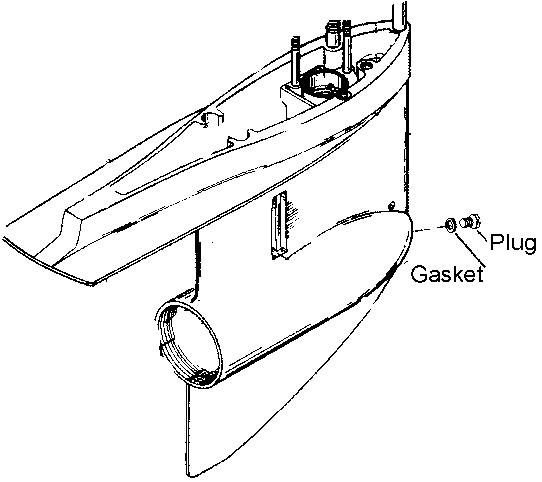
1- On the sides of the bullet directly behind the prop near the front of the case you will locate a large drain screw (photo below c/w gasket) it can be removed with a large flat screw driver, Directly above this drain screw above all of the anti cavitation plates you will locate another identical screw this is the vent screw.

 First step after you locate the vent and drain screws is to remove the prop. when you remove the prop you should have  the prop nut, stainless steel nut lock which has small flanges that are bent back over the brass spacer(these small tabs will have to be bent away from the spacer), the brass spacer, the prop ,and behind the prop the thrust washer a large brass tapered washer. Inside the prop you may find a hub will slid out, Note: that the hub will only fit back in one way. (Photo of prop and hardware above). Get a large container (an oil change pan will work the best), be sure to trim your drive all the way down, this will orientate the drive skeg in the oil catch pan.With collection pan under the drive remove the drain screw and the vent screw. (Pictured in the diagrams below)

2- Allow the gear oil to drain from the drive this will take at least an hour to complete. The longer you give the drive to drain the better the service will be, do not rush.
3- While the gear oil is draining, it is time to take a look at the anodes these are clearly marked in the drive picture at the top of this post. If they are gone or are badly corrode you will need to change them. Anodes are your front line protection against corrosion.
4-  If the drive has some area were the paint is damaged you can prime and paint just these areas, DO NOT unless it is really really necessary sand down the drive and respray  the whole thing. Once you do this you will be doing this every year! The products that the drive comes from the factory coated with are the very best and cannot be reproduced. Once these factory coatings are sanded the drive  does not have the same corrosion resistance any more. Just touch the drives up even this will start to become an annual thing to do.
5-  Now  you can prepare to refill the drive with gear oil you will need to pick up a gear oil pump kit that attaches to the gear oil bottles these parts are available from your local mercury parts dealer (photo of pump and gear oil below)

You will need 4 or 5 one litre containers of gear oil for the job. You will attach the pump to the filler screw hole at the bottom or on the bullet of the drive. Very slowly pump your gear oil back in the drive please go slow, the reason for this is, the gear oil must push the air out of all the passages on its way up to the vent screw hole. When you see new gear oil at the vent screw hole coming out stop. Waite five minutes and try to pump a little more you may get spits of oil and air at this time, if you do stop and try again after a couple of minutes. The gear oil at the vent should flow out evenly. Once you have determined that the drive is full you will re install the vent screw with a new ring gasket and then the drain screw with a new ring gasket (seal). Photo of vent screw and gasket above.
The reason for new seals at the drain screw and vent screw  every time you service them is simple these are points were water can access the gear oil. After all the drain screw and vent screws are under  the water level.
6- Clean the prop shaft and all of the prop parts with a clean dry rag. Place a thin layer of 2-4-C grease on the prop shaft and re install the prop. Be sure not to over tighten the prop nut. tighten until snug and then grab the prop and try to move back and forth on the shaft you will feel a slight bit of movement from the shaft a couple of millimeters, and then bend back the nut locks, you should only be bending the tabs that line up with the slots in the spacer.
7-  On newer boats there is a gear oil reservoir on the top of the motor, you will now need to go in the boat and top this bottle to the operating rang mark.It drains down when the drive is draining.


 On your first run of the year check the gear oil level in the reservoir on the engine if the drive was filled to fast the drive will consume some of this gear oil and you will need to top the reservoir up again. A note about the gear oil reservoir, There is a sensor in this bottle and when the gear oil is low it will send a signal and you will receive a beeping alarm at the helm. Never ignore these alarms they are critical! I have seen many boats were the wires to the reservoir have been cut if this is the case fix the problem do not leave the drive reservoir unhooked or modified in any way, this is how a drive manages to blow up with out any notice. If you do not have a reservoir and alarm system than this service is even more critical, as it is the only way of verifying you have full, good clean gear oil in the drive.

List of tools for this service:
1-Mercury floating prop wrench, which every Alpha owner should have on the boat
2-Pair of needle nose pliers
3- Small mallet
4- Set off screw drivers
5- Extra large straight blade screw driver
6- Metric socket set

Parts required:
1- 4 to 5 one litre mercury high performance gear oil
2-Two replacement drain screw seals
3- Anode kit if required fro Mercury Marine
4- Mercury phantom black spray paint
5- Mercury zinc chromate primer
6- 2/4/C Mercury Grease

Problems that you may have:
A- Contaminated gear oil, this is gear oil that has been mixed with water. If when you drain the gear oil you have fluid that comes out looking like a green milk shake or if when you drain the gear oil there is water which has separated and poured out separately. If this is the case you will need to contact your Mercury Authorized service provider for repair. Quite often the problem is fishing line around the prop shaft behind the prop and against the prop shaft seal.
B- Over heat problems or poor water flow to the engine, this is probably a water pump kit it is located inside the drive between the upper and lower gear case . The water pump should be serviced at least every two years.
C- A clunking sound when you put the boat in gear Call your Mercury Service provider and get this checked there is a universal joint on the drive shaft between the motor and the drive.
D- A vibration or constant odd sound from the back of the boat, there is a bearing in the transom housing that is held in a large rubber mounting this bearing is designed to carry the drive shaft through it and it can seize or start to fail
E- Trim and Tilt wont work this is not an exterior problem, it is a trim pump issue
F- The drive trim limit does not work, this is probably a trim limit sender issue you will need to call a Mercury Service technician to verify
                                         

If you complete this basic service every year you will extend the life of your drive.


To guarantee access to all of  Boat Nut Magazine articles, pictures and featured services visit the official Boat Nut Magazine ©™ website. Be sure to reply to the Boat Nut Association registration on our site for the latest Boat Nut weekly and monthly news letters and opportunities.


Copyright 2015 © Boat Nut Media, Toronto, Ontario. All rights reserved. No part of this information/publications may be stored in a retrieval system, transmitted, or reproduced in any way, including but not limited to photocopy, magnetic, or other record, without prior agreement and written permission of the publisher, Boat Nuts Media ©™ No liability is assumed with respect to the information provided.