Showing posts with label Boaters Security. Show all posts

Sunday, 5 April 2015

Hull Identification Number all you Need to Know


http://boatnutmagazine.com/


HULL ID NUMBERS AND MANUFACTURERS ID CODES


Hull Identification Number

The Hull Identification Number (HIN) consists of 12 consecutive characters (capital letters of the alphabet and/or Arabic numerals) with no spaces, slashes, oblique stroke or hyphens between them. These characters are:
* A three digit Manufacturers Identification Code (MIC) followed by
* A five character manufacturers hull serial number and
* Four figures giving the date of manufacturer

Manufacturers Identification Code

The Manufacturers Identification Code (MIC) consists of three characters (block capitals or numbers) forming the first three characters of the HIN, as issued by Coast guard. It identifies the plant of manufacturer and is unique to whom it is issued.

Hull Serial Number

Characters four through eight of the HIN are the individual hull serial number which is defined by the manufacturer. No two boats are assigned the same hull serial number. The hull serial number consists of capital letters of the alphabet or Arabic numerals or both, exceptions being the letters I, O and Q, they are not used.

Characters nine through twelve of the HIN are a letter and numbers indicating the month and year of manufacture and the model year for which the boat is built. The date code of the HIN has been handled three different ways over the years (to be explained further on)

Country Code

The country Code is an optional addition to the HIN. Manufacturers of boats have the option of adding the prefix, e.g. "US-" (block capitol letters and hyphen) in front of the HIN. This is a mandatory requirement for manufacturers exporting to some countries (for example: the European Community). This is not part of the accepted mutual recognition of Hull Identification Numbers between Canada and the US.

Marking of the Hull

The HIN is permanently affixed into the hull, hull member, or on a plate so that removal of the HIN or plate would normally cause some scarring or damage to the surrounding hull area. No character of the HIN is to be less than 6 mm (1/4 inch) in height and width.

 Where  is the HIN located?
* The transom above the load water line (preferably on the upper starboard quadrant).
* The starboard side at the aft end of the hull that bears the rudder or steering mechanism, if the boat has no transom.
* The outer most starboard side of the after end of the hull, if the boat has more than one hull, and no transom.

Some manufacturers have added additional characters after the HIN separated from the HIN by a hyphen.
Three different HIN numbering systems have been used by the Coast Guard and boat manufacturers.


Numbering System 1

Most builders started using this format in Jan 1985 and is still in use.

ZZZ                                           45678                                 A                     5                  85
Manufacturers ID Code      Hull Serial Number      Month built    Year Built    Model Year

Character Nine - is a letter of the alphabet indicating the month during which construction or assembly began
Character Ten - is the last numeral of the year during which construction or assembly began
Character Eleven - are the last two numerals which represent the model year for which the boat was built.

The example above shows that Hull Number 45678 built by manufacturer identified as ZZZ was built in  JAN 1985

Jan -A        Feb -B     March -C    April - D     May -E     June -F    July -G    Aug -H    Sept -I
Oct -J        Nov -K       Dec -L

Numbering System 2

Most builders used this format from the mid 1970's until Dec 1984. However, some builders still used the previous system.

ZAA                                                      45678                                          M76E
Manufacturers ID Code                Hull Serial Number                    Month and Year

Character Nine - of the HIN is the letter "M" a spacer letter before the year
Character Ten and Eleven - are the last two numerals of the model year, which commences in Aug of the preceding calendar year.
Character Twelve - is a letter of the alphabet which indicates the month during which construction or assembly began

Using the "Model Year" option, the date of manufacture code for Dec 1975 would be displayed as M76E

Aug -A    Sept - B    Oct -C    Nov -D    Dec -E    Jan -F    Feb -G    March -H    April -I    May -J
June -K    July -L

Numbering System Number 3

Most builders use this format from the 1960's though until the mid 1970's. Some builders converted to the newer system earlier.

ZAA                                                   45678                                          1275
Manufacturers ID Code         Hull Serial Number                 Month and Year of Manufacture

Characters Nine and Ten - indicate the month of the calendar year (Jan to Dec numbered 01 to 12)
Characters Eleven and Twelve - are the last two numerals of the calendar year.
The date of manufacture is the month and year during which the construction or assembly began. Using the "Model Year" option, the date of manufacture code for Dec 1975 would be displayed as 1275.

If a HIN area is damaged a replacement code can be imprinted in the hull, the manufacturer will send a replacement HIN mold, but it must be returned (I have received them by armored car). The HIN should be inspected on any boat you have or may purchase, it must be accessible for law enforcement to inspect if you cover the HIN you must provide access to the original area. The HIN is placed in several locations on the hull and deck if you see that the number does not look factory finish you can contact the builder for more information on were to locate another HIN area so you can confirm that the boat is not stolen or being fraudulently represented. The HIN is a number you should have on hand at all times as it can be used to gather the original build information for the boat. All information that the manufacturer has on file for the boat is kept using the HIN.
No HIN, No Sale!


To guarantee access to all of  Boat Nut Magazine articles, pictures and featured services visit the official Boat Nut Magazine ©™ website. Be sure to reply to the Boat Nut Association registration on our site for the latest Boat Nut weekly and monthly news letters and opportunities.


Copyright 2015 © Boat Nut Media, Toronto, Ontario. All rights reserved. No part of this information/publications may be stored in a retrieval system, transmitted, or reproduced in any way, including but not limited to photocopy, magnetic, or other record, without prior agreement and written permission of the publisher, Boat Nuts Media ©™ No liability is assumed with respect to the information provided.


Monday, 23 March 2015

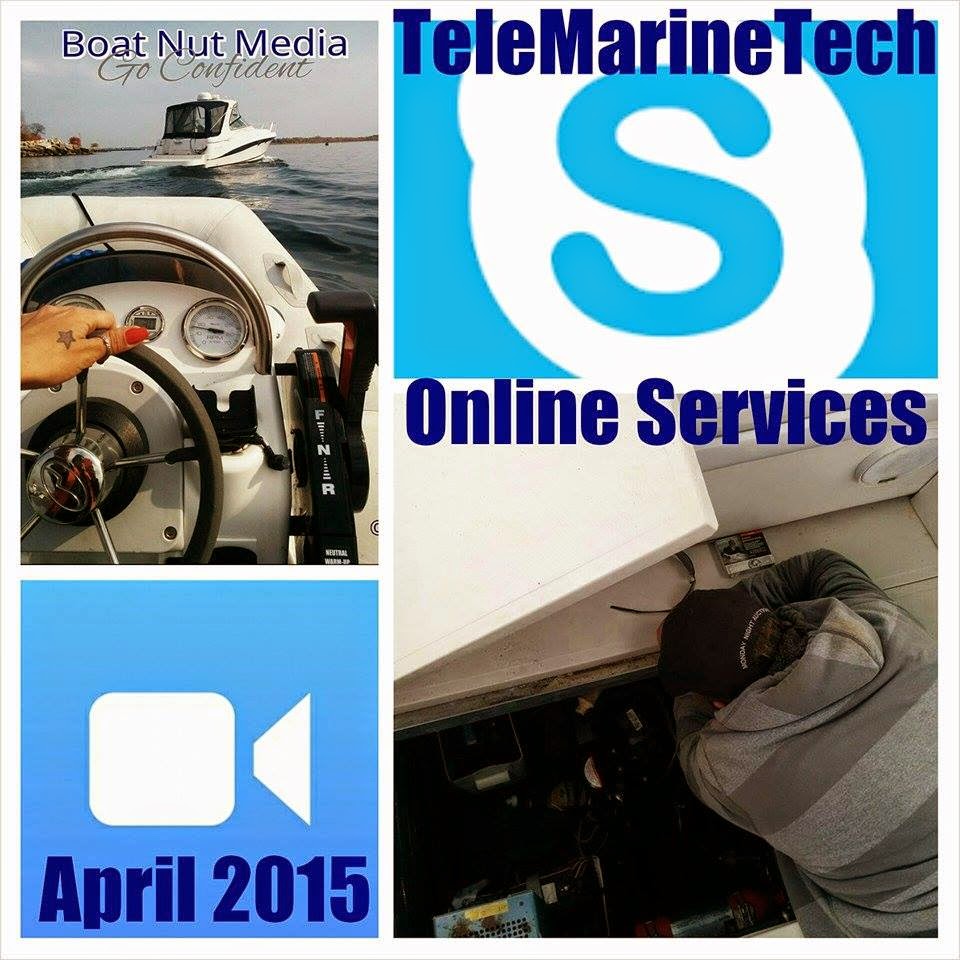
Telemarinetech part 2 BNTN Program


http://boatnutmagazine.com/


Telemarinetech the best tool you will have as a boater, we field all questions you may have!

Please Email boatnutmedia@gmail.com to receive more information and an application

You can read over the information and look at the application before you commit to the program, There is no limit to the amount of times you use the service. Any question any time BNTN is the perfect addition to your boat ownership plan. Boat Nut Media guarantees your satisfaction or you will get a full refund. The specialists that will help you are hand selected marine technicians who can explain your answers in an easy to understand language.

You now have an expert available to you 7 days a week, Our specialists believe that any question is a good question we want you to be informed about your boat, because when a problem comes up you are usually on your own. It is rare that you have a problem with an expert on board with you. The idea for this program stems from the days when I was in the boat service business, My clients were able to call me anytime, my phone used to ring over 21 times before noon almost every day from boaters who had questions ranging from mechanical failures to what size anchor do I need. With break down questions we could get the boat running 99 percent of the time over the phone and save the boating day or trip! Telemarinetech is not trying to take the place of your marine mechanic ,we are designed to be a support program for you.

This program is ideal for  New Boaters who are just starting to boat, Boaters who cruise distances, and Experienced Boaters who just need to make inquires to verify that what they are dealing with is accurate. We can take the time with you that a service technician cannot always give you


Telemarinetech/ BNTN details at boatnutmedia@gmail.com
on our blog, and on twitter @BoatNutMedia

To guarantee access to all of  Boat Nut Magazine articles, pictures and featured services visit the official Boat Nut Magazine ©™ website. Be sure to reply to the Boat Nut Association registration on our site for the latest Boat Nut weekly and monthly news letters and opportunities.


Copyright 2015 © Boat Nut Media, Toronto, Ontario. All rights reserved. No part of this information/publications may be stored in a retrieval system, transmitted, or reproduced in any way, including but not limited to photocopy, magnetic, or other record, without prior agreement and written permission of the publisher, Boat Nuts Media ©™ No liability is assumed with respect to the information provided.

Monday, 16 March 2015

Spring Boating : How to know if the boat is running the way it should


http://boatnutmagazine.com/

How do you know if your boat is operating right?


There are a set of simple test tricks to know if your boat is performing the way it is expected to.
Your boat has a basic set of parameters dictating performance expectations that the builder released when the boat was originally sold new, these numbers are an idea in most cases. These parameters would have or could have included information such as top speed, RPM at full throttle, weight of the vessel with full fuel and water, fuel burn expectations, etc. However after some engine operation hours your horsepower numbers will begin to drop off, the weight numbers will vary from boat to boat simply because some boaters will keep a lot of gear and items on their boat , other owners will have next to nothing. If you start to add accessories like a tender, radar arch, swim platform extension, a replacement swim platform or adding a big generator. Then you have definitely changed the weight of the vessel and could possibly have changed the center of gravity and created a load shift backward/forward or side to side of the vessels center line.

Changing the load from the center line or changing the center of gravity will totally change the expected performance of the hull and the way the boat rides on the water. Large loads can create changes that the hull cannot recover from, an example of this is when the load shift from center line will no longer allow the hull to get on a natural plain position. The bow will simply not drop. The only way to fix this type of problem is to start changing props, modifying or installing a hook in the hull, this is a type of permanent trim tab. You can also add more weight to the fore ward hull. All of these modifications can bring the bow down, however all these modifications will mean that your fuel bill will climb substantially. A really good accessory designer will keep this information in mind and recommend installation location instructions specific to your make and model of boat. Adding accessories like extended swim platforms can really affect the performance of the hull when backing up or travelling in following sea conditions.

This means that the new swim platform can act like a trim tab and keep the hull from rolling from bow to stern. This can create lift at the transom and make the boat very "transom loose". Which creates a situation were you loose the ability to steer the boat. In the worst case of operation in a following sea the back of the boat can be lifted up and come around to try and pass you. This is when the weight of the boat is being placed on the mounting point of your new swim platform and the water can rip it off.

Other situation that can be created is a "list" when the load weight is not even from side to side, this situation is enhanced at high speed. The boat starts to lean over and becomes unstable. You can try to correct this with trim tabs but if this is a must all the time you must address the list. If you continue to run a boat with a list you will eventually stress the trim tab and the trim tab ram or trim tab will eventually give up. Balance from side to side is far more easily addressed than any other balance problems . The load on the boat can be moved around, the best place to start is with the batteries etc. If you find the boat is listing and slowly getting worse you may have a leak, and a floatation locker maybe slowly filling up. This type of leak can go on for a long time and never show any water in the bilge. To figure this problem out you will probably need to bring in a surveyor to tell you were this maybe taking place.

When it comes to the engine there are some simple tell tail signs that you need to have some mechanical work done. What you need to do is start by reading the water, this means on a nice calm morning start the motor or motor(s) one at a time. Immediately go to the back of the boat and look at the exhaust water and the water around the back of the boat. If you see a slick of gas on the water then the motor is not cleanly burning all the gas it is consuming. This is the sign of requiring at least a tune up. If you have twins with thru hull exhaust check the water flow against each other, if one motor flows more than the other then you probably need to change a sea water pump impeller in the motor with less flow. This same trick can be used for inboard out board units. With the engines off trim the drives up and down and look for any oil slicks if there is a leak in a seal the small leak will create a slick on the surface of the water. For trim tabs use the same test. Any kind of slick is a sign that something is wrong! The water around the back of a boat that is running right will be clean.

The exhaust smoke color can also tell you a lot about what is going on with the motors. White smoke is usually just steam. A little bit of white smoke is not a horrible thing on start up or after a long run coming off plain but it should clear up quickly. However white smoke that has a sweet smell means that you are burning antifreeze from your closed cooling system. Black smoke is carbon, which may just mean the boat needs a good high rpm run to clean up and heat up the motor, or it could be a sign of bad spark plugs. Blue smoke is oil, this is a sign that you have a motor that is getting tired, if it is just blue at the start then you have a valve train or ring problem and again will need to get this fixed. This means some type of engine tear down. Any off the above problems will affect the performance of the motor(s) and this will affect the boats performance.

Take the boat for a ride and bring another driver with you. This is so you can read the water again. The information you can get from this is interesting. Look out the back off the boat while you power up through the rpm range, watch the wash coming off the back of the boat it should be even on both sides, when you do this "do not" use the trim tabs at all. Look at the prop wash and you should see a nice even flow of water, if you have twins the wash should be the same on both sides. When you get to 2500 plus rpm with twins if you match the rpm's on port and starboard motors the boat should start to sing. The sound will be even and matching (the sound should be like one motor). When this happens, run the boat like this for 15 min or so the sound should remain even and solid you will hear it if a motor starts to lag or miss immediately. With some experience doing this you will easily be able to pick out the motor that is acting up. Now take a peak up the sides of the hull and see were the water is breaking out from under the hull and how far the spray travels this will let you know if you are running with any list on plain.

When you are out for your ride you can test the rpm ranges of your motor(s), you should have push all the way from idle speed right through the range. Check the following. When you push the throttle and the rpm increases quickly but the boat is slow to react or it sounds like the motor is not loading up (Slipping), or at the top end of the rpm range the maximum speed of the boat is obtained way before full throttle is obtained, and the last of the throttle range just increases the rpm only, These are signs that you have to re prop. The best way to do this is to call the engine manufacturers and they will ask you a series of questions to determine the best prop for the performance you are trying to achieve, improving the prop can make a huge difference in performance and fuel burn.

These are simple tips but they really do work try them out on your boat or your friends boat. Reading this is may explain why quite often a mechanic will start the boat and step off the back and stare at the water he/she is reading the signs the boat are giving. A lot of times problems will show up here first before a break down. A boat is much like a car, it will tell you what is wrong, most cases long before a larger problem arises, the trick is to know what your boat is telling you.

To guarantee access to all of  Boat Nut Magazine articles, pictures and featured services visit the official Boat Nut Magazine ©™ website. Be sure to reply to the Boat Nut Association registration on our site for the latest Boat Nut weekly and monthly news letters and opportunities.


Copyright 2015 © Boat Nut Media, Toronto, Ontario. All rights reserved. No part of this information/publications may be stored in a retrieval system, transmitted, or reproduced in any way, including but not limited to photocopy, magnetic, or other record, without prior agreement and written permission of the publisher, Boat Nuts Media ©™ No liability is assumed with respect to the information provided.


Friday, 13 March 2015

Boats and Boaters representatives in Canada


http://boatnutmagazine.com/


Open letter to all the acronym boat representatives out there..........


Where does all the money go and what do you do for Ontario or for that matter any boaters? NMMA, OMOA, and a host of other letters. I am very curious, these groups represent themselves as the voice of Canadian Pleasure Boaters. Over the last 35 years I have been in almost every major marina and yacht clubs in North America and I have yet to meet or been introduced to a single person who identifies them selves as a director or public relations officer. I guess that is my bad luck. I really would like to know what their mandate is and where they use their large budgets and government support, to create a better safer more organized boating experience at the grass roots level in Ontario.I hope they do something other than sell programs to get you a boat operators card. I have tried to reach out to these groups, but they must be very busy listening to boaters needs or creating new boater education and safety programs that are initiated by themselves or one of their board members. Outside ideas must not be serious enough to require their attention.

Boat Nut Medias reach is only 16000 readers globally!

Honestly it is no wonder Power Boaters create their own grass roots groups clubs and organizations to try and better their own boating experiences, and do not trust others. These five lettered groups must be contacting  and networking through the privately funded and quality boaters groups and forums like the CBOC. An organization who is working hard to open a responsible dialog with and between Canadian boaters. No they don't. The largest brick and mortar boating school in Canada has never had any interaction with the NMMA/ Discover Boating Ontario. Ontario Place Boaters created their own group in an attempt to negotiate with the Ontario Government, trying to figure out development plans with the marina and where that may leave them in the near future. There are several hundred boaters who are supposed to be represented at the provincial and federal level by one or all of these groups, so why are they not involved with development plan information so the boaters they represent are not in the woods fighting for information on there own.

Don't get me started when it comes to the Power Squadron the power house that was and still is supported by Transport Canada, they have the ability to do so much more, I think that these  representative groups clubs and associations are stuck in the mud they have fat budgets and apparently all the attention of the government officials, and unless I am wrong, large boat membership and data basis of information. So what do they do for the lowly boater the very reason they exist, not a god damn thing that will make a difference in my summer on the water.

I will go to their boat shows and read the updated literature, watch their ads on the TVs at the Ontario travel centers. However I am certain that unless I show up at their door when they are at their office, I will not likely ever meet one of them and have them ask me how they can make my boating experience a better and safer one this year.

If these groups really want to do something grab a boat get out on the water and take the time to have a one on one conversation with our great Ontario Boating community. Take some of their ideas and complaints back to your office and help them have a less stressful and more full filling boating experience. Worry less about the industry, they have their own boys clubs and side with the boater. What a novel idea. Hope you are reading this!  

             Yours truly, Boat Nut Media

In closing I really would like to know what these groups do, If I knew more about real changes or programs that were beneficial to boaters maybe I would have a different opinion, perhaps there will be a  response to this letter if they do I will post it. Because up until now we have reached out to many of these lobbyist groups and so far we've received a whole lot of nothing! They're apparent lack of interest in the boating community, safety, boating education and events has been astounding to us! After all isn't this exactly what your funding, and taking the boaters hard earned dollars is for?

To guarantee access to all of  Boat Nut Magazine articles, pictures and featured services visit the official Boat Nut Magazine ©™ website. Be sure to reply to the Boat Nut Association registration on our site for the latest Boat Nut weekly and monthly news letters and opportunities.


Copyright 2015 © Boat Nut Media, Toronto, Ontario. All rights reserved. No part of this information/publications may be stored in a retrieval system, transmitted, or reproduced in any way, including but not limited to photocopy, magnetic, or other record, without prior agreement and written permission of the publisher, Boat Nuts Media ©™ No liability is assumed with respect to the information provided.