Showing posts with label Pleasure Crafts. Show all posts

Wednesday, 13 January 2016

WAKE BOATS REAL DEAL OR COPY WHICH IS BEST


http://boatnutmagazine.com/

WAKE AND SKI BOATS? THE REAL DEAL OR THE EVERY ONE BUILDS ONE


From our quick Toronto Boat Show 2016 review:

The Ski and Wake board sector has some awesome new additions to their breed. Malibu with fully digital dashes and surf gates for one example. These boats are really advanced and the fit and finish is second to none. I love that the wake boats have a lot of color and models to choose from, this is a sector of the pleasure boat market that knows its buyers needs and is developing product to meet all the requirements the buyer has. It works, they are not cheap but I am certain that very few buyers bitch about the disappointing performance of the boat they buy.

I know it doesn't say much but I want to be careful here as these to me are utility boats and I say this with the up most respect. There seems to be two different trains of thought in this group. The real deal and the everyone has built a boat with a wake bar, I want to know if there are any not so built specific boats that are really good. Or are they just boats with the fancy gear on them to look cool and go tubing behind. This breed of boat is designed, marketed and sold with the purpose of providing specific goals to the boat owner. However that seems to be only a small part of the story. I would think that the true test of any of these brands (built specific boats) is the reaction for the guy or girl not on the boat at all. I read several reviews of this class in the Boat Test 2016 Magazine and was alarmed to see that the reviews seemed to talk a little about the brand, short to no detail about the boat, but worst of all there was no one behind the boat!

FOUR WINNS

Many years ago my shop was an authorized repair center for American Skier and Master Craft. Back then we knew that the skier and wake board rider played a larger role in the boat owners decisions than the boat owner himself (EVEN IF IT WAS THE SAME PERSON WEARING TWO HATS). We had to have the highest standards of repair or the boat was right back. Today these boats are way more advanced hell an old ski boat would be hardly recognized next to a new one. All the additions of ballast, surf doors, location of the bar and wedges are for the rider are they not so how do we know if a wake boat is really any good?

Malibu

I am trying to catch up with todays wake boat and learn all I can, to be able to judge the calibre and abilities of  these new more advanced boats. I feel that these boats deserve top billing for design, engineering and technological advances in what a boat can do for you. The fit and finish on the top names is remarkable. Some of our old repair and maintenance technics still apply but that's about all. I love the freedom this breed has had to really open the minds of designers, unlike other power boat lines they have a refined not over done feel when you look close.

I don't think any power boat tester can really pass judgment on these boats unless you get someone behind one to tell you if they really are all they are built up to be. Looking forward to the experience of doing more than looking and driving one like a runabout again!  We want to hear from as many Wake Board and Ski Boat enthusiast as possible to design reviews and tests that will be truly informative.
 
Copyright 2015 © Boat Nut Media, Toronto, Ontario. All rights reserved. No part of this information/publications may be stored in a retrieval system, transmitted, or reproduced in any way, including but not limited to photocopy, magnetic, or other record, without prior agreement and written permission of the publisher, Boat Nuts Media ©™ No liability is assumed with respect to the information provided

Sunday, 27 December 2015

BOAT SHOW HYPE


http://boatnutmagazine.com/

              BOAT SHOW HYPE / Another year of Cookie Cutter Boats

Every year at this time I start getting requests for Boat Show Passes, and this year is no exception. I have been involved with several major Boat Shows over the years Toronto, Vancouver, Seattle and Miami. In each case I anticipate seeing something new, something exiting! The last few years I have not been thrilled about my Boat Show experiences at all. The only power boat sector that I have seen go through real engineering and physical changes have been the Wake Board Boat builders. Every one else is playing copy cat right down to the hull side windows. Some were along the line ergonomics and cost cutting have trumped usable design, and since when did boaters all become 5 feet tall. A lot of these new boats have claustrophobic spaces where sea sickness must be included in the price. Boat builders are all following the same trend slightly deeper hulls, flat decks, cramped spaces with more crap than ever crammed into theses areas. You can use the head, take a shower and wash your hands all at the same time on a forty foot yacht. All of this great (NOT REALLY) new design, comes complete with the boat builders all using the same color pallet. I think boat builders have a secrete meeting every year and decide that all the boats will be black (or green or whatever they deem the flavor of the year) so we have no choice as consumers, take the black one. Reminds me of the model A car, you can have any color you want as long as it is black.


I hope this year brings something new but I am not holding my breath. My biggest pet peeve is the Boat Show timing. I mean I get the fact that in certain climates Boat Shows generate off season dollars for dealers, but really they are selling boats! Why not an in the water show in the spring where a boat can be in it's element. A boat at a Boat Show and in the water are two different animals. A 27 foot power boat looks big when you are looking at it on land, however put the same boat at the dock and half of it seems to disappear. Hold it maybe I answered my own question, looking bigger must sell boats! As far as I am concerned the only people who do well at the Boat Show are the people who host the venue.

I know that the idea behind any show like this is to introduce new product to the consumer, however what about the non multi millionaires who are in need of a great used boat why not show some used product, hell quite often the two year old boat is a nicer design than the new one. Why not have a used product show or at least include an area for these boats at the show? Maybe Boat Nut should develop a used boat show  that wont cost the vendors a fortune to be in, what do you think?


Just remember that the boat show prices and deals are available after the show so if you feel you need time to consider the purchase you have it, don't be pressured. I had to laugh a couple of years ago I was with a client at the Toronto show to purchase a davit system. We asked for the Boat Show price (as they advertised a discount) it was hilarious to hear that the discount worked out to fifty cents. No joke a 15 thousand dollar purchase was discounted by fifty cents!! So don't buy into all the hype.


If you are thinking of buying accessories such as bow thrusters shop the boat show and make contacts but you don't have to buy one unless you are familiar with the way the system is rigged into your vessel, or you have been on a boat similar to yours with the same set up on board. Some of these new non tunneled thrusters may show well on a video but may not work in your application. A good vendor will be able to demonstrate one in the water in the spring for you, before you lay out thousands of dollars for a piece of equipment that will not fit your boat on the inside were the wires and relays are to be located.
It is important to remember that you are dealing with sales people and not installers in most cases, if there is an installer talk to them first. The vendors are there for one reason to get your money!

Boat Shows are a great place to go and get ideas and if you are committed to a purchase sometimes to get a great early season deal. However experienced boaters know the best deals are usually END OF SEASON or previous unsold model years not at the Boat Show.


HAPPY HUNTING 

Copyright 2015 © Boat Nut Media, Toronto, Ontario. All rights reserved. No part of this information/publications may be stored in a retrieval system, transmitted, or reproduced in any way, including but not limited to photocopy, magnetic, or other record, without prior agreement and written permission of the publisher, Boat Nuts Media ©™ No liability is assumed with respect to the information provided

Author  RP

Thursday, 19 November 2015

The GOOD, The BAD and the UGLY


 http://boatnutmagazine.com/


THE GOOD THE BAD AND THE UGLY, Some of the best and worst boats Part 1

Every manufacturer that I have ever had any involvement with have had great and not so great boats. The not so great boats still work and I am sure that some boaters will not share my enthusiasm with what I refer to as marketing filler, just bad idea, or poorly engineering power boats. When times are good boat builders try all kinds of crazy ideas while they try to cover too wide a market ( A boat for everyone, a sales mentality). This has mentality has spawned boats that made hardly any sense and some that should have never been developed. Some of these boats were changed part way through production to try to fit marketing needs, some of these models just make you ask who developed this idea and why. In some cases it wasn't the boat but it was the motor combinations, in others it was the color schemes. Today when you walk the boat shows you will notice that boat builders are still trend chasers, almost all the new boats will be the same colors and designs. I know lime green and black are not going to be in demand three years from now. Come on boat builders we want to own these boats for longer than a color fad, what will happen to the value of these boats when the market no longer wants lime green or boaters realize that like blue hulls the color wont stand up to the environment.

Here are a few examples:

The first is a no sense boat that was the 21 foot BAJA Hammer available from 1997 thru to 2001. This 21 foot boat coupled with a big block and a bravo drive package was a bone crushing ride. This is when Baja had some pretty outrageous colors as well purple and yellow was a great example. I know that there are people who probably love this boat. The hammer seemed like on of those engineering questions that someone dreamed up an answer to, how can we take this little boat and stuff a huge motor in it and then sit on the floor to operate it (it was fun for 5 min). Sometimes manufacturers just build too many models, the hammer was a great example. It was not any kind of off shore boat which was what Baja was marketing. This was however was an off shore looking boat you could fit it in your swimming pool. Spend a few more dollars and buy a 25 Outlaw at least you are going to buy a boat which resembles an off shore boat, the Hammer is just a runabout.

The Hammer, leave it on the trailer! Its bad enough that the real offshore boaters refer to Baja as the Bayliner of the breed.


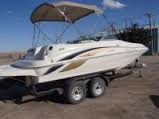
The second boat that I was no fan of was the 210 Sundeck from SEARAY available from 1998 to 2001 .  Yes even Sea Ray has some regrettable and forgettable models! This boat seemed to make sense right up until you launched it and realized that you have no freeboard at all at the transom. Which you might think isn't that bad until you take your 70 year old mother in law on a canal ride. You are cruising along at low speed, and a large yacht overtakes you from behind. At that point make sure you are in bare feet because that wave is going to roll right inside the back of the boat so slick that at the helm looking forward you will hardly notice until small fish are swimming around the cockpit area. The larger deck boats are great so why try to build a 200, 210, 220, 240, 260, 270, 280, 290, and so on this is hardly necessary. I think that they could carve a few away after all in 2010 Sea ray offered ten 21 foot model variations. How many 21 foot boats does the market need?

The mighty Sea Ray should focus on their line up that has been solid for them over the years here is hoping that Brunswick doesn't start to run Sea Ray into the experimental ground like they did with Bayliner


The third boat was rushed to market. The Bayliner 1500 Jazz available from1996 thru 1998  It wasn't the boat that held threw this one onto to the crap list it was the motor that did the job. The small jet boat craze that took hold in the late 90's was afoot and Brunswick had developed a jet package so along comes the Jazz and its cousin Reflex. This little boat was a fun, the problem was it was always breaking down, if this boat would have been born with a Yamaha or Sea Doo motor we would still be driving them today, the problem was these boats were born with a black anchor on board. It was such a good hull that Sea Ray had there version but even with a power head swap they still were a constant repair bill. Being the first to market doesn't guarantee you a place in the boat builders history books. These little boat ate parts at a ridiculous pace, and if you were in the salt water the problems were compounded.

This hull is still one of the most comfortable fun rides ever, please bring it back with a real motor! This would have, an could have been the most versatile little boat that was ever made, just look at what you can do to your PWC. Imagine the possibilities!


The fourth boat should have never been called a Commodore. The Regal 2656 Commodore. The stepped hull on this boat creates some strange handling issues . The fact that it only backs up one way is a combination of design foe paws, If you had the model with the generator which was crammed on the port aft side, with the step in the hull you could be really in trouble. This boat is an example of too many accessories pilled on a boat that is sized to be a really nice weekender. The generator causes a slight list to the port side. This list creates a situation where when you are in reverse the boat slides to the right only, you cannot back up the other way .There is no way to compensate for this problem no matter what you try, its a design flaw that immediately limits your choices of slip and docking options. When the consider the option list for these boats why not add aft and forward  thrusters, after all Regal is building a 26 foot yacht.

The sad thing is not only could you only back up one way but the majority of the time the automotive style gauge cluster was burning itself out. so you got to guess what the boat was going to do in reverse and at the same time guess how the engine was running. To much stuff, and if Regal wants to try new ideas test them before you push new technology to market. PS Regal Parts Department please have parts in stock or someone who can advise the boat owner on another option for the dash!

So that is four boats that could have been better, if it wasn't for the whole rush to market or trying to build a motor yacht out of a boat under 27 feet! These could have been better boats. Boat manufacturers today have created a monster. Boats are getting smaller for the size and they are building too many options and technical additions which have not been tested over time into every boat they build, this is a real problem particularly when stuff breaks, and it always does.. There is no room in these boats anymore, room for error or physical room, in a lot of these smaller cruisers there is even enough room to change your mind.


Lets take a look at some of the best, these are boats that really made an impact and gave more than I expected from them! These are probably not on every ones best boats list. However they all had something to offer that was different, and today can be purchased for very reasonable prices. One boat on my list confirms an advertising slogan that is known around the world!


The first boat on the list has been copied by Mainship and has record setting production numbers, if brought back today it would still sell even though it has been gone for over 20 years. Bayliner 3288 Motor Yacht. Most boaters do not know the type of testing or for that matter where the testing of  Bayliner Motor Yachts of this era was completed. Well I can tell you it was in the Pacific North West and not on fair weather days but all conditions. For a 32 foot boat it is virtually unmatched in its ability to take whatever water conditions you can through at it, but also a spacious layout with an amazing amount of space for a 32 foot boat. If you have never been on a Bayliner Motor Yacht from the early 90's do yourself a favor find a well maintained one and take a look. The 32 was available in gas and diesel (I would only have the diesel). This is a cruising boat not a speed demon, However take care of this boat and it will get you there where ever there is!
 As a marine technician for over 30 years, been on board and operating well over a thousand production boats  (all sizes and builders), and despite the fact that its a Bayliner I would own one! As a matter of fact I would own the 3288 ,3888, or the 4588 all where such great big water boats. I know this because I have been there many times.


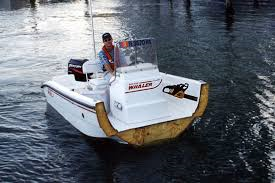
The next boat is only half a boat! I know this boat shouldn't count but I have to include it the list. The Boston Whaler cut in front of console. Whaler has cut many of these boats around the world for boat shows and promotion and a few years back I got my hands on one in Sarasota Bay. I cant tell you how I managed to get it out for a ride, but I can tell you that there were four of us on the boat and we were on plane up and down the 20 mile stretch of water and we did not slow down even for on coming wake off other boats. We had to know if this was an honest campaign is it really, Unsinkable, Unstopable. The four of us took turns driving and we did not even get our feet wet. Now before I build Whaler into gods gift to the boat market they to had some duds and flawed models over the years as well no builder is that good.

Boston Whaler has had a reputation as being one of the safest boats on the market and I can say beyond a doubt that half a Whaler is just as much fun as a complete Whaler. it is a little spooky when you are standing at the center console on plane and about to go over some waves and there is nothing forward of you!


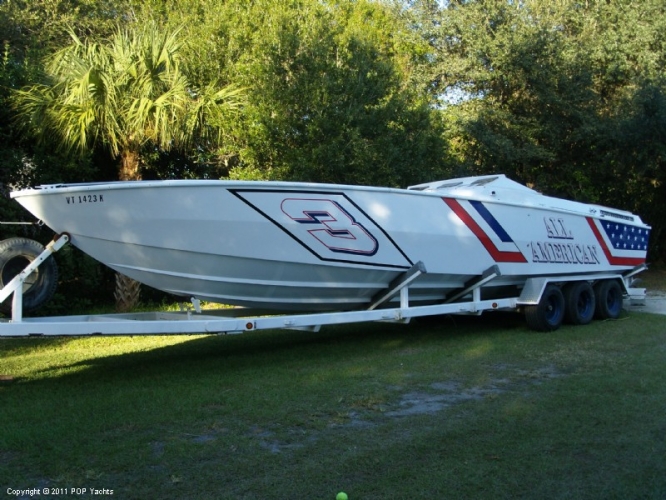
The next boat is an oldie but a goody.  The 1983 Cigerette Flat Deck Offshore. The reason I mention this boat is when I was first introduced I was really unsure what to expect from it. First I had to make the boat run like it was supposed to, it had seen many hack mechanics and was ruff under the hood... The picture above is the very boat that I ran in Florida several years ago with Rod Presley, Rod was a former APBA Champion. Rod had explained to me how much of an animal these older offer shore boats are at the dock ( it took two people to drive this boat off the trailer and to the dock, from the dock to the channel) and how they come alive out in the open water, and man was he right. This old boat broke 90 miles an hour and felt like a rock, fast for an old 1983 but what a ride we ran in a 3 foot chop and the boat didn't move at all. You have no idea of the speed until you are over taking a boat and that's when it hits you realization of your speed.
This is not a day cruiser or a pleasure boat, it does have a cabin but that's not what this boat is about. If you have never experienced this type of boat, you got to try one (I am not saying buy one, that's nuts). I would not own one they are stupid expensive to run and have no real purpose but to go fast from point A to B as fast as you can handle the boat. So for many reasons it could make both my lists but I think that this boat is one of the most memorable safe high speed I have ever had.


The last boat on this list is a fun runabout that was an eye opener. A 1994 Thunder craft Diablo 21 foot. I launched this boat brand new in Indian Arm and five of us took it for a ride up to Vancouver Harbor. We where five adult guys and in most runabouts this is a decent load (at least 800 lbs) As we took off we all noticed that this hull was awesome it jumped right on plane carved incredibly well and was fast. I would say that this little boat could push into the high 40 mph range. After a few miles had passed by we realized that no one new for sure what this boat had for power. I was taken back when we opened the dog house and found a V6, we were just as impressed with the fact that this boat was so easy on fuel. This was one of the best hull and motor combinations that I have ever seen in a 21 foot runabout. Even today I have not been on a boat like this that performs the way this boat did.
The icing on this cake was, the boat was a Canadian built boat which is still something to say after all these years. We can build awesome boats here in Canada! Campion has some great boats, we really need to support more boat building and Canadian boat parts suppliers and manufacturers.

If you have any good or bad stories share them new boat buyers should hear and see all they can about every make and model out there!

To guarantee access to all of  Boat Nut Magazine articles, pictures and featured services visit the official Boat Nut Magazine ©™ website. Be sure to reply to the Boat Nut Association registration on our site for the latest Boat Nut weekly and monthly news letters and opportunities.


Copyright 2015 © Boat Nut Media, Toronto, Ontario. All rights reserved. No part of this information/publications may be stored in a retrieval system, transmitted, or reproduced in any way, including but not limited to photocopy, magnetic, or other record, without prior agreement and written permission of the publisher, Boat Nuts Media ©™ No liability is assumed with respect to the information provided. 


Wednesday, 1 April 2015

Knowing PWC's


http://boatnutmagazine.com/

PWC  do you know the rules, regulations and safety requirements?


What is a PWC? Surprisingly enough we hear this question asked ALL the time. A PWC is a personal watercraft, also known as a jet ski, or in some parts of the world a water scooter. Do not get confused Sea doo's, Waver runners, and Jet Ski's are all personal watercraft the only difference is who the brand name is trade marked too. With Sea doo a lot of people get confused as Sea Doo also builds and markets jet boats. Sea doo PWC's are not a 'BOAT per say they are very similar to every other brand on the market. All PWC's are stand or sit 13 foot or less vessels, running on an inboard engine which propels a jet pump. Do not let yourself be confused or swayed into believing a boat and a PWC are one in the same and if one can drive a boat one can properly run a PWC or vice versa.

Different Brands of PWC:

↪Jet Skis trademarked by Kawasaki
↪Sea Doo trademarked by Sea Doo
↪WaveRunner trademarked by Yamaha


PWC's do have a lot of benefits for new or experienced boaters. They are affordable, easy to transport, fairly easy to maintain (if you know how to do this properly), they are great for water sport, socializing, and cruising the waterways. Although despite how popular and fun these vessels can be the lack of safety preparation and knowledge of laws and regulations to operate one are still highly ignored or unknown. Of course in a lot of cases the legal guidelines vary from state to state or country to country, however safety equipment requirements remain the same. So we recommend if you have or are looking into buying a PWC you take the time and look up your areas requirements for operation. The guidelines set forth by your government or Coast Guard NEED to be legally and respectfully followed.


Canadian requirements for PWC operators
• Must be over 16 years of age to operate PWC, no exceptions.
• Hold a valid approved PCOC, and have on your persons when operating vessel.
• Have at least the Minimum CCG approved safety equipment on board.
• Have valid registration/insurance.

However these regulations and age requirements do not apply in the Northwest Territories or Nunavut. Which personally I think is absurd.

CCG minimum required safety equipment
• CG approved PFD for all persons operating or on board. Fit to size and weight.
• 1 buoyant heaving line NO less then 15m.
• CG approved flares or waterproof flashlight.
• A proper, approved and functioning sound signaling device.

Boat Nut Media would advise for all boaters and PWC operators, especially when going out alone, inexperienced, or on unfamiliar waterways to always invest and keep an AIS device with you. Most AIS devices (Automatic Identification System) are equipped with both flashing strobe lights for higher visibility, and GPS for a more accurate location. When activated your AIS will transmit to all AIS equipped vessels in the area, this can certainly increase your chances of receiving quick accurate assistance.


With over a million PWC's registered in both Canada, and the United states its safe to say there is a strong market for these vessels, but as with any popular market comes many risks. The statistic's of marine related accident's as whole is quite disturbing, but when you think about half of marine related incidents happen on PWC's and there are triple the amount of registered Boats on the water, this should be a clear sign safety is not taken as seriously as it should be. Just taking a look at the USDOT statistics shows us that over 3,200 PWC accidents a year are reported, with over 1,500 of those accidents resulting in injured persons, and almost 70 of those ending in fatalities. The USCG also reports that per 4,000 accidents close to 2,500 of these are due to collisions with other vessels. The sad part is with more boaters and PWC operators being more observant and taking less risk's this number could drastically come down instead of increasing. So why do so many PWC accidents occur? How can these accident's be avoided? Well first obviously like every other motorized piece of equipment, accident's happen, things fail, things can be hit, on a jet engine sucked up, and people will still always take risks no matter how illegal or insane it may be.


Common reason's why accident's occur on PWC's and ways to help prevent them:
↪Low visibility and high speeds. PWC are much smaller then a lot vessels on the water which makes them hard to be seen by other boaters. When you combine this with no direct routes, and high speeds both with boats and PWC's accidents happen quite often. Being aware that PWC's and other boats on the water can change direction at any moment and it is extremely hard to judge where and how fast the boats around you are going paying close attention to marine traffic on the water is highly, highly advised. It is important to remember your PWC does not have navigation lights or an anchor light so in low light or bed weather you will be the last vessel to be seen on the water. If the lake has the right conditions and you are riding a white PWC you can blend in with the white caps, and at higher speeds this is a serious issue!
Be observant! Especially on PWC, operators are usually out for the thrill and the fun of it. Somewhere in between keeping up with your buddies, or looking for the next good wake a lot of times you fail to keep your surroundings in mind. Always be aware of your environment, what's around and below you,  what area are you in, is there a lot of traffic, how close to shore are you, all of these are important to know at any given time.
Dangerous maneuvering is never advised and should always be avoided. What would be considered dangerous maneuvering? Sharp, or high speed turns, taking unnecessary risks, or weaving in between marine traffic. Speeding through no wake zones, by moored or anchored vessels, buoys, during dangerous sea conditions, or around high risk environments (i.e. low depths, rocks, lines in water, ext.). Jumping or following a boaters wake, this always seems like a fun idea at the time! It is never advised to follow in the path of a boater, jump, steer, or run up on a boaters wake. There are multiple reason's for this you can hit the wake to hard or at the wrong angle which can end in sever injuries, or accidents. Also the boater may not be paying attention and see you following them and if the make a sharp turn, or slow down and your not paying attention or are to close you can literally run your PWC right into the back or side of the boat. PWC's are agile, maneuverable, and quick, doing twists and turns, pulling 180-degree turns, and jumping large wakes can be a lot of fun! However also makes it impossible for another boater to judge what the jet skier will do next. All boaters should also keep in mind, knowing how to swim and having a PFD on does not mean hitting the water will be safe. At high speeds or wrong angels, hitting the water can feel and be very much like hitting concrete.
Allowing inexperienced boaters or children to go out by themselves on PWC's. If you are going to allow inexperienced boaters, or younger individual(s) to take out your PWC remember your vessel should have come with two keys, one for full horsepower, and another for learning and lower horsepower. Never give the full key to a child or someone inexperienced. PWC can not be steered with out throttle which causes a lot of people to quickly increase speed especially at start shot and this can be very dangerous. Also always go over safety procedures, equipment, and how the vessel will respond and preform. It is always a risk to let people use your PWC but by informing them a much as possible is always best. NEVER let someone take out a PWC under the age of 16 or legal requirements, who can't swim, or who does not have a proper fitting PFD!

Boat Nut Media will be launching an 'Introduction to boating, PWC operating and safety course'. Our course will be covering everything from laws and regulations, safety requirements and equipment. We will also be to teach you basic maintenance, the pro's and con's to mooring or docking your vessel overnight, and the differences and benefits to the different keys you will receive with your PWC.

Introduction to Personal Water Craft/ PWC Program 2015:

Personal Water craft are versatile, fun and exhilarating craft, Boat Nut proficiency course prepares you for riding safely and responsibly and is designed for first time and experienced riders alike.

Objective: To be self sufficient in good conditions and aware of the limitations of yourself and PWC.

Ashore Knowledge: Safety, Seaman Ship, Weather, Navigation, Complementary Water Sports Guidelines. This part of the program contains 44 separate topics that are related to the above list.

Afloat Skills: Preliminaries, Maneuvering, Under Power, Making Fast and Snugging Down. This part of the program contains 16 separate topics related to the above list.


This program when completed can be used as a prerequisite for the International Certificate of Competency which is commonly required when operating your own or renting a personal water craft abroad. Boat Nut considers this program the most comprehensive in Canada.


To guarantee access to all of  Boat Nut Magazine articles, pictures and featured services visit the official Boat Nut Magazine ©™ website. Be sure to reply to the Boat Nut Association registration on our site for the latest Boat Nut weekly and monthly news letters and opportunities.


Copyright 2015 © Boat Nut Media, Toronto, Ontario. All rights reserved. No part of this information/publications may be stored in a retrieval system, transmitted, or reproduced in any way, including but not limited to photocopy, magnetic, or other record, without prior agreement and written permission of the publisher, Boat Nuts Media ©™ No liability is assumed with respect to the information provided.


Tuesday, 24 February 2015

WHAT TO CONSIDER WHEN BUYING A USED BOAT


 http://boatnutmagazine.com/

WHAT TO CONSIDER WHEN BUYING A USED BOAT 

Easy Tips To Follow


How do I buy the right used boat for my use? Do you know were I can get a deal?, These are the most common questions anyone in the marine service industry gets asked. I have read many advise articles on this topic over the years, most of them are written by persons who are in boat sales or prepared by a boat manufacturer. This is not the case with what you are about to read.

I have had 30 plus years to think of how I would answer these questions. There is a whole host of considerations that need to be addressed before you even think about the boat itself. The first consideration is the plan you have to use and store the boat. Are you going to keep the boat in one location such as, your cottage, a marina, your driveway, or in a storage facility some were. This may seem like an odd first question but it is important. Each one of these answers has specific limitations or costs associated with it. You need to consider the cost of ownership over and above the purchase price of the boat you love. It seems a lot of new boat owners have very limited knowledge of the annual cost of ownership and the complications that boat ownership can create.

If you are considering a trailer boat so you can take the boat with you from one location to another for sport fishing, water skiing, or you may just enjoy seeing and experiencing different bodies of water across the province. Then if this is your choice here are some considerations you need to give to your boat purchase. First do you have an appropriate tow vehicle for the size of boat you want to buy or do you need to keep the boat inside the towing limitations of your current tow vehicle. Are you allowed to store your vessel at home in your driveway or do you need to rent a location to store the boat. This may restrict the size of boat you are able to buy. Remember the distances you plan to tow your boat will dictate the type of trailer you will need to have under the boat and the trailer can add several feet to the length of area you will need to have available for storage.

If you are purchasing a boat to have at your cottage or home on the water, this presents other concerns you need to plan for. What is the depth of the water you have available at your dock, and how long is your dock. Will you be prepared to spend the money to change your dock if necessary. Are there any restrictions on horse power or noise. Do you have facilities were you can go for waste pump outs and gas. What is the nature of the body of water you are using, can it get nasty in bad weather, does the lake have a rocky bottom, is it well marked or hard to navigate, is it common for  boats to hit the bottom or hit hidden debris, where can you launch the boat. You may only have access to a shallow ramp or a beach front.  

If you have selected a marina or yacht club you want to belong to, you must find out what slips are available. Do not buy a boat and assume that your choice of marina will be able to facilitate your boat some marinas have waiting lists for slips. Look at the slip set up and make sure that the boat you purchase will fit. If the boat is wide in beam or to long you will be afraid to take the boat out of the slip, you need to have a comfortable slip to get in and out of. Be sure they have the required facilities your boat will require need such as dockside water and appropriate shore power plug (You may require more than 1 30 amp plug). Know the costs of mooring your boat ,some marinas will charge by length over all and others will charge by the length of the slip do not calculate the cost by the length that the manufacturer places on the boat (an example of this is a 2855 Bayliner is 33 feet length over all). Make sure you can accommodate your extra boating requirements such as storage, BBQ or other on the water toys that you may add to your fleet, such as a tender or a jet ski.

All of the above considerations will cost you money over and above the boat, these costs can pile up and this does not include insurance. If you are not prepared you may have your boat for sale after the first season. I have seen these costs drive out a new boater.

Now lets talk the boat! The biggest consideration for your boat is the budget. Have you ever driven or spent much time on a variety of boats and why are you buying a boat?  How large will your immediate crew be? do you have pets? any crew members with physical restrictions? Is the boat for a weekend cottage or do you plan to get out on the water? Are you a family or person who enjoys camping or will you be a day boater only? It is popular to have a boat for corporate use were you will be entertaining guests? Do you have friends with boats and are you planning to spend a lot of time at and on the boat? Does this boat purchase have to satisfy many personalities and expectations you must be realistic and able to satisfy all the persons who will be spending time on the boat other wise you will be boating alone or selling the boat. Boating is a great way to spend time with friends and family however this only works when you have found the right boat.

These are a lot of questions the more time you spend answering these questions the happier you will be with your choice.

Once you have selected the size of boat and the style (Cruiser, Fishing Boat etc.) of boat you will be shopping for we can then put together a list of things to look for to determine if the boat has been well maintained. We will divide the assessment of the boat into three areas the boat itself which is the structure, the systems which are all the accessories and items added to the boat and motors the propulsion system that gets you through the water. It really doesn't matter the size of the boat when it comes to the structure the same rule of thumb applies. There is the hull, the deck and the internal structure of the boat (stringers and the bulkheads). The hull of the boat is reasonably straight forward.  Always inspect the boat out of the water. Never assume that because the top side of the boat is fantastic that the same goes for the bottom. If you are buying a boat that will be living on the trailer  all the time you are not using it then there are some boats you can immediately knock off the list. The first boat off the list is any boat with bottom paint, this bottom paint will become an unnecessary hassle for you as it will dry up and flake of leaving the boat looking nasty. You will then have to repaint for no reason a waste of money. The next boat to be weary of are boats with painted hulls, the paint can hide a world of damage also paint is not designed to live most of its life underwater.I would not buy a painted hull boat., they are more expensive to fix All boats will get some degree of dock damage. However there are exceptions to every rule, some boats only come factory painted.  These are boats such as a Donzi, Chris Craft and large yachts you can rest assured these are fine, you just need to remember the cost of repair if this is your first boat. Other places to look for use and abuse is along the keel of the boat, and at the transom corners, over and above the normal wear and tear of docks and fenders the keel and the two back corners take the most abuse. What you are looking for is gel coat damage or damage that has been patched up (if the back corners are damaged this could be a sign of a hard boat to handle in reverse). Gel coat repair is generally not hard to spot you look for either areas that don't match in color, are too shiny(a sign of a paint repair) or to dull (indicates old repair area). Some of the other signs of damage are patched up hull graphics or no hull graphics at all.  If all of the factory graphics and logos are gone the boat has probably had repaired damage, these graphics are expensive to purchase and apply and are not always available.

The deck of  a boat can have all of the same issues finish issues as the hull. When it comes to the deck there are obviously a lot more items that will have to be checked over. You will need to check over all the hatches on the deck that are part of the original deck (motor, storage, anchor locker).Open them all up and check the inside for cracks inside of the lids. older hatches could have long cracks across them and newer style hatches that are mold finished inside will develop cracks around the inside edges. These cracks are a sign that the core is wet. Verify the hatches fit correctly and that the latches close when the hatches are closed. Next inspect around the rails and mounted hardware for sealant that has been added after the boat was assembled. This includes around the windshield area. Any build up of sealant is a sure sign that there are leaks in this area which have likely been getting inside the boat. Look over the sides of the deck above the deck and hull joint for cracks in the gel coat. The areas under the cleats are were stress will show up the most, this is a sign that the boat has been in some really bad weather and the cleats have been stressed. If the boat has an arch or a hard top, get up and take a look on top. If this area if it is clean and waxed it is a sign the boat has had genuine care, this area will also show if the boat has had electronics changed or removed usually boaters will just fill these holes on top with silicone. Check the transom door for the fit see if there are any problems with the fit or if the latches have been modified or do not work. Take your time and look over the non skid around the edges you are looking for bad mold areas were the nonskid doesn't have nice clean molded edges, these problems can also exist in the center areas of the non skid. This is a sign of air voids and lamination issues when the boat was built. If the non skid on the boat is not the same type or design all over the boat this is a bad sign this boat has had serious work done to the deck. The only acceptable time to see different non skid is when a boater has added a after market swim platform.

If you are looking at a boat that has extra items like swim platforms, radar arch, generators, hardtops added to the boat  buy an owner at some point be very careful. Boats are sensitive to center of gravity and center line load weight shifts. These are just terms to tell you that adding weight to the vessel after construction can change the performance. If you are looking at a boat that has seen extra accessories like the above list added be sure you run a boat that is an unmodified version to compare too. When you start to mess with center of gravity and load distribution you can destroy the way a boat runs you may need a ladder at the dash to see over the bow when you try to get on plain, no joke... if the boat will not get on plane without full trim tabs maximum trim and all kinds of other tricks then do not buy it.

When you assessing the motors and the mechanical's the first thing you need to check are the hours. In a car we go by mileage when we are calculating a value, in the boat industry we look at hours. A standard rule is 40 hours per year, less is fine with the correct maintenance but way less is not great. Once you start to put time on the boat it will start to cost you money, parts will break down.  Don't be afraid if there are more hours its not a bad thing it tells you the boat has been used. This means that everything likely works as you are buying from a seasoned boater. The truth is you need a mechanics opinion, you can take oil samples, hook up diagnostic computers, read spark plugs, compression checks and much more. Get an independent opinion, when you do this have the seller provide any records of maintenance. Do yourself a favor even if you love the boat, listen to your mechanic. The mechanic may break your heart. The cost associated to this service is peanuts compare to a bad motor or drive. Do not buy a boat that has a drive or engine package that were removed from the market, an example of this is Yamaha inboard outboard configuration , OMC king cobra drive, or any composite drives. You can write a book on this subject here is my suggestion find a good mechanic who will give you the straight truth good or bad have him/her be detailed do not stop at the motors and drives. Have the generator , batteries and other systems checked. I recommend a mechanical survey. Ask for the manuals that came with the boat these manuals contain serial numbers for the motors and drives. If the drives do not match just be sure that the replacements are an exact match for the factory drives this includes rotation and gear ratio. If the motor or motors have been changed unless they are brand new walk away, rebuilt marine engines have a horrible reputation for not lasting long.

The last items that can really hurt the pocket book are the canvas and upholstery. The canvas is just as it seems if it is old and crappy looking and will need to be replaced, even in a year or so get an estimate for money and time. Canvas on a large boat of 30 feet or more can easily exceed $8000.00 dollars. Upholstery can be of a similar cost be careful. There  are lots of boats for sale don't be a speed buyer.

No matter what boat you wish to buy get a mechanical survey and a condition survey, this should reduce the chances of getting a bad deal. Always make your deal based on a sea trial, if this is your first boat bring an experienced boater with you and take the boat from the slip out and back yourself if you can. DO NOT buy a boat you are afraid of and do not pick the perfect day some wind some waves. I cannot stress enough the need to understand your boat and how it works, Do not buy a highly modified boat. Buy a good clean original boat for your first boat. Your first boat will be a learning curve it usually takes owning more than one boat before a boater settles into long term ownership. I cannot advise anyone on a brand or style that's a personal choice buy what works for you. I can suggest that if it is a boat you have not seen a lot of call the manufacturer and see how many were built , go online and check with boat owners clubs or groups this is were you will get the truth about the boat your thinking of buying. This may seem like a simple list but these are the things that are the easiest and fastest to find. Any red flags walk away, always get a professional opinion, do not rely on your friend who owns a boat.



To guarantee access to all of  Boat Nut Magazine articles, pictures and featured services visit the official Boat Nut Magazine ©™ website. Be sure to reply to the Boat Nut Association registration on our site for the latest Boat Nut weekly and monthly news letters and opportunities.


Copyright 2015 © Boat Nut Media, Toronto, Ontario. All rights reserved. No part of this information/publications may be stored in a retrieval system, transmitted, or reproduced in any way, including but not limited to photocopy, magnetic, or other record, without prior agreement and written permission of the publisher, Boat Nuts Media ©™ No liability is assumed with respect to the information provided.