Showing posts with label PWC. Show all posts

Saturday, 16 July 2016

CONTAMINATED FUEL/ WATER IN FUEL


http://boatnutmagazine.com/

      CONTAMINATED FUEL/ WATER IN GAS PART 1 


        Contaminated fuel is like a dog with a bone it will not give let go!


 It will give you more motor running problems then you can imagine! Quite often when you think that you have beat the issue, the contamination is all gone, then mechanical failures show up. Contaminated fuel will come back to get your motor again and again. So how does the fuel get contaminated with water and other debris, and what are the effects to your boat motor?

First off lets discuss how this contamination can happen:  Gas caps and the fuel vents are the first common sense place to look for a point of  water entry into your gas tank. When you look at power boats there are generally two different types of fuel caps.


The first type of fuel cap is the self venting cap. This is a filler cap that includes a built in vent. The vent allows the tank to expand and contract with temperature variations. The vent also allows the tank to expel air during the filling process and allow air to enter the tank while the fuel is being consumed.


*This type of cap quite often has a large inside rubber gasket that seals off the filler pipe when closed while leaving the vent to be able to breath air for expansion and contraction and varying fuel levels. In many cases were the fuel in the tank has become contaminated the gasket which seals the filler pipe is damaged or missing. Meaning that in the rain or while washing your power boat the water can pass the cap and enter the filler pipe, down the filler hose to the fuel tank.
Image result for marine gas caps


*The second type of fuel cap is the screw type fuel filler cap: These caps generally require a deck key to open them. The cap threads into the filler pipe. There are two major issues with this type of cap one there is a rubber o ring that creates a seal under the cap lid which maybe missing or damaged. The filler cap maybe deck mounted in such a fashion that rain water or wash down water may pool on top off the cap.Giving the water lots of time to work past the cap and enter the tank.
Image result for marine gas cap


*The fuel vent: The fuel vent is mounted on the hull side and is used in conjunction with a non vented fuel filler cap. The vent could be turned so that the air opening is facing in a direction were when either running the boat, while raining or washing the water may enter the vent and thus get into the tank through the fuel tank vent line.
Image result for marine gas caps


                   The other factors that may allow water to enter the fuel tank are:

Environment VS Volume of fuel in tank;  This means that if the volume of fuel is never topped up and or the boat lives in an area were the temperature can make large swings the fuel tank can sweat thus water will build up over time. (This also occurs when the boat has been stored for lengths of time without use).
Please keep in mind that current fuels that contain methanol will absorb water, compounding the problem.

You may have purchased contaminated fuel at the fuel provider. What can also happen at a full serve gas dock is that the attendant mixes up which cap is which and water is accidentally added to the fuel or visa versa were fuel ends up in the water. Any Power Boater who has been around awhile has seen this happen.


Off course there is always the possibility that the contamination is from the tank fitting themselves there are bad signs that go along with this issue, the primary sign is that there is an issue with tank fittings failing is the smell of fuel in the bilge or near the tank.


NEVER START OR RUN A POWER BOAT IF THERE IS THE ODOR OF FUEL IN THE BILGE ALWAYS HAVE THE VESSEL CHECKED BY A PROFESSIONAL TO LOCATE THE PROBLEM!


Image result for water in gas


  How do I know if the tank is contaminated:


1- The way the engine runs (or doesn't run) will be the first sign of issues it will loose power, and start to run rough. The motor will hesitate and sound like it is miss firing and likely stall. Another sign is hard starting with  a hard time idling, stalling through the shift and popping while running. The motor will also create white smoke out the exhaust. Do not get me wrong there are other issues that can cause these same issues,                          
You have more checking to do to confirm contaminated fuel.


2- If you have a fuel filter in line between the tank and the motor, This filter is a canister and should look like an oil filter. This filter traps water that is leaving the tank on its way to the motor and should be changed in a regular maintenance schedule. To check the condition of the fuel in the filter remove the filter and pour the contents into a clear glass container and allow the fuel to settle for several minutes if the filter is trapping contamination you will see the water sink to the bottom of the glass container (it will look like clear jelly at the bottom). This dump the fuel out of the filter test it is not always accurate as some filters trap water and the only way to know if the filter is contaminated is to change it. 

. Image result for marine fuel filter water separator


3- Remove the fuel line at the filter or fuel pump and draw some fuel from the tank direct and let the fuel settle. Check the bottom of the clear glass container  you are using to inspect fuel samples for water. ( BE SURE THAT YOU DUMP THE FUEL FROM YOUR GLASS CONTAINER AND CLEAN AND DRY BEFORE POURING A NEW SAMPLE TO VIEW) The amount of contamination you find is important to how you remove the water from the tank.


4-No in line fuel filter to dump and inspecting the fuel from the tank is to risky. There is another way to check for water. Take off the flame arrester on the top off the carburetor or throttle body on the top of the motor.(While the motor is not running) Spray some WD40 around the top edges of the carburetor or throttle body. Not a lot just a thin coat and start the motor the spray from the injectors or the mist from the carburetor will contain water and white spots will show up in the WD40. The water will also build up and run down barrel openings of the body.


5- Remove the spark plugs and check the color of the end were the spark takes place. You can read the way a motor is burning fuel by the color on the plugs.
Image result for spark plug burn


6- If you have experience with fuel you can dip your fingers in the fuel at the carburetor or under the injector spray and see the water it will form little bubbles in the fuel.


   So I have contaminated fuel what can happen to my motor if I continue to operate my boat?


Several issues can and do occur if you run the boat on contaminated fuel:


The first of which is the ignition system will start to fail. Due to the fact that you are trying to ignite fuel that is not wanting to burn properly. The coil wire can burn off, the coil can fail. The cap, rotor, wires and plugs will live a much shorter life. If the ignition side of your boat suddenly fails one of the reasons could be contaminated gas.


The next thing on a carburetor motor is the carburetor itself will act up. The water that does get through the system can corrode the inside parts of the carburetor. This causes flooding and stalling. You may have to rebuild or at the very least service the carburetor. The carburetor can give you issues hours after or years after running on contaminated fuel as the damage on the inside can get worse when the boat is stored or sees a reduction in running hours.


Image result for carburetor marine


Image result for marine efi throttle body


A newer boat with throttle body injection can suffer far more problems. This is a brief list:
Fuel Pump
Injectors
Fuel filter in cooler
Sender failure
Over fuel dumping at injectors
Computer codes
And if you have a hard start even gas in motor oil


Water in Fuel will also eat up spark plugs


The bottom line is contaminated fuel could be and quite often is the culprit of a bad running motor quite often over looked and dismissed as needing a tune up that leads to more and more service. Contaminated fuel can be a costly situation to have to deal with if you only tackle one failure at a time, as they show up. If you have water in the fuel be prepared to go all the way other wise you could have the I AM BACK AT THE DOCK BLUES over and over until the whole system is serviced


To guarantee access to all of  Boat Nut Magazine articles, pictures and featured services visit the official Boat Nut Magazine ©™ website. Be sure to reply to the Boat Nut Association registration on our site for the latest Boat Nut weekly and monthly news letters and opportunities.


Copyright 2015 © Boat Nut Media, Toronto, Ontario. All rights reserved. No part of this information/publications may be stored in a retrieval system, transmitted, or reproduced in any way, including but not limited to photocopy, magnetic, or other record, without prior agreement and written permission of the publisher, Boat Nuts Media ©™ No liability is assumed with respect to the information provided
Connect with the Magazine web site 


Part 2 will discuss how to get ride of the gremlins contaminated fuel will produce.


Friday, 19 February 2016

PWC BAD RAP http://boatnutmagazine.com/pwc


Image result for changes
 
 I have been saying for quite a while now that changes are coming to the PWC riders world. PWC is the hot button topic on most countries power boat legislative agenda. There are organizations and groups that are plugging the channels to organizations like Transport Canada with statistics on how dangerous a PWC is. These statistics combined with some really bad rider behavior have swung a spot light onto the PWC world, in a way that there is likely no other outcome than a shift in the rules and in the build category that PWC riders and builders now enjoy. The fact is that the PWC market has exploded and if for no other reason than sheer numbers of vessels, it will bring the greedy tax grabbers looking for a way to cash in.  We in the industry always do, and still fall back on the old adage that boating is a small market.( There are more than 60,000 PWC in Ontario alone according to a Sea Doo rep at the Toronto Boat Show 2016) Boats and boaters have escaped many changes due to this illusion that the Industry has created. Power Boating of any kind is no longer a cottage industry, the numbers of boaters and people who enjoy getting out on the water is continuing to grow around the world.

There is a small group of boater organizations who have the ear of the government and law makers and they receive a great deal of money to represent you and I. Protecting our interests and looking out for the boater. The fact is that they are heavily influenced by Industry and have a track record of  presenting and protecting their interests. If PWC owners and operators do not get proactive and show initiative demonstrating that they recognize the fact that PWC operation is a safety a concern and adopt a program that will fit the needs of the average rider they will have one legislated for them. This was done to motorcycles and snow mobiles in the past.

The effects will be water way restrictions, more speed limits, higher safety regulations, sky rocketing insurance premiums and the list goes on. All boaters not just the PWC riders need to understand that as power boating grows so to do the eyes that watch us, this even includes drones. Yes that's right drones to patrol areas of high boating traffic or areas that are problem spots.

I have sat by over the last 30 years and watched the lack of boater involvement in our environment and in our past time. I do not want a pile of regulation and licenses to add to my boating experience. I want to get out in front and demonstrate to the powers that be we can have an effect on our own with out more silly taxes like the boaters card. I know that the Boaters Card program made my day on the water a whole lot safer!

I propose a change in the status quo, create a not for profit PWC Operators program, a useful sensible course that gets results. A course that PWC owners will be able to use to obtain insurance discounts. Take the profits and role them back into attract more persons to get out on the water.
Image result for opp boat safety

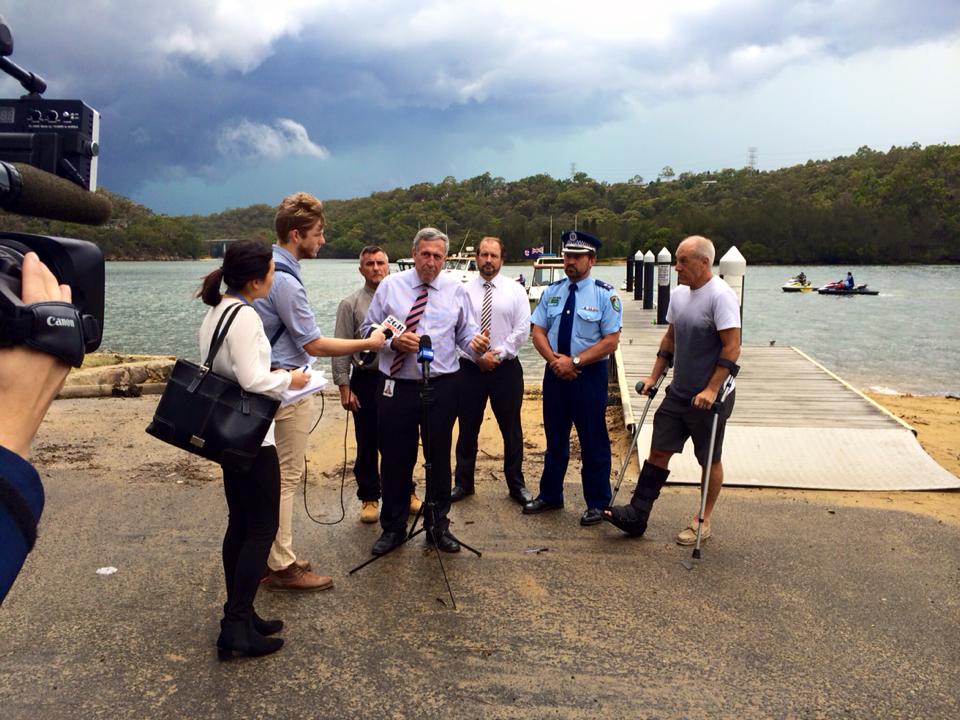
Lets do this before there are more of these meetings at the shore of were you ride!

maritime_crackdown
Director Maritime Angus Mitchell joins Minister for Roads, Maritime and Freight Duncan Gay and NSW Police Marine Area Commander Detective Superintendent Mark Hutchings to announce a crackdown on dangerous and anti-social riding of jetskis in and around the Georges River.
Media Release: Minister for Roads, Maritime and Freight Duncan Gay, Member for East Hills Glenn Brookes and NSW Police Marine Area Commander Detective Superintendent Mark Hutchings today announced a NSW Government crackdown on dangerous and anti-social riding of jet-skis in and around the Georges River, Botany Bay and Port Hacking.
New measures include increased high visibility and covert patrols, additional speed restrictions and jet-ski exclusion zones, stronger laws to enable immediate suspension of boat licences for reckless, dangerous and negligent behaviour and seizure and impoundment of jet-skis.
Minister Gay said local and boating community members had raised serious concerns about hoons who pose a huge safety risk to all river users.
“All jet-ski users flouting the law are on notice. We’re putting a stop to this behaviour,” Minister Gay said.
“Speed limits, irregular riding and safe distance rules are in place for a reason – breaking the law is just downright irresponsible and there are serious consequences.
“Everyone needs to share our waterways – there is no place for intimidating behaviour.
“Quite frankly, we shouldn’t have to stand up and tell jet-skiers to slow down, keep a safe distance and obey the law – it’s about time more courtesy and respect was shown for other boaters and water users.”
Detective Superintendent Mark Hutchings said it was known that dangerous hoon-like behaviour stopped when enforcement is in place, which is why we’re stepping it up a notch.
“Police officers will be tasked daily to patrol the Georges River and other areas where jet-skiers are causing trouble,” Det Supt Hutchings said.
“We are specifically targeting a rogue element of individuals who conduct illegal activities on the water. ”
“Police have already pressed charges against a man who allegedly drove his jet-ski negligently on the Georges River at Picnic Point, knocking a kayaker into the water and causing that man serious and painful injuries. ”
“We won’t hesitate to arrest and charge others who insist on breaking the law on the water,” he said.
Director of Maritime Angus Mitchell from Roads and Maritime Services said a raft of measures was also being considered to deter illegal activity and catch offenders, including the use of GPS and drone technology as well as increasing the number of CCTV cameras in and around problem areas.
“From 1 January, Roads and Maritime will extend the eight knot speed limit zone on the Georges River by two kilometres,” Mr Mitchell said.
“We’ve also set up a dedicated complaints hotline on 13 12 36 for the community to report incidents of dangerous or anti-social behaviour and compliance issues.”
The eight knot extension will apply from the downstream end of the existing four knot Picnic Point area about 1.5km, to near the entrance to Mill Creek. It will also extend the existing eight knot area upstream of the Picnic Point speed area about 500 metres to the entrance of Deadmans Creek, to include the Sandy Point boat ramp.
Mr Brookes said jet-ski exclusion zones would also be properly considered in parts of the Georges River (around Revesby), Port Hacking (Bonnie Vale) and Botany Bay over the next six months, in consultation with the local communities, water users and Police.
“These measures are a great win for the local community members who have been calling for tougher enforcement, so locals can use the waterways without feeling intimidated.
“Stronger laws to enable immediate suspension of boat licences for reckless, dangerous and negligent behaviour have already been proposed and new powers to enable seizure and impoundment of jet-skis will be progressed as part of marine safety legislation reforms in 2016.”
From OZPWC
 Image result for crashed sea doo

Boat Nut designed this program in 2015 and had it vetted by Yamaha, so here it is;


Application for this program click this link
Introduction to Personal Water Craft/ PWC - Personal Water Craft are versatile, fun and exhilarating craft, Boat Nut Media proficiency course prepares you for riding safely and responsibly and is designed for first time and experienced riders alike.
 
                                                          
OBJECTIVE: To be Self Sufficient in good conditions and aware of the limitations of yourself and your   PWC
Prerequisites: Valid Boat Operators Card
ASHORE KNOWLEGE:
Section 1:  Identify what is considered a PWC
1-      The candidate must be able to:
A-     Describe the primary difference between a power boat and a PWC
B-      Identify the difference between conventional propeller driven propulsion and jet propulsion
Section 2: Parts of the PWC and Terminology
The candidate must be able to:
1-      Identify and describe the following parts of a PWC
Bow                         Stern                                 Beam
Hull                          Keel                                   Freeboard
Bow Line                 Spring line                        Deck
Cleats                     Tow Eye                             Rub Rail
Foot Well                Locker                               Reverse door
Jet Intake              Jet Exhaust                         Steering Nozzle
Engine well            Tether                                Drain Plug
2-      Define the following terms
Aft                            Port                                   Starboard
Making Way           Ahead                               Draft
A stern                   Under Way                       Wash
Wake                       Leeway                             Forward
Section 3: The Engine and Propulsion Unit
The candidate must be able to:
3-      Identify the following parts used in the operation of a PWC
A-Common Engine Parts-
Engine cover               Battery                       Gear shift Lever
Throttle                        Brake                          Fuel Line
Fuel Tank                    Exhaust Outlet           Gauges
Air Filter                  Fluid Check Points        Warning Labels
Stuffing Box                 Steering                     Trim Controls
Water Intake Grate           Engine Bed         Engine Flush
4-        Name and describe the use of the following:
A: Fuel System- fuel filler, fuel tank, fuel line, fuel filter
B: Ignition System- start button, spark plugs, ignition wires
A-     Cooling System-water intake, heat exchanger, discharge
B-      Ignition Keys- learners key, full access key
5-      Describe how the jet propulsion works and the body of water levels required for safe operation and motor start up limitations
A-     Be aware of the depth of water the PWC is being operated in
B-      Be aware of the conditions of the body of waters bottom and depth before start up
C-      Be aware of the debris conditions of the body of water you are operating on
6-      Describe how to check and maintain the following:
Battery                     Cooling System Fluid               Engine Fluid Levels
Jet Water Pick Up         Control surfaces
7-      Describe probable causes and trouble shooting for the following situations:
A-     Engine is no start with no power at gauges
B-      Power at the gauges engine will not turn over
C-      Reduction of power and or alarm
D-     Engine difficult to start
E-      Engine stops suddenly
F-      Engine overheats
 

A-     Engine is running but PWC is not moving well
B-      No reverse
C-      No steering
D-     Pick up debris in jet intake
E-      Rope or debris around the jet propeller
F-      Water in fuel
1-      List the required steps to run or flush the engine out of the water
 
Section 4: Safety
The candidate must be able to:
2-      List from memory:
A-     Transport Canada required items for candidates PWC
B-      The rules for care for PFDs and life jackets
C-      The recommended method of testing buoyancy in a PFD
3-      Describe the importance of the Transport Canada information on the capacity plate
4-      Define what hypothermia is including:
A-     The signs and symptoms and the major areas of heat loss to the body
B-      Steps for prevention,
C-      Treatment for mild and severe hypothermia
D-     The actions to be taken by one or more individuals in cold water to increase survival time
5-      Define what cold shock is including:
A-     The signs and symptoms
B-      Steps for prevention
C-      Treatment for
6-      Define what carbon monoxide poisoning is including:
A-     The signs and symptoms
B-      Steps for prevention
C-       The treatment of
7-      Describe:
A-     The common source of fire and/or explosion on a power boat and methods of prevention
B-      The danger involved and the precautions to take when recharging batteries
8-      Describe as stated in the “ Safe Boating Guide”:
A-     Safe on the water refueling procedures
B-      The use of each of the types of flares their proper storage, and the method and safety precautions when using them
9-      The main responsibilities of the driver and passenger(s)
DRIVER
Safety of passengers and PWC
A-     Briefing on location and operation of lifesavings and other safety equipment prior to getting underway
B-      Instruction in the safe use of the PWC equipment while underway
C-      Obligations and observing an accident or vessel in distress
A-     Actions to demonstrate respect for other boaters and others property
              PASSENGER
A-     Obey the driver
1-      Describe:
A-     The reasons for keeping gear and equipment stowed in assigned places on a PWC and the principals for proper stowage of extra gear and equipment
B-      The frequency of maintenance of a PWC and its equipment so that it is capable of functioning at all times
C-      The minimum items recommended for a water proof emergency kit
Section 5: Seamanship
The candidate must be able to:
2-      Describe the use of the following:
Towing Bridle               Ski Tow Line
Boat Hook
3-      Describe the danger of a lee shore
4-      List some precautions that should be taken in preparation for heavy weather
5-      Describe the action to be taken in the following situations:
A-     Capsizing your PWC
B-      Collision with another boat
C-      Running aground
D-     Fouling the jet
E-      Engine failure
F-      Fire
G-     Springing a leak
H-     Steering fails
I-        Passenger falls off the PWC
J-       Beaching the PWC
Section 6: Weather
The candidate must be able to:
6-      List three sources of marine weather forecast
7-      Describe local weather hazards, the warning expected, and the identification of both the warning and the hazard.  Provide suitable action to be taken to reduce or avoid their effects
8-      Interpret the marine weather forecast applicable to the area of operation and apply that information:
A-     Determine whether it is safe to go boating
B-       Decide how forecast changes in the weather may influence the day’s planned activities
C-      Identify the wind speeds associated with:
Light winds                     Moderate winds                 Strong winds
Strong and warning         Gale warning                     Storm warning
Section7: Navigation

The candidate must be able to:
1-      Understand the use of a Canadian Hydrographic chart of the local are as follows:
DESCRIBE
A-     A chart
B-      Aids to navigation
READ
A-     Depth of water
B-      Distance scale
C-      Buoys and their significance
D-     Types of bottom ( sand, rock, mud, clay)
E-      Under water/surface hazards: kelp, cable, rock, shoals, cribs, currents
F-      Light symbols
G-     Beacons
2-      State the principals of operating a PWC around large boats
3-      Be able to orient yourself with where you are on the body of water you are using
Section 8- Boating regulations and rules of the road
The candidates must be able to:
4-      Describe any types of boating accidents which need to be reported and which authority is responsible
5-      Apply Collision Regulations Rules 13 to 21 by means of diagrams
6-      State the name, color and angle of visibility of lights required by:
A-     A vessel under power, under sail, under or giving a tow, and at anchor
B-      An unpowered vessel under 6 meters
7-      List six internationally recognized distress signals as stated in the “ Safe Boating Guide”
8-      Identify and describe the following:
PWC                                                     Pleasure Craft
Sailing vessel                                      Power driven vessel
Compliance/ Capacity Plate            Recommended gross load capacity
Recommended safe limit of engine power
9-      Demonstrate Knowledge of regulations applying to boaters
A-     Describe the process and guidelines for licensing a vessel and how a license number must be marked on a PWC
B-      Identify the principal acts/legislation that a PWC operator should be knowledgeable about, and the areas covered by each including
Small Vessel Regulations                                    The Criminal Code of Canada
 Collision Regulations                   Competency of Operators of Pleasure Craft Regulations
10-   Identify:
A-     Four considerations in determining the safe speed to operate a PWC
B-      The actions and precautions to be taken in reduced visibility
C-      Your responsibilities when operating in a commercial traffic lane
D-     The proper courtesies of operating in restricted passages and in harbors
Section 9: Complementary Water Sport Guidelines
The candidate must be able to:
1-      Describe the best techniques for the following:
A-     Driving while towing a water skier
B-      Returning a towline to a fallen skier
C-      Picking up a fallen skier
D-     Observing a skier
E-      Water and dock starts
2-      Describe the following water ski hand signals:
A-     Speed up or down
B-      Speed ok
C-      Head back
D-     Turn
E-      Stop
F-      I’m ok after a fall
3-      Identify the diving flags and appropriate PWC operation when in sight of such flags
Section 10- Trailering a PWC
The candidate must be able to:
4-      List the main criteria for selecting a trailer
5-      Describe the importance of load distribution between the trailer and the vehicles hitch
6-      Explain the fundamental skills needed to back a trailer attached to a vehicle
7-      List and demonstrate the main steps when launching and retrieving a PWC with a trailer or a PWC cart
8-      Describe how and why to pack the wheel bearings
9-      Describe the fundamentals  when using a PWC sling lift
 
 
AFLOAT SKILLS
Section 11: Preliminaries
The candidates must be able to:
1-      File a boating plan
2-      Demonstrate (on shore) the correct method of putting on a PFD while in the water
3-      Demonstrate the correct use of a heaving line
4-      Demonstrate how to belay a cleat (round turn, figure eight finish with a half hitch)
Section 12: Manoeuvering Under Power
The candidate must be able to:
 
5-      Plan and execute an undocking with varying wind and current conditions
6-      Manoeuver a PWC under varying sea and wind conditions, alongside and parallel to a dock, port to  and starboard to not more than two feet off without the aid of lines, without the stern passing a given mark at any time during the manoeuver
1-      Come to a full stop with bow one half PWC length away from a buoy using reverse( The objective of this manoeuver is to learn how much distance it takes to bring a PWC to a full stop, PWC is to be kept on a straight course while this manoeuver is being carried out)
2-      Demonstrate the driver’s actions from the time a passenger falls off the PWC until the passenger is recovered. Consider the passenger overboard wearing a PFD and available to assist him/her self      
A-     Maintain a look out
B-      Describe at least two methods of getting a person out of the water and back on the PWC
3-      Demonstrate the basic PWC handling
4-      Apply rules 5 through 18 of the Collision Regulations as applied to a PWC under power
5-      Demonstrate safe PWC operations at high and low speeds
6-      Demonstrate the ability to operate the PWC while focus is on collision avoidance
7-      Handling and recovery of driver back to PWC re board the PWC by yourself
Section 13: Making Fast and Snugging Down
The candidate must be able to:
8-      Secure a PWC to a dock so as to prevent excessive movement and set out fenders correctly
9-      Prepare a PWC for longer term mooring at a dock
10-   Describe the technique of placing a PWC on chocks, on a larger boat as a tender
 
Time Table                  4 hours     Classroom                    4 hours   On the Water
 
Like all other programs Boat Nut Media prepare a dry run to verify the time table.
 This Program may be used as a pre request for the International Certificate of Competence which is commonly required when operating your own or renting a personal water craft abroad.
Program Designed and Written by:   Clayton Cripps   Director of Education Development
                       Boat Nut Media   Toronto Ontario Canada    March 2015


To guarantee access to all of  Boat Nut Magazine articles, pictures and featured services visit the official Boat Nut Magazine ©™ website. Be sure to reply to the Boat Nut Association registration on our site for the latest Boat Nut weekly and monthly news letters and opportunities.


Copyright 2015 © Boat Nut Media, Toronto, Ontario. All rights reserved. No part of this information/publications may be stored in a retrieval system, transmitted, or reproduced in any way, including but not limited to photocopy, magnetic, or other record, without prior agreement and written permission of the publisher, Boat Nuts Media ©™ No liability is assumed with respect to the information provided