Thursday, 19 November 2015

The GOOD, The BAD and the UGLY


 http://boatnutmagazine.com/


THE GOOD THE BAD AND THE UGLY, Some of the best and worst boats Part 1

Every manufacturer that I have ever had any involvement with have had great and not so great boats. The not so great boats still work and I am sure that some boaters will not share my enthusiasm with what I refer to as marketing filler, just bad idea, or poorly engineering power boats. When times are good boat builders try all kinds of crazy ideas while they try to cover too wide a market ( A boat for everyone, a sales mentality). This has mentality has spawned boats that made hardly any sense and some that should have never been developed. Some of these boats were changed part way through production to try to fit marketing needs, some of these models just make you ask who developed this idea and why. In some cases it wasn't the boat but it was the motor combinations, in others it was the color schemes. Today when you walk the boat shows you will notice that boat builders are still trend chasers, almost all the new boats will be the same colors and designs. I know lime green and black are not going to be in demand three years from now. Come on boat builders we want to own these boats for longer than a color fad, what will happen to the value of these boats when the market no longer wants lime green or boaters realize that like blue hulls the color wont stand up to the environment.

Here are a few examples:

The first is a no sense boat that was the 21 foot BAJA Hammer available from 1997 thru to 2001. This 21 foot boat coupled with a big block and a bravo drive package was a bone crushing ride. This is when Baja had some pretty outrageous colors as well purple and yellow was a great example. I know that there are people who probably love this boat. The hammer seemed like on of those engineering questions that someone dreamed up an answer to, how can we take this little boat and stuff a huge motor in it and then sit on the floor to operate it (it was fun for 5 min). Sometimes manufacturers just build too many models, the hammer was a great example. It was not any kind of off shore boat which was what Baja was marketing. This was however was an off shore looking boat you could fit it in your swimming pool. Spend a few more dollars and buy a 25 Outlaw at least you are going to buy a boat which resembles an off shore boat, the Hammer is just a runabout.

The Hammer, leave it on the trailer! Its bad enough that the real offshore boaters refer to Baja as the Bayliner of the breed.


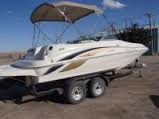
The second boat that I was no fan of was the 210 Sundeck from SEARAY available from 1998 to 2001 .  Yes even Sea Ray has some regrettable and forgettable models! This boat seemed to make sense right up until you launched it and realized that you have no freeboard at all at the transom. Which you might think isn't that bad until you take your 70 year old mother in law on a canal ride. You are cruising along at low speed, and a large yacht overtakes you from behind. At that point make sure you are in bare feet because that wave is going to roll right inside the back of the boat so slick that at the helm looking forward you will hardly notice until small fish are swimming around the cockpit area. The larger deck boats are great so why try to build a 200, 210, 220, 240, 260, 270, 280, 290, and so on this is hardly necessary. I think that they could carve a few away after all in 2010 Sea ray offered ten 21 foot model variations. How many 21 foot boats does the market need?

The mighty Sea Ray should focus on their line up that has been solid for them over the years here is hoping that Brunswick doesn't start to run Sea Ray into the experimental ground like they did with Bayliner


The third boat was rushed to market. The Bayliner 1500 Jazz available from1996 thru 1998  It wasn't the boat that held threw this one onto to the crap list it was the motor that did the job. The small jet boat craze that took hold in the late 90's was afoot and Brunswick had developed a jet package so along comes the Jazz and its cousin Reflex. This little boat was a fun, the problem was it was always breaking down, if this boat would have been born with a Yamaha or Sea Doo motor we would still be driving them today, the problem was these boats were born with a black anchor on board. It was such a good hull that Sea Ray had there version but even with a power head swap they still were a constant repair bill. Being the first to market doesn't guarantee you a place in the boat builders history books. These little boat ate parts at a ridiculous pace, and if you were in the salt water the problems were compounded.

This hull is still one of the most comfortable fun rides ever, please bring it back with a real motor! This would have, an could have been the most versatile little boat that was ever made, just look at what you can do to your PWC. Imagine the possibilities!


The fourth boat should have never been called a Commodore. The Regal 2656 Commodore. The stepped hull on this boat creates some strange handling issues . The fact that it only backs up one way is a combination of design foe paws, If you had the model with the generator which was crammed on the port aft side, with the step in the hull you could be really in trouble. This boat is an example of too many accessories pilled on a boat that is sized to be a really nice weekender. The generator causes a slight list to the port side. This list creates a situation where when you are in reverse the boat slides to the right only, you cannot back up the other way .There is no way to compensate for this problem no matter what you try, its a design flaw that immediately limits your choices of slip and docking options. When the consider the option list for these boats why not add aft and forward  thrusters, after all Regal is building a 26 foot yacht.

The sad thing is not only could you only back up one way but the majority of the time the automotive style gauge cluster was burning itself out. so you got to guess what the boat was going to do in reverse and at the same time guess how the engine was running. To much stuff, and if Regal wants to try new ideas test them before you push new technology to market. PS Regal Parts Department please have parts in stock or someone who can advise the boat owner on another option for the dash!

So that is four boats that could have been better, if it wasn't for the whole rush to market or trying to build a motor yacht out of a boat under 27 feet! These could have been better boats. Boat manufacturers today have created a monster. Boats are getting smaller for the size and they are building too many options and technical additions which have not been tested over time into every boat they build, this is a real problem particularly when stuff breaks, and it always does.. There is no room in these boats anymore, room for error or physical room, in a lot of these smaller cruisers there is even enough room to change your mind.


Lets take a look at some of the best, these are boats that really made an impact and gave more than I expected from them! These are probably not on every ones best boats list. However they all had something to offer that was different, and today can be purchased for very reasonable prices. One boat on my list confirms an advertising slogan that is known around the world!


The first boat on the list has been copied by Mainship and has record setting production numbers, if brought back today it would still sell even though it has been gone for over 20 years. Bayliner 3288 Motor Yacht. Most boaters do not know the type of testing or for that matter where the testing of  Bayliner Motor Yachts of this era was completed. Well I can tell you it was in the Pacific North West and not on fair weather days but all conditions. For a 32 foot boat it is virtually unmatched in its ability to take whatever water conditions you can through at it, but also a spacious layout with an amazing amount of space for a 32 foot boat. If you have never been on a Bayliner Motor Yacht from the early 90's do yourself a favor find a well maintained one and take a look. The 32 was available in gas and diesel (I would only have the diesel). This is a cruising boat not a speed demon, However take care of this boat and it will get you there where ever there is!
 As a marine technician for over 30 years, been on board and operating well over a thousand production boats  (all sizes and builders), and despite the fact that its a Bayliner I would own one! As a matter of fact I would own the 3288 ,3888, or the 4588 all where such great big water boats. I know this because I have been there many times.


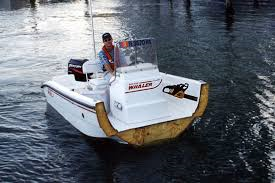
The next boat is only half a boat! I know this boat shouldn't count but I have to include it the list. The Boston Whaler cut in front of console. Whaler has cut many of these boats around the world for boat shows and promotion and a few years back I got my hands on one in Sarasota Bay. I cant tell you how I managed to get it out for a ride, but I can tell you that there were four of us on the boat and we were on plane up and down the 20 mile stretch of water and we did not slow down even for on coming wake off other boats. We had to know if this was an honest campaign is it really, Unsinkable, Unstopable. The four of us took turns driving and we did not even get our feet wet. Now before I build Whaler into gods gift to the boat market they to had some duds and flawed models over the years as well no builder is that good.

Boston Whaler has had a reputation as being one of the safest boats on the market and I can say beyond a doubt that half a Whaler is just as much fun as a complete Whaler. it is a little spooky when you are standing at the center console on plane and about to go over some waves and there is nothing forward of you!


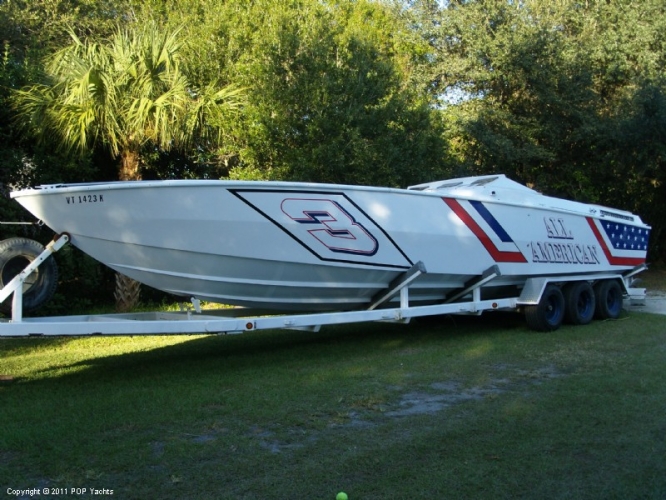
The next boat is an oldie but a goody.  The 1983 Cigerette Flat Deck Offshore. The reason I mention this boat is when I was first introduced I was really unsure what to expect from it. First I had to make the boat run like it was supposed to, it had seen many hack mechanics and was ruff under the hood... The picture above is the very boat that I ran in Florida several years ago with Rod Presley, Rod was a former APBA Champion. Rod had explained to me how much of an animal these older offer shore boats are at the dock ( it took two people to drive this boat off the trailer and to the dock, from the dock to the channel) and how they come alive out in the open water, and man was he right. This old boat broke 90 miles an hour and felt like a rock, fast for an old 1983 but what a ride we ran in a 3 foot chop and the boat didn't move at all. You have no idea of the speed until you are over taking a boat and that's when it hits you realization of your speed.
This is not a day cruiser or a pleasure boat, it does have a cabin but that's not what this boat is about. If you have never experienced this type of boat, you got to try one (I am not saying buy one, that's nuts). I would not own one they are stupid expensive to run and have no real purpose but to go fast from point A to B as fast as you can handle the boat. So for many reasons it could make both my lists but I think that this boat is one of the most memorable safe high speed I have ever had.


The last boat on this list is a fun runabout that was an eye opener. A 1994 Thunder craft Diablo 21 foot. I launched this boat brand new in Indian Arm and five of us took it for a ride up to Vancouver Harbor. We where five adult guys and in most runabouts this is a decent load (at least 800 lbs) As we took off we all noticed that this hull was awesome it jumped right on plane carved incredibly well and was fast. I would say that this little boat could push into the high 40 mph range. After a few miles had passed by we realized that no one new for sure what this boat had for power. I was taken back when we opened the dog house and found a V6, we were just as impressed with the fact that this boat was so easy on fuel. This was one of the best hull and motor combinations that I have ever seen in a 21 foot runabout. Even today I have not been on a boat like this that performs the way this boat did.
The icing on this cake was, the boat was a Canadian built boat which is still something to say after all these years. We can build awesome boats here in Canada! Campion has some great boats, we really need to support more boat building and Canadian boat parts suppliers and manufacturers.

If you have any good or bad stories share them new boat buyers should hear and see all they can about every make and model out there!

To guarantee access to all of  Boat Nut Magazine articles, pictures and featured services visit the official Boat Nut Magazine ©™ website. Be sure to reply to the Boat Nut Association registration on our site for the latest Boat Nut weekly and monthly news letters and opportunities.


Copyright 2015 © Boat Nut Media, Toronto, Ontario. All rights reserved. No part of this information/publications may be stored in a retrieval system, transmitted, or reproduced in any way, including but not limited to photocopy, magnetic, or other record, without prior agreement and written permission of the publisher, Boat Nuts Media ©™ No liability is assumed with respect to the information provided. 


Wednesday, 18 November 2015

SWIMPLATFORM EXTENTIONS


http://boatnutmagazine.com/


           SWIMPLATFORM EXTENTIONS


It is popular now a days to modify our boats and add the accessories that we see on new boats, to change the issues that older boats were plaiged with in the 80s and 90s. Boat owners are doing things as simple as changing to LED lights right through to adding oversize swim platform extensions and everything in between. Trying to create a more up to date and usable boat, is this a good idea? Will these type of modification affect the performance of the boat (both mechanical and ride performance). I have operated a few boats where the addition of accessories had completely destroyed the performance of the boat. Unfortunately it always seems to be the first time boat buyer who ends up owning these boats, the seller knows the boat is no longer performing but the new boater has nothing to compare the boat to and assumes the ride is natural.

What are the problems associated with installing accessories like swim plat forms, radar arches, generators, extra batteries and other weight and load changing items to our boats. All boats that come to market are designed with several important standards and measurements in mind, these include floatation, center of gravity and load weight balance. The boats are engineered and weighed with full loads this includes fuel, fresh water, batteries all of the systems that the boat was designed to have and use from the factory. Changes to any of these measurements will change the way the boat handles and performs.

 By adding weight you affect the way the boat sits in the water when at the dock. This can include a list to one side, a drop in the water line (aft, forward or over all). These change can and will affect exhaust flow, safe height for thru hull locations from the water line, proper operation of bilge pumps, and of course the ability for floatation that the manufacturer installs to work correctly or at all. In the case of a list many boaters try to counter act it by adding more dead weight to the high side making the situation worse. The moment that you have changed the load enough to create a change at the water line you have changed the way the boat will perform. Keeping in mind I have not allowed for all your personal items you keep on the boat and for some boaters this can be the equivilent of a pick up truck load of items of all shapes, weight and description.

  Lets go over the main items we add to our boats now a days to make them more up to date:


Swim platform extension: The first question you need to ask is did my boat come with this option what was the size and how was it mounted. Am I running the correct engine package combination to accept this accessory. Quite often the boat you have did not have the platform added at the factory due to the fact that the boat has V6 power rather than V8 power or you may have a single engine rather than a twin engine combination. Possibly the boat came optioned with a bundle of accessories that you don't have and this could include counter weight items that are moved forward such as a generator in front of the motors to offset a heavier transom load. If you are planning to add a platform to a boat that did not come with this option here are the things you need to consider.
  • What is a reasonable size. You may want a patio back there but can you see it from the helm, how much extra in slip fees will this cost you as you are changing the length over all. What are you really using the swim platform for, is it just to make boarding the boat easier and are you looking to mount a BBQ. How will this change the way I tie my boat up during bad weather
    .
  • How much does it weigh. Load weight right on the transom is one of the evasive changes to a boat you can make. The reason for this is you are directly affecting the center of gravity. This will change the way the boat planes, the affect of the trim tabs and drive trim. The depth of water the drives are in at the dock, and the exhaust flow. If you have thru hull exhaust you can sink the ports under the water completely or only part way either is not a good thing. this can increase the back pressure on the motor, and possibly leave the mufflers full of water at all times. In the case of and inboard out board it will change the height of the exhaust water in the bull horn ( the exhaust outlet at the back of the motor) outing stress on the flapper valves and increasing the opportunity to hydrolic the motor on shut down or while backing up. Both of these situations are expensive to repair and can blow a motor.  

  • How will the hull run after. A swim platform can create several bad situations if it is not designed to match the boat correctly. If the platform is mounted down low two important effects can happen. the first is suction this is when the bow of the boat starts to lift and the platform is right down in or at the surface of the water, this creates a vacuum effect were the boat has to power past and pull the platform out of the water. When this happens the boat lays bow up for way to long and with out enough power will not plane at all. The second is the following sea scenario were the platform act like a trim tab and lifts the back of the boat out of the water. As the waves roll up behind they get under the platform and have no were to break so it just lifts the boat up and can create a situation were you can no longer control the boats direction. This same situation will show itself while trying to back down or if you are floating or at anchor. The boat can actually come right around on you and you will be facing the direction you were coming from in a second!

  • What will it be mounted to. There are three ways to mount an extension, over the platform, under the platform or directly to the transom. Most over platforms mount this way to prevent the trim tab effect, the silly part of this is the platform is useless as the platform sits a foot or more out of the water. they look more like a back deck than a swim platform. The second is under mount this is generally how the factory installs platform extensions. it is clean neat and functional, But you need to restrict the size try to stay close to the factories sizes any more and you will probably find it floating past you one day. You must be sure that all the interior support structure is in the boat to do this as the bolts go up through the bottom of the platform hull area. Just because the boat was designed for this does not mean that the support structure is in the boat. The third is way is to mount right to the boat transom, picking the right height and being sure that the structure of the transom is solid is important. You do not want to half ass this mounting set up. Quite often there are issues with this set up as a larger platform will require different bolt patterns and support bars. Check the engine compartment first you may have steering bars, pumps, or your motors may be so close that placing support bars were they need to be maybe impossible. Try to remember that in some cases the reason for the factory installing small platforms is an engineering issue not just due to the fact that they were not wanting to do more.

  • What do you want the extension for. If you want a functioning platform than you probably will not like the over mount platform at all, the platform can be unusable for swimming and re boarding. This falls into a safety issue as well if you have high decks or deck sides you need to be able to get down to the water in the case of an accident. It would be ridiculous to attempt to get a hurt person up more than a foot out of the water on this type of platform. In some cases that the re boarding issue, if you feel over board was the only reason the factory put any platform at all on the boat. Not all accessories were created for there good looks they just had to function. If you are just trying to add length seriously sell the boat and buy a bigger one.
Just do not assume that the extension you buy or have built will work you need to consider a lot of things before you slap three feet of floor on the back of your boat!   It can turn out fantastic or be the biggest failure and destroy the performance characteristics of a great boat.
    Davit Systems fall under the same rules as adding a platform they are both transom load weight additions. You must make the same considerations to the boat in either case, The difference with a davit system is that you can calculate the weight load and have a marine engineer or the manufacturer inform you of its feasibility and the effects of the weight. If you buy a boat with a davit system be sure you find out the recommended load before you just load your sea doo or tender.

      To guarantee access to all of  Boat Nut Magazine articles, pictures and featured services visit the official Boat Nut Magazine ©™ website. Be sure to reply to the Boat Nut Association registration on our site for the latest Boat Nut weekly and monthly news letters and opportunities.


      Copyright 2015 © Boat Nut Media, Toronto, Ontario. All rights reserved. No part of this information/publications may be stored in a retrieval system, transmitted, or reproduced in any way, including but not limited to photocopy, magnetic, or other record, without prior agreement and written permission of the publisher, Boat Nuts Media ©™ No liability is assumed with respect to the information provided. 
       

    Tuesday, 17 November 2015

    Gelcoat Damage- Below the waterline


    http://boatnutmagazine.com/

    GELCOAT DAMAGE BELOW THE WATER LINE.  How serious is this?

     When you pull your boat at the end of the season it is not uncommon to find chips, scratches and gouges below the water line. The question is do the repairs really require immediate attention, the short answer is yes but not right away. I will explain!

    First lets cover why you would wait to complete the repair this time of year. When you hauled your boat out, the hull was and still is wet. Every hull has a moisture content or the amount of moisture the lamination has managed to pick up. Each hull will have picked up a percentage of moisture content over the years. In the case of a new boat the humidity may have been very high the day that they laid the fiberglass material in your boat, thus creating trapped moisture there from day one. Not to worry any thing below 6% is considered very dry. There is a tool to measure this level of moisture, (moisture meter). Surveyors love them, but half the time they are not calibrated right or the operator doesn't know how to read it correctly.(Moisture meters are a whole other topic we will get into later). In the winter weather conditions are dry after the freeze, dry cold air, this air will help dry out the damaged areas in preparation for your repair(s). Drying the hull will make for a higher quality repair! The dryer the repair area the more likely it is that the bond of the repair will be better and the gel coat patch will not become contaminated. So take advantage of the cold dry winter weather, let it dry out the damaged area.


    So what's the big deal a couple of chips cant be that bad? There are two common trains of thought.
     1- Fiber glass cannot rot
     2- Fiber glass is water proof.
     Both of these statements are incorrect. Fiberglass material can rot. This happens when the material gets so damp that mold and mildew starts to break down the mechanical bonds between the layers of material used to build up the thickness of your hull or deck. You can actually pull the black rotten fiber glass layers apart like a layer cake. Water will also break down the resin which surrounds the  fiberglass strings in the material.( There is a tell tale sign that this is happening. The water in the material starts to smell like vinegar when you break through to these areas). This is called wicking, the water will break the resin down and actually flow up hill from the water line toward the deck and hull joint.

     The second misinformation is that gel coat is water proof, it is not! As soon as you breach the resin rich surface, the gel coat can be penetrated by water and this causes damage such as blisters and high moisture content developing and spreading through the hull. (A foot note: When you sand the bottom of a boat in preparation for antifoul you are breaching the resin rich surface. There are several great sand less primers on the market, use these product instead of sanding. You will need to use the same brand of primer and paint. I have done over a hundred bottom paint jobs this way in the Pacific North West and it will work great provided all instructions are followed). Maintaining a resin rich and unbroken gel coat layer below the water line is very important to the life of your boat.

    Back to the question, Yes these repairs below the water line are important to complete for the above mentioned reasons. Any repair work below the water line should be your priority, just remember that the outside of the hull is not the only area to the hull which can be chipped or damage. Boat owners often over look the inside of the hull in the bilges, damage in these areas have the same effect on the hull as exterior damage as the bilge usually always has water laying around in it. The hull will draw moisture from the inside or out. Damaged gel coat (referred to as base coat on the interior of the hull) can also lead to rot of structural components and water contaminating the floatation foam areas.

    Where do these little chips and gouges come from? Well there is an answer for this. Most of the damage will come from haul out and launch. If you are using a trailer then you know how easy it can be to make an error in judgment and get on the trailer wrong and hit the trailer. If you are using a travel lift then little rubs and damage can occur. Areas that are exposed in most cases are the factory voids. These are areas where they did not roll out the material behind the gel coat very well and these areas have opened up. We refer to these areas as air voids, this type of damage is very common on edges of lifting strakes and hull steps where there are tight 90 degree edges that the material must try to lay in. Of course you may have ran over some debris that was just below the surface or hit the hull with fishing equipment such as down rigger weights. The most common damage to the hull, bar none is beaching damage. The boat owner will run the bow up onto the sand. Causing the gel coat on the keel to be sanded away leaving and exposed area of material along the very bottom of the boat, this area could be several feet long and several inches wide (if this is common practice for you consider a keel guard purchase or have an extra couple of layers of gel applied in this area).


    While we are on the topic of hull damage and the importance of  keeping the area below the water line in good repair, lets briefly touch on epoxy barrier coating. One of my pet peeves, an oversold expensive product that does work, yet is applied more times than not, for no reason at all. Barrier coats are designed to prevent moisture penetration, this makes sense for new boats that have not been in the water for years. Dry hulls definitely benefit from a barrier coat system. However keep in mind if it won't let water in, then it only makes sense that it won't let water out. So if you apply it to an older boat not only are you are trapping the moisture content in the hull, but you are eliminating the possibility of air drying over the off season. You can dry the fiberglass material out before you install the barrier. This will require stripping all of the gel coat from the waterline down (a massive undertaking), having a controlled environment and several days with heater pods to dry the material. ( Just ask Black Line in Sydney BC they are the very best at blister repairs). So it may make you feel better. But are you not throwing your money away by barrier coating an old hull? Just think about it! If you currently have a barrier coat then it is important to remember it too must be repaired if you have gel coat damage.

    To guarantee access to all of  Boat Nut Magazine articles, pictures and featured services visit the official Boat Nut Magazine ©™ website. Be sure to reply to the Boat Nut Association registration on our site for the latest Boat Nut weekly and monthly news letters and opportunities.


    Copyright 2015 © Boat Nut Media, Toronto, Ontario. All rights reserved. No part of this information/publications may be stored in a retrieval system, transmitted, or reproduced in any way, including but not limited to photocopy, magnetic, or other record, without prior agreement and written permission of the publisher, Boat Nuts Media ©™ No liability is assumed with respect to the information provided.  

    Saturday, 14 November 2015

    CAPTAIN O' CAPTAIN


    http://boatnutmagazine.com/

                        CAPTAIN O CAPTAIN , HOW DO I KNOW ITS TRUE?

    First let me ask why are all the boat experts referred to as captain? Is calling yourself a captain a self appointed arrogant way of saying I know boats, or is it to give you a warm and fuzzy feeling that they are telling you the facts. After all they must know something he/she is a captain. I personally hate being referred to as a captain, I spent over 40 years around boats, and always thought of a captain as someone who was responsible for the safe operation of a vessel. Someone who is an expert at charts and navigation. A captain would be the go to person for maritime laws and rules not necessarily the person to keep the vessel in tip top order, there is a crew for that. So I consider myself crew and not a captain.


    SO WHAT MAKES ME SO SMART?

    My phone rings everyday with questions about all matter of topics to do with maintenance, repair and opinions of all years makes and models of power boats. This is what I have discover opinions are like ass holes everyone has one! Most of the opinions are founded on self gain and sales, you call a company or expert and they are trying to figure out how to cash in. You are a potential cash cow, do they want to advise you or raid your wallet.............

    I started this blog to provide the best information I could with the thought that over 30 years of international power boat repairs, operation and maintenance would be of value to you the boat owner. As there is little quality information and entertainment to do with power boating maybe I could grow this idea into something fun and truth full, not a every boat and boat product is the greatest thing you have ever seen. There are enough of those sites out there
    .

    So what makes me any different than any other so called expert? I feel I should explain my back ground and how I earned a degree from the Boat Nut University. I received my PHD in power boat repair from putting in Plenty of Hard Days. Making mistakes, learning and listening to the best  people the industry had and has to offer, these are not the advise givers they are the people who build and service boats around the world. Person's that boat builders rely on to fly to some little country where there are no supply stores and fix every issue big or small on any boat at a moments notice. We needed to be experts at every system of any size boat any model year. No fancy titles just able to do anything trouble shooters, providing a written account of why the part or system failed in the field, design a repair procedure for others to follow, and supply engineering with solutions to stop the failure on future models of the same or similar boats.  There where not many of us.

    You had to be able to disassemble an entire boat in the field, as well as be a mechanic, upholstery, wood worker, electrician, plumber, fiberglass expert you name it. Back in the 80s and 90s we received certificates for each trade we mastered even receiving US Coast Guard certificates for fuel systems. But that's all gone now, new technicians are parts swappers, the best you can get is a service school diploma.

    My client base included plenty of names you will recognize:

    • Sea Ray
    • Bayliner
    • Robalo
    • Wahoo
    • Boston Whaler
    • Trophy
    • Meridian
    • Maxum
    • Baja
    • Tiara
    • Ranger
    • Wellcraft
    • Prowler
    • Rinker
    • Hydra Sport
    • Astro/ Procraft
    • Campion
    • Thundercraft
    • Chris Craft
    • Trojan
    • Glasstron
    • Four Winns
    • Larson
    • Mastercraft
    • Lund
    • World Cat
    • Polar
    • Fountain
    • Cigerette
    • Doral
    • and many more custom and private boats
    This variety of manufacturers and model years have provided a unique insight into power boats and how they have evolved over the last 35 plus years. I have repaired and operated all of the above boats, in all types of environments. These experiences coupled with the amazingly skilled people that I have had the pleasure of having as colleges and friends have prepared me to sit down and write honest, informative and entertaining information for you the boat owners.


    Any feed back or opinions are welcome at boatnutmedia@gmail.com!!!!

    To guarantee access to all of  Boat Nut Magazine articles, pictures and featured services visit the official Boat Nut Magazine ©™ website. Be sure to reply to the Boat Nut Association registration on our site for the latest Boat Nut weekly and monthly news letters and opportunities.


    Copyright 2015 © Boat Nut Media, Toronto, Ontario. All rights reserved. No part of this information/publications may be stored in a retrieval system, transmitted, or reproduced in any way, including but not limited to photocopy, magnetic, or other record, without prior agreement and written permission of the publisher, Boat Nuts Media ©™ No liability is assumed with respect to the information provided.           

    Friday, 13 November 2015

    HOW TO WINTERIZE A BOAT


    http://boatnutmagazine.com/


    TAKE THE COURSE AT: MARINE SAFETY SCHOOL, TORONTO @ http://boatnuteducation.freeblog.site/


    HOW TO WINTERIZE MY BOAT?

      This is a difficult topic to address in this format, the reason for this is that every boat is different and the systems along with the way they are rigged can be very different. Watching a video or getting information on a web site does not mean that the boat has been properly protected. So I will go over each main system on the boat that can potentially freeze and discuss the problems you could run into. What you need is a list and a strategy that is specific to your boat.

    BOAT SPECIFIC(will include) MAKE, MODEL ,YEAR, MOTOR (serial number) DRIVE (information), LIST of SYSTEMS

    INBOARD & INBOARD OUTBOARD
     

    There are two different types of cooling systems 1 Closed cooling and 2 Raw water cooling.

    What does this mean? Closed cooling refers to a motor that has a heat exchanger and antifreeze running through the block. This type of cooling takes very little raw water to run the system,  you need to protect the raw water side and be aware of the condition of the coolant in the closed system side.
     Two different systems to cool the motor.
    1- Closed cooling requires you to check the condition of the antifreeze in the heat exchanger, and not just a visual check but a check of the freeze point or temperature which the antifreeze will no longer be effective. There is a tool for this and if you fail to check this the motor can and will still freeze.
    2- The raw water side of the system is where the lake water is pumped through the heat exchanger and cools the anti freeze. This is the side that must be drained and have antifreeze pumped through it until it comes out the exhaust. You will notice that I said you must drain the system first. This goes for all the water systems on the boat if you just pump antifreeze through the system how do you know you have the level of protection you expect, you don't, the water in the system will mix with your antifreeze and lower the temp with which it will freeze or possibly leave pockets of water in areas of the block or the accessories mounted to the block. These areas will freeze!
    3- You will have to locate the drain on the heat exchanger to allow the fresh water to drain. While you are draining the fresh water from the heat exchanger it is a good time to remove and check the condition of the pencil anode. This anode protects the heat exchanger from corrosion.
    4- On the older heat exchangers you can remove one of the end caps to allow the fresh water to drain. If you remove the end cap it is important to replace the end cap and the gasket in the right direction. Do not overtighten the end cap when you replace it. Be sure you inspect the end cap for leaks in the spring when you start the engine.

    Raw water cooling is where motor cooling is done by pumping lake water alone, flowing through the block and all attached accessories. The same strategy applies you must drain the block, manifolds, coolers and any other raw water components of water first. If you have a Mercruiser with the central water sump drain be sure you remove the drain plug. Once you have drained all the fresh water and replaced the drain plugs, go ahead and pump antifreeze through the block until it comes out the exhaust.

    Here are the things you need to watch for
    • When draining the block and the manifolds are you getting flow out of each drain? You should. If you are not getting a flow of water out of the drain there are two possibilities of a problem. 1- You have a build up of sand in the area where the drain is, and this sand will freeze and split the block or the manifold  2- You have a build up of corrosion in the port you are trying to drain. You can test these possibilities by finding a short piece of wire or a wire tie with you. Poke it in the drain and see what comes out. The debris that comes out will tell you what is going on, once cleared of debris you should start to see the area drain down.
    • Do you have mufflers in your boat? The mufflers also hold water and have a drain screw at the bottom to let the water out before you add antifreeze to the motor.
    • Be sure you have pumped enough anti freeze through the system, do not be stingy or assume that the exhaust tells you when the system is full there could be long runs to coolers or a hot water heater. When the anti freeze is showing at the exhaust be sure to rev the motor up two or three times and back to idle to verify that you have all the systems full.
    • You should have a nice constant flow of antifreeze out the exhaust if it is week or taking forever to flow then you have a bad water pump. Just because you had flow of water through the exhaust while your boat was in the lake doesn't mean the pump is strong enough to pump the antifreeze on land.
    • Your boat may also rely on raw water to lubricate the stuffing box were the shaft goes through the hull you must see antifreeze  flowing out here as well
    • Water pick up lines from the lake to the raw water pump must also be protected this may include basket strainers, be sure you drain the strainers and protect them as well. All basket strainers have a drain on or near the bottom, this is also a good time to use your shop vac and clean them out of debris. As long as the thru hull is open the hose from the thru hull to the basket will gravity drain.
    • Fuel filters, if you have had a problem with water in the gas this year change the fuel filters or drain the water separator bowl. Fuel filters and bowls will freeze and crack.
    Information from Discover Boating
    You should run the engine(s) to warm it up and change the oil while it is warm. This tends to allow impurities to be drained away with the oil. You should also change the oil filter(s). Flush the engine(s) with fresh water. You should circulate antifreeze through the manifold by using a pickup hose from the waterpump to a bucket of antifreeze. Start the engine and allow the antifreeze to circulate until water starts to exit the exhaust. This process will vary slightly depending on whether you have a "Raw Water" cooling system or an "Enclosed Fresh Water" cooling system. While you're in the engine room you should also change the fluid in your transmission. Remove spark plugs and use "fogging oil" to spray into each cylinder. Wipe down the engine with a shop towel sprayed with a little fogging oil or WD-40.
     
    Reply from Boat Nut
     
    If you are planning a fluid change it is better to do this before you haul the boat or put your boat on a trailer. This will assure that you can run the boat engine long enough to obtain a temperature that will allow you to remove the fluids. Cold oil is like dealing with molasses and is hard to remove. Never assume that you can get enough water to the boat on land to run it long enough to get the engine warm enough to flow. A big block engine can suck a garden hose flat in a matter of seconds and create an overheat situation, damaging the water pump and much more. You must also have the correct muffs to run your boat or the water pump will draw air when you are on water or antifreeze. If you have the means grab a sample of the antifreeze after you feel that you are protected and use a Anti freeze tester to see the freeze point. Giving the block a spray with WD 40 is always a good idea. 
      You should thoroughly inspect the stern drive and remove any plant life or barnacles from the lower unit. Drain the gear case and check for excessive moisture in the oil. This could indicate leaking seals and should be repaired. Clean the lower unit with soap and water. If your stern drive has a rubber boot, check it for cracks or pinholes. Grease all fittings and check fluid levels in hydraulic steering or lift pumps. Check with your owner's manual for additional recommendations by the manufacturer.
       
      Alpha Service Information from Boat Nut Magazine
       
      Bravo Drive and Volvo Duo Prop
       
      If you have an OMC drive it is important that you know to drain the shift cavity as this area holds water and can freeze
    All of the above will also apply to your generator if you have one on board.

    There is question as to whether you leave the antifreeze in the blocks and systems or to drain the system after you add the antifreeze. Some people say the antifreeze protects the inside of the water passages from corroding over the winter, but because we have had a few crazy winters with rapid  temp fluctuations I drain the systems after I run the antifreeze through the systems, this is because I am in an area where we use minus 50 antifreeze but could see colder temperatures. This also means that in the spring I am not starting the boat in the water and polluting the lake with coolant.

    In the case of an Inboard Out board Drive it is always a good idea to pull and inspect the drive. The biggest reason for this is the bellows will in all probability have some water in them. In the spring you will see many issues with bellows cracks and this is because the water in the bellows has frozen and expanded. Now the boat is taking on water and you have a problem. If you have a OMC you must loosen the drive and drain the shift cavity this area holds water and will freeze.

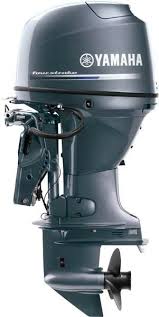
    OUTBOARD


    Information from Discover Boating -Outboard Motor

    Flush engine with fresh water using flush muffs or similar device attached to the raw water pickup. Let all water drain from the engine. Wash engine down with soap and water and rinse thoroughly. Disconnect fuel hose and run engine until it stops. It is important to follow a step by step process to make sure that all fuel is drained from the carburetor to prevent build-up of deposits from evaporated fuel. Use fogging oil in the cylinders to lubricate the cylinder walls and pistons. Apply water resistant grease to propeller shaft and threads. Change the gear oil in the lower unit. Lightly lubricate the exterior of the engine or polish with a good wax.


    Boat Nut Response
    All new four stroke motors must be winterized as there are areas such as thermostat housings and other areas which do not self drain when the motor is tilted in the vertical potion. If you wish to protect the engine from fuel issues in the spring you can run the motor on a light mix of two stroke mix or you can purchase man made fuel to run the motor on which last more than a year.
     
    No matter what you are winterizing Inboard Out board or Outboard always pull the props clean the shaft check for fishing line at the back of the prop around the shaft or thrust washer. Re grease the shaft with prop shaft grease and reinstall the prop, do not over apply the grease or the thrust washer will not push all the way back on the shaft. Treat the lower unit on an outboard the same as an Inboard Outboard.
     
    Link


     BATTERIES


     If the batteries are not at a full charge or have been serviced by adding distilled water they can freeze, it is best to store the batteries in a dry warm location and to give them a trickle charge every once in a while to keep them fresh and ready to go in the spring

    AIR CONDITIONING


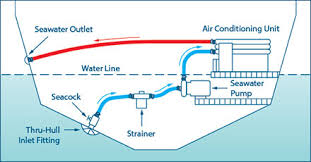
    Your Air Conditioning relies on lake water pumped through a heat exchanger of sorts. This is why  we need to drain and protect this system as well. Because the water pick up point is the lowest point this is the best way to drain the AC. If you have a basket strainer then use this as your drain point and take the time to clean the strainer out. Gravity will allow the water to feed back down and drain almost all of the water out of the AC unit, and you can use the basket strainer as the feed point to pump antifreeze back through the AC until it comes out of the thru hull on the side of the boat. So what can go wrong?
    • AC systems from the factory have a magnetic drive pump. This means the impellor can run free when the system is not powered, however they are expensive and many pumps have been replaced with traditional impellor pumps. If you have a nonmagnetic pump you will not be able to gravity drain the system as the impellor will not free wheel backwards. This will mean disconnecting the hose at the outlet side of the pump and reconnecting after you drain the system.
    • It is not unusual for the impellor to become slimy and not pick up the antifreeze and pump it through the system, you may need to force pump antifreeze through the system.
    • If it is a split system where you have more than one AC unit you need to be sure that both units are protected equally this may mean blocking a thru hull until antifreeze shows at both the thru hull drains on your boat. Check the antifreeze by catching some and inspecting some of it just to be sure it is not watered down.
    • The same rules apply here, you can drain away the antifreeze when you are done if you choose to. One note the antifreeze is very slippery and can affect the spring start up ability of the AC pump to prime itself, you may need to pull the magnetic impellor and clean the pieces to prevent the impellor from simply not turning.

    SUMP PUMP, BILGE PUMPS, ACCESSORY PUMPS


    Information from Discover Boating- Bilge
     
    Make sure the bilges are clean and dry. Use soap, hot water and a stiff brush to clean up any oil spills. Once the bilges are clean, spray with a moisture displacing lubricant and add a little antifreeze to prevent any water from freezing.
     
    Response from Boat Nut Magazine

    With new boats and different types of boats there are many pumps and systems that will require your attention. In the case of Fishing boats and Wake Board boats there are a variety of pumps that cannot be over looked these include ballast pumps and tanks, live wells and bait wells. For cruisers and smaller boats there are bilge pumps, shower sump pumps and wash down pumps. Each one of these systems must be drained and protected with antifreeze. This is where boat specific information is required as you may not know where to access or how to access these pumps. These systems can be expensive to repair and can cause a boat to sink if they are not properly protected.

    Leaving water in the bilge can cause thru hull blocks to split and create leaks at any hardware that goes through the boats hull. Always be sure the areas below the floor are dry and clean if you have any concerns take any extra anti freeze you have and pour it directly into the bilge after you clean and dry these areas. If you read the blog on Shrink Wrap you will have picked up on the tip to use a dehumidifier this will draw the moisture out from any where below the floors and get the water and moisture off the boat so that any damage by freezing water in areas you cannot see are reduced.

    FRESH WATER SYSTEM


    Information from Discover Boating - Water System
     
    Completely drain the fresh water tank and hot water heater. Isolate the hot water heater by disconnecting the in and out lines and connect them together. Pump a non-toxic antifreeze into the system and turn on all the faucets including the shower and any wash-down areas until you see the antifreeze coming out. Also put non-toxic antifreeze in the water heater.
     
     Reply from Boat Nut Magazine
     
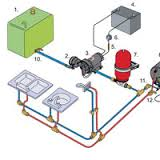
    The fresh water system is the hot and cold water that you have on your boat, this maybe as simple as a tank, pump and one sink. It can also be complex with hot and cold manifolds complete with a dockside systems, The following is a list of what could be included.

    1. Hot Water Tank. You do not want to fill your hot water heater with antifreeze, you need to by pass the tank by tying the hot and cold lines from the tank together to create a closed loop and drain the water heater down of water using the drain provided on the tank.

    1. Ice Maker. The Ice Maker uses water from the cold side on the boat to make ice and must be drained and protected as any other water accessory on the boat. There are different types of ice makers but they all require a small cold water line to work. You do not need to pump antifreeze all the way thru the icemaker when you disconnect the small water line to the unit it will drain . You just want antifreeze to the unit itself.

    1. Head. If you have a head which relies on potable water to flush, such as a vacuflush system then you need to be sure that the water to the head is pumped out and that antifreeze is pumped to the head. in the case of a vacuflush head if you push up on the flush foot valve you can pump the water out with the fresh water pump on and while pumping antifreeze do the same action and you will see the antifreeze flow into the bowl. Traditional flush heads and electric flush heads pick up water from the lake to flush, but beware this is not always the case. You must know where the head is getting water from to protect it properly. This goes for each head on the boat. I have seen cases where heads have been changed and in doing so have changed the water supply as well. Of course you must flush a gallon or so directly down the head to protect the lines and accessories between the head and the holding tank. Be sure you have pumped out your holding tank before touching the head system, once pumped if you have an odor in the boat add some cleaner to the holding tank and let it work over the winter.
    Pump out the holding tank at an approved facility. While pumping, add fresh water to the bowl and flush several times. Use Vanish crystals or whatever your owner's manual recommends that will not harm your system and let sit for a few minutes. Again add fresh water and pump out again. Add antifreeze and pump through hoses, holding tank, y-valve, macerator and discharge hose. Again, check your owners manual to make sure that an alcohol-based antifreeze won't damage your system.
    1. Hot and Cold water systems on older boats are straight forward. The tank feeds a pump and the pump feeds the system. However new boats have distribution manifolds and in many cases more than one, each manifold has a drain and must be drained before you add antifreeze as these distribution points will not fill with antifreeze to prevent freezing. There will be hot water manifolds and cold water manifolds. This again is boat specific stuff and you must know where they are located to be sure you do not have a leak in the spring.
    2. Washer/Dryer. The washer/dryer units in larger boats are also tied to the cold water lines and you must understand the manufacturers instructions on how to correctly protect the unit from freezing.
    3. Dock Side Water hook up is a separate cold line which tees in on the pressure side of the water pump and has no connection to the water holding tank on board the boat, and for this reason it is a dead end from the pump and must be drained out and protected.
    When you start to protect the fresh water system you must first pump the water holding tank and the system out of water.  DO NOT PUT THE ANTIFREEZE IN THE WATER HOLDING TANK!!

    • Open the drain valve on the hot water heater
    • Open all the taps on the boat hot and cold, this includes the transom shower and allow the pump to run until all water is out of tank and taps are spitting water.
    • Disconnect the dockside fitting and let the pump push any water out of line
    • Hold up on the flush valve on your vacuflush head until you have no water
    • Disconnect the water line at the icemaker
    • By pass the hot water heater
    Once all the water is gone disconnect the water line feeding the fresh water pump and attach the line you intend to feed the antifreeze thru. Once you are ready to pump antifreeze, close all the taps and get ready for antifreeze flow at the open lines such as dockside water and icemaker. These lines will fill quick. Turn on the pump and watch to be sure the system has picked up the antifreeze, once the dockside line and ice maker lines are full turn off the pump, reconnect these lines and get ready to do each tap in the boat individually (don't forget the showers) start with the furthest tap from the pump and work your way thru the boat until all the lines are running with antifreeze.

    It is always a good idea to pour some antifreeze down any deck drains!

    WINTERIZE USING COMPRESSED AIR

    The other option is no anti freeze and using compressed air this works very well. Create a line which connects your compressor to the dockside water hook up. in this case you do not need to bypass the water heater. You leave all taps open and simply push air thru the system until all the water vapor is gone this way the next year you simply fill the system and go. The trick here is not to over pressurize the water system with too much air. I have met people who use air to blow the water out of virtually all there systems and use little to no antifreeze at all. This takes less time and effort but does require the experience of knowing what to look for. Otherwise you will not know all the water is pushed out of the systems.

    IF YOU WOULD LIKE TO HAVE A BOAT SPECIFIC PROGRAM PLEASE CONTACT US BY EMAIL  boatnutmedia@gmail.com


    FUEL SYSTEM

    Information from Discover Boating
    Fill your fuel tank(s) to avoid a build up of condensation over the winter months. Add a fuel stabilizer by following the instructions on the product. Change the fuel filter(s) and water separator(s).
     
    Response from Boat Nut Magazine

    There is a great deal of disagreement on filling fuel tanks or leaving them with some fuel. Here is why if you have been filling with fuel that contains ethanol, which most of us are now, the ethanol will actually create a water in fuel condition when left to settle unburnt. So some say the more fuel you leave in the tank the more contamination you are introducing. Others are still on the side of filling the tanks up. Most additives we use to stabilize fuel only last three months or so. I believe less fuel is better as fuel life is so short that even with stabilizer you can top the tanks in the spring change the filters and run the bad or old fuel off in a mix.
     

    The Boat

    Information from Discover Boating
    Once you have taken care of the system you should remove any valuables, electronics, lines, PFDs, fire extinguishers, flares, fenders, etc. Over the winter these items can be cleaned, checked and replaced as necessary. Open all drawers and lockers and clean thoroughly. Turn cushions up on edge so that air is able to circulate around them or, better yet, bring them home to a climate controlled area. Open and clean the refrigerator and freezer. To keep your boat dry and mildew-free you might want to install a dehumidifier or use some of the commercially available odor and moisture absorber products such as "No Damp," "Damp Away" or "Sportsman's Mate."
     
    Response from Boat Nut Magazine
     
     We agree with Discover Boating! You must however take care of the canvas, never leave the canvas on under the plastic cover. The corners of the canvas get worn down premature and mold and mildew set into the material. Once this mold is in the canvas it keeps coming back. Always remove and store the canvas in a dry location, this gives you the opportunity to inspect for areas that need repair and zippers that need repair. The curtains or windows should be dry clean and rolled for storage. Never fold or crush the windows as they will crack along these folds. Remember in the off season it is the ideal time to have repairs, replacement or modifications made to your canvas covers. While the boat is in storage it is important to treat the exterior seats with the same care as the interior seats lift them up and allow the air to move around them. Open all lockers and hatches for the same reasons prevent excessive mold. In the spring when the temperatures start to climb all the moisture trapped in the boat attempts to evaporate this will cause mold any where the moisture cannot reach the outer environment. Remember NO BOAT BUILDERS RECOMMEND PLASTIC AS A STORAGE SOLUTION!
     

    OUT OF WATER

    Information from Discover Boating
    Pressure wash hull, clean barnacles off props and shafts, rudders, struts and trim tabs. Clean all thru-hulls and strainers. Open seacocks to allow any water to drain. Check the hull for blisters and if you find any that should be attended to you might want to open them to drain over the winter. While you're at it, why not give the hull a good wax job? It is probably best to take the batteries out of the boat and take them home and either put them on a trickle charger or charge them every 30-60 days.
     
    Response from Boat Nut Magazine
     
     The method of pressure washing works great if you have bottom paint on the hull, however without bottom paint it can be a different situation. Pressure washing works at its best if you get the hull cleaned immediately after haul out (Right Away). If you have no bottom paint then it maybe necessary to used a acid cleaning. To complete an acid clean you must be aware of how to protect the boat the environment, yourself and the trailer. Boat Nut Magazine will prepare an article on Acid Cleaning for boaters who want the bottom to look like new for the next season. If you find blisters on the hull have a professional inspect the areas, there are several reasons for blisters and opening them up without any knowledge of what you are assessing can be detrimental to determining the cause. If you leave the blisters until the spring to have assessed then you are defeating the purpose in having the blisters looked at many types of bottom blisters will dry up over the winter and appear to have gone away. There not they will be back next season and quite often worse and larger in size. Maintaining gelcoat finishes with wax or compounds only works when there is correct temperatures to cold and the materials will not be effective. Pick the days you compound and wax carefully.


    IN WATER STORAGE 

    Information from Discover Boating
    Close all seacocks and check rudder shafts and stuffing boxes for leaks, tighten or repack as necessary. Check your battery to make sure it is fully charged, clean terminals, add water if necessary and make sure your charging system is working. Check bilge pumps to ensure they are working and that float switches properly activate the pumps and that they are not hindered by debris. Make sure either to check your boat periodically or have the marina check it and report to you. If in an area where the water you are docked or moored in actually freezes, you should have a de-icing device or bubbling system around your boat.
     
    Response from Boat Nut Magazine

    Boat Nut Magazine will follow this subject up with an article dedicated to this topic soon!


    This information is not a how to guide nor is this information intended to make you a pro at winterizing. It is to educate you that there are situations that can appear that will effect the ability of antifreeze to be effective in preventing freezing ( Anti freeze can freeze it is just designed not to expand, unlike water which can grow to nine times its liquid size in volume). This information will also demonstrate that there is more than one way to winterize, and without being boat specific there is no way to be sure that you are protected. No one can show or tell you with any certainty without knowing the details of your boat that you have winterized your boat with any guaranty. In some cases a combination of techniques may be best for your boat, as some systems maybe hard to locate. It is also important to note that not all motors are the same (even the same model may have several types of drain systems) there may be no drains where you expect and others where your not looking. Simply running antifreeze through your boats systems does not in any way mean that your boat is protected you must have knowledge of your boats systems to be sure you are doing the right techniques. If you have invested in a brand new boat or do not feel confident hire a pro, its not cheap but you will know that if there is a problem that you have not voided a warranty or insurance plan.

    Once you have a plan in place and have a clear understanding of the types of pumps, sizes of hoses and lines you need to work with. You can design and create adaptors and hose fittings for each system so you can hook up your antifreeze container or air lines to make the process of winterizing quicker and easier to complete. You should only struggle the first year with your boat after that you will find the whole process a lot less time consuming and be able to accurately purchase the necessary supplies without waste. Come up with a system that works for you everyone has an opinion or advise some will be ok lots will not apply to your boat!


    To guarantee access to all of  Boat Nut Magazine articles, pictures and featured services visit the official Boat Nut Magazine ©™ website. Be sure to reply to the Boat Nut Association registration on our site for the latest Boat Nut weekly and monthly news letters and opportunities.


    Copyright 2015 © Boat Nut Media, Toronto, Ontario. All rights reserved. No part of this information/publications may be stored in a retrieval system, transmitted, or reproduced in any way, including but not limited to photocopy, magnetic, or other record, without prior agreement and written permission of the publisher, Boat Nuts Media ©™ No liability is assumed with respect to the information provided.           

    Shrink Wrapping


    http://boatnutmagazine.com/


    SHRINK WRAP MY BOAT

    Shrink Wrap is the industry standard of protecting our boats through the winter, and or for long term storage. A disposable cover that is thrown away 99% of the time after it has seen the end of its use ( really environmentally friendly). It comes in white , blue and clear in a variety of thickness for different environments. Installation of this product creates a pile of waste cut off , it is unfortunate that this is the simplest solution for boats which could see well over 20 winters.

    The question is does the wrap affect the boat and is wrap the best way to keep your boat protected from old man winter?


    So how does the boat suffer when we wrap it up?

      The first way the plastic can damage the boat is the movement of the wrap cover over the winter. This movement will leave scratches and damage to the hull side and the strips on the hull creating the additional costs of having to buff the hull in the spring. This is even more of an issue with colored hulls. The wrap will also damage any of the canvas that it comes into contact with, the areas of canvas that are damaged are, the corners of camper backs and the areas above the windshield (any of the areas were the plastic will sit on top of the canvas). These canvas components are left on almost all of the time ( a really bad idea) anyone in the canvas industry will tell you to strip the boat of all canvas and store rolled up in a dry safe environment.
      The most damaging effect to the boat is trapping the moisture that the boat has picked up from rain and washing all summer. Just consider what you see in your bilges! This moisture is trying to evaporate to the outside air. The moisture collects on the bottom of the plastic cover, under the floors the walls and cabin ceilings. The next thing you know you have mold and lots of it under your canvas and through out the boat, creating odor's and nasty messes for you to clean up in the spring. This same moisture starts to dry rot wooden components and structure. When a survey is done and high moisture is located in decks and other structural areas the culprit may not be leaks or bad sealant it can be water that has been unable to escape the boat due to being wrapped up tight. This happens despite installing vent holes at the time the boat is wrapped up.
     The best advise is to wrap the boat as late as possible and remove the cover as early as possible. Be sure to have removed as much moisture as possible from the boat and leave as much air flow as possible through the boat as possible, this may mean cracking hatches and doors to the main cabin. Provide air flow under the floors were you can.


    The truth be known the only benefit to shrink wrap is it makes a great snow cover, it is fairly easy to install and the snow slides off the surface, as the temperature under the plastic will get warmer than the outside air. I suppose the boat will stay cleaner depending on were you choose to store it, but it will not keep out the critters. There is no other benefit to wrapping your boat. As far as I a m concerned  shrink wrap creates more environmental issues on the boat dealing with mold, mildew and rot. Not forgetting  the waste created with all that used plastic. We generally only use it once and then throw it away , have you seen the mountains of plastic in the spring that build up at the marinas. We should be ashamed of the amount of material and money we simply throw away. There must be a better way to deal with outside boat covering.\

    So what are the options?


    Well if the environment allows it you can tarp your boat this can be done in various ways, with the budget to do this just as varied. From a quality pre manufactured tarp to a custom fit cover. If done right the tarp will get through several seasons and can be reused for other purposes later. You need to be sure that you have a frame and that the tarp is tied down tight do not tie to the boat stands. a tarp which is not tied down right will cause its share of damage to the boat if you take your time get the right size and tie under the keel a tarp is just as good as wrapping. You will see better air flow through the boat and less mold in the spring as the tarp is not as tight to the boat as plastic wrap.


    What can be done to prevent mold and keep your boat in the best condition possible when wrapping?

                     Purchase a dehumidifier  !!!!!!!!!!!!!!!!!!                                                                         


    The one purchase that every boat owner should make. This simple investment will extend the life of your boat by leaps and bounds,  Run it as often as you can , It will keep your boat dry and smelling so much better it is never to late. At the end of the season really get it going and dry the boat out as much as possible if you can put it under the floors and in the engine compartment. I can not stress enough the difference this will make for your boat! Another tip add a bromine tablet to your bilges regularly the water will remain clean and with out odor, your bilge pumps float switches will last a lot longer and remain clean and free to work at their best. Take down your canvas and open all the lockers and doors that you can, do not use the cabin as a garage and the interior will last and last. These few simple tips will pay for them selves and you will be amazed at the way your boat will smell and stay mold free. The motors will thank you for the dehumidifier it dries out the distributor and the electronics extending the life of these components and your boat will run much better every time. Try it !!!!!!!!!!!!!!!

    If you have your boat wrapped try to cut a hole in the wrap under the bow sprit to allow a larger air flow space, If small holes are blow through the plastic don't cover them all up let the boat breath. Have a door installed and visit your boat over the winter to change the air. Please only shrink wrap if you have too. If you check with the boat manufacturers you will find that shrink wrap is not recommended for storage.

                                                         Any cover is better than this!!!!

    To guarantee access to all of  Boat Nut Magazine articles, pictures and featured services visit the official Boat Nut Magazine ©™ website. Be sure to reply to the Boat Nut Association registration on our site for the latest Boat Nut weekly and monthly news letters and opportunities.


    Copyright 2015 © Boat Nut Media, Toronto, Ontario. All rights reserved. No part of this information/publications may be stored in a retrieval system, transmitted, or reproduced in any way, including but not limited to photocopy, magnetic, or other record, without prior agreement and written permission of the publisher, Boat Nuts Media ©™ No liability is assumed with respect to the information provided.