Showing posts with label boating safety. Show all posts

Monday, 29 August 2016

TERRIBLE ACCIDENT / BE A RESPONSIBLE BOATER


A TERRIBLE ACCIDENT / BE A RESPONSIBLE BOATER 

 
Another needless death on the water this year, boaters have to start to obey the rules when it comes to lifejackets. To many boaters panic when there is a crisis on board, I am not saying that this is the case. Knowledge of boat operation and how to complete a Williams Turn may have helped here. To many boaters stash the safety gear away in places were in an emergency they are difficult to access. Boaters also fail to prepare tenders and throw rings in a way that makes sense for emergency use (learn to tie a proper quick release knot). This equipment is not a pain in the ass pile of boat crap or jewelry, when you need it you need it. This is a wake up call do not be that boater that says there by the grace of god that's not me. BE PREPARED, PRACTICE RESCUE, BE PROCTIVE and this kind of accident can end with tears of joy rather than tears of pain.

Colorado mom dies saving 2-year-old son from drowning in Lake Powell

Chelsey Russell.
Wellborn Sullivan Meck & Tooley/CBS Denver

SALT LAKE CITY - A mother was enjoying a family boat trip across Lake Powell when she heard a scream and splash. Her 2-year-old son had slipped off their houseboat and into the water.
Chelsey Russell, a 35-year-old mother of two from Lakewood, Colorado, jumped in to rescue her son. She managed to keep the toddler above water for five agonizing minutes until a relative pulled him safely back onto the boat.
But by that point, Russell was unconscious. She was pulled from the water and rushed to shore at the nearby marina, where bystanders and officials performed CPR Tuesday afternoon.
After about 30 minutes, they determined they couldn’t save the woman who just rescued her son.
 
 
Officials with Glen Canyon National Recreation Area, which encompasses the 186-mile-long lake along the Utah-Arizona border, said the boy was in stable condition and flown to a hospital about 200 miles away in Flagstaff, Arizona, as a precaution.
The houseboat had been traveling about 8 mph toward shore when the boy, playing with another child, somehow fell off, San Juan County Sheriff Rick Eldredge said Friday.
After Russell jumped in, her brother stopped the boat and hopped in after his sister, leaving Russell’s mother and at least one other child aboard.
The boat had kept moving after Russell went in and the man realized he was too far away from her and the child, Eldredge said. So he returned to the vessel to retrieve a motorboat they had been towing. The knots tethering it were so tight that he had to cut them with a knife.
Russell was in the water for at least five minutes before her brother could reach them and take the conscious toddler from her chest. Throughout that time, she kept her son above water, her family told authorities.
“She was holding the baby out of the water the best that she could,” Eldredge said.
The sheriff said neither Russell nor her son wore life jackets. They are required for boaters under 12, according to Glen Canyon National Recreation Area.
The sheriff’s office was waiting for the Utah medical examiner to determine Russell’s cause of death, but Eldredge said it was suspected to be drowning. He did not know when the medical examiner would make a ruling.
“There are no words to convey the tragedy of losing a loved one like this,” Teri Tucker, acting superintendent for the recreation area, said in a statement. “Our hearts are with the family and friends of the victims during this time of unexpected pain and loss.”
It’s the sixth death at the recreation area this year.
Russell’s co-workers at a Denver law firm remembered her as a “superstar” attorney, mother and marathon runner who competed in a 100-mile race last year.
“She was a better mom than any other mom I’ve ever known, including myself, and she would have done anything for her kids,” colleague Amy Seneshen told CBS Denver.
“She was a talented lawyer, loved by everyone in this firm,” attorney Keith Tooley said Friday. “She was just a rock star here. Her passing has just crushed us all.”
Russell leaves behind a 5-year-old daughter in addition to her 2-year-old son, according to CBS Denver.
                    

To guarantee access to all of  Boat Nut Magazine articles, pictures and featured services visit the official Boat Nut Magazine ©™ website. Be sure to reply to the Boat Nut Association registration on our site for the latest Boat Nut weekly and monthly news letters and opportunities.


Copyright 2015 © Boat Nut Media, Toronto, Ontario. All rights reserved. No part of this information/publications may be stored in a retrieval system, transmitted, or reproduced in any way, including but not limited to photocopy, magnetic, or other record, without prior agreement and written permission of the publisher, Boat Nuts Media ©™ No liability is assumed with respect to the information provided

Friday, 12 August 2016

LIFE JACKET DESIGN WINNERS


Life Jacket Design Competition Winners
 

2015 Life Jacket Design Competition Winners Announced

 
Sponsored by the BoatUS Foundation for Boating Safety and Clean Water and the Personal Floatation Device Manufacturers Association (PFDMA), the 2015 Innovation in Life Jacket Design Competition attempted to answer the question: What would a modern life jacket look like if you threw out the rulebook and started with a clean slate?
The goal of the competition was to rethink a 100-year-old design, seek out the newest technologies and design innovations and develop interest in newer, more versatile life jackets. Design entries were judged on the following criteria: innovation, wearability, value/affordability, reliability, versatility and practicality.
A team of five judges from the boating, paddling and life jacket manufacturing industry reviewed nearly 250 contest submissions from as far away as Mongolia and New Zealand, and also asked recreational boaters to vote for their favorite design entry.
Competition Judge and Image Base Vice President Joe Fogarty said, “Whether a commercial enterprise, an individual inventor-entrepreneur, a student or a group of Scouts, the 2015 Life Jacket Design Competition brought forth a lot of creativity. The entries we chose will not only keep us afloat, but showed thoughtfulness, problem solving and practicality.”
Judge Lili Colby, Owner and “chief PFDiva” at paddlesport life jacket manufacturer MTI Adventurewear said, “It was exciting to see that so many of the competitors shared a common goal to create more wearable product for the average recreational boater. Thinking ‘out of the box’ not only meant that the designs need to work, but that they also need to look good and be comfortable to wear. I wouldn’t be surprised to find a number of the finalist’s designs make it to market someday if they can be US Coast Guard approved.”
Winners of the design competition received a share of $15,000 in prize money: $10,000 to First Place, $3,000 to Second Place and $2,000 to Third Place.

Winner Announcement Video:


Here is a breakdown of the three winners:

life jacket design winner

First Place: Michael Garman – Foam Filled Jacket

Michael Garman of Moseley, Virginia submitted his prototype design that uses two-part expanding foam encased in a comfortable thermal fabric that’s designed to keep the wearer cool. The design uses a smartphone app to submit exact body measurements to the factory where the lifejacket is custom molded, offering a perfect fit right out of the box. A heat reflecting fabric can be used on cold days to help keep the wearer warm – or reversed for hot days that combine with an inner fabric mesh to keep the wearer cool. Accessories such as a rear mounted hydration pack – great for paddlers – and custom pocket choices add versatility. A built-in signal mirror and whistle improve safety.


lifeshirt floatation device

Second Place: Jimi Beach of Aegis Safety Products – Life Shirt

Jimi Beach of the two-year-young Aegis Safety Products in Orlando, Florida took second place with his brand new, soon-to-market, inflatable floatation “Lifeshirt” that blends affordability with comfort and performance. The “actionwear” design looks similar to a sport shirt and is intended for a range of uses from boating to surfing. Offering automatic or manual inflation, a patented design resists inadvertent inflation from rain or splashes but activates instantly when the user’s head or shoulders submerge. Retail pricing is expected to remain consistent with or lower than other PFDs on the market. Lifeshirt is currently undergoing certification for adults and children in a lightweight performance class of personal floatation devices. LifeShirt is expected to be available Spring 2016.


comfort flex life vest

Third Place: Jessie Kate Brown – Comfort Flex Life Vest

Jessie Kate Brown of Lafayette, Louisiana submitted a theoretical design for the “Comfort Flex Life Vest,” a comfortable form-fitting design that increases visibility and inspires user confidence. “Relief cuts” on the side add buoyant material while a new hinge point and a lobster tail-like relief cut on the middle of the back of the jacket allow the wearer to easily bend their body, unlike some current vest-style designs which have one-piece backs. A reflective collar, and an athletic spandex shell and liner increase comfort and wearability.

More Design Finalists

All 11 finalists of the Life Jacket Design Competition can be found on the Boat US. 
 
STORY and PICTURES from:

Marine Marketing Tools Logo


To guarantee access to all of  Boat Nut Magazine articles, pictures and featured services visit the official Boat Nut Magazine ©™ website. Be sure to reply to the Boat Nut Association registration on our site for the latest Boat Nut weekly and monthly news letters and opportunities.


Copyright 2015 © Boat Nut Media, Toronto, Ontario. All rights reserved. No part of this information/publications may be stored in a retrieval system, transmitted, or reproduced in any way, including but not limited to photocopy, magnetic, or other record, without prior agreement and written permission of the publisher, Boat Nuts Media ©™ No liability is assumed with respect to the information provided
 

Sunday, 7 August 2016

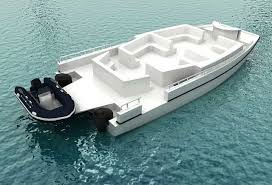
IS THIS THE FUTURE FOR THE DECK BOAT?

DECK BOATS ARE HERE TO STAY


WHAT WILL THE FUTURE DESIGN BRING ?


To guarantee access to all of  Boat Nut Magazine articles, pictures and featured services visit the official Boat Nut Magazine ©™ website. Be sure to reply to the Boat Nut Association registration on our site for the latest Boat Nut weekly and monthly news letters and opportunities.


Copyright 2015 © Boat Nut Media, Toronto, Ontario. All rights reserved. No part of this information/publications may be stored in a retrieval system, transmitted, or reproduced in any way, including but not limited to photocopy, magnetic, or other record, without prior agreement and written permission of the publisher, Boat Nuts Media ©™ No liability is assumed with respect to the information provided
Connect with the Magazine web site 

Friday, 26 February 2016

NEW EU VESSEL STANDARDS WILL TELL US THE CONDITIONS A BOAT IS DESIGNED TO TAKE


AT BOAT NUT WE ALWAYS TALK ABOUT REVIEWS AND HOW WELL A BOAT WILL DO ON A BAD DAY WELL THE EU SYSTEM MAY GIVE US MORE OF AN IDEA AS TO A BOATS REAL ABILITIES

New design and operation technology will change the standards that boats will have to conform to. I think this type of information should be mandatory for new boats every were at least the consumer would have an idea as to the conditions that a boat would be safe to take on.


Countdown has started…
On 18 January 2016 the new EU rules on boats, personal watercraft, engines and components will start applying.


creation and use of notified bodies (notified bodies were unknown in the recreational

boating field, even if some Member States involved Classification Societies in their

applicable national regulations);


18 January 2016 - New EU Watercraft Directive becomes applicable 
watercraft directive applicable
The new EU Watercraft Directive 2013/53/EU, formally known as the Recreational Craft Directive or RCD, started to apply today, Monday 18 January 2016.
European Boating Industry has been working on this new piece of legislation since 2008, participating in the meetings and advising the European Commission and Member States on the various changes to be introduced. For instance, the obligations and responsibilities of all economic operators - be they manufacturers, commercial and private importers or distributors - that have been further defined in the new Directive. They include updated
identification and traceability requirements as well as recommended templates for the Declaration of Conformity.
The essential safety and environmental requirements were also modernised in line with the latest developments and nautical knowledge. Design categories are now solely based on meteorological conditions 
(wind and waves); means of re-boarding the craft must be accessible from the water; holding tanks or onboard treatment systems became mandatory for boats equipped with toilets; and engine exhaust emission levels have been further reduced and aligned with the US EPA levels


To obtain it, the products shall meet essential requirements for safety, health,

environmental and consumer protection.

In first place of the Directive’s essential safety requirements for the design and the
 
construction of craft are boat design categories, defined this way4:


A. OCEAN: Designed for extended voyages where conditions may exceed wind force 8


(Beaufort scale) and significant wave heights of 4 m and above but excluding abnormal

conditions, and vessels largely self-sufficient.
 
B. OFFSHORE: Designed for offshore voyages where conditions up to, and including,


wind force 8 and significant wave heights up to, and including, 4 m may be

experienced.
 
C. INSHORE: Designed for voyages in coastal waters, large bays, estuaries, lakes and


rivers where conditions up to, and including, wind force 6 and significant wave heights

up to, and including, 2 m may be experienced.
 
D. SHELTERED WATERS: Designed for voyages on sheltered coastal waters, small


bays, small lakes, rivers and canals when conditions up to, and including, wind force 4

and significant wave heights up to, and including, 0,3 m may be experienced, with

occasional waves of 0,5 m maximum height, for example from passing vessels.
 
 
1.3.1. Meaning of the Directive’s existing definition


These four design categories are all defined the same way, which is: a boat given a certain

design category is designed for “a type of voyage” where “conditions” include or exceed

“wind force” and “significant wave height”.

They are then defined on three criteria:

1) type of voyage (intended use);

2) wind force;

3) significant wave height.

The intended use, first criterion, is defined by the capacity of a boat to:
 
- face safely environmental conditions (wind and waves) of the concerned


design category;
 
- offer a protection and a shelter for the crew, which is adapted to the type of


navigation and allows people onboard to sleep, rest, warm up, change

clothes, have a hot meal;
 
- have energy autonomy to make the intended navigation: e.g. sufficient


amount of fuel for the main engine on motor boats but also for generators

producing electricity, sufficient amount of electrical batteries, aero or hydro

generators, desalination system, etc.;
 
- have fresh water and consumables autonomy for the total time of the voyage


(e.g. tank capacity for fresh water, food storage capacity, etc).


The second and third criteria, respectively wind force and significant wave height, are

linked. The wave height is mainly a function of the wind, depending on:

- wind force: the stronger the wind, the bigger the waves;

- duration of the wind: the longer the time, the bigger the waves;

- fetch size, which is the distance of sea on which the wind blows: the longer

the fetch, the bigger the waves;

- and depth of water: the shallower the depth, the bigger the waves.

So, the capacity of a boat to safely face wind and waves depends on the following

parameters, which are:
- essentially stability characteristics; the boat’s stability is linked to its


dimension, shape, tightness, degree of protection, weight, height of centre of

gravity, windage area, etc.; it is these characteristics that will allow the boat

to resist to flooding and capsize or knock-down and make it able to progress

in such conditions, but also;

- scantling and construction which guarantee that the hull,


To guarantee access to all of  Boat Nut Magazine articles, pictures and featured services visit the official Boat Nut Magazine ©™ website. Be sure to reply to the Boat Nut Association registration on our site for the latest Boat Nut weekly and monthly news letters and opportunities.


Copyright 2015 © Boat Nut Media, Toronto, Ontario. All rights reserved. No part of this information/publications may be stored in a retrieval system, transmitted, or reproduced in any way, including but not limited to photocopy, magnetic, or other record, without prior agreement and written permission of the publisher, Boat Nuts Media ©™ No liability is assumed with respect to the information provided


Saturday, 30 January 2016

BOATER LIABILTY ENVIROMENTAL CLEAN UP / IF YOU BOAT IN CANADIAN WATERS YOU BETTER READ THIS


BOAT NUT HAS EXPRESSED CONCERNS ABOUT THE ENVIROMENTAL NET CLOSING ON POWER BOATS

Boats come in all shapes and sizes. If you own a canoe, personal watercraft, sailboat, commercial vessel, pleasure craft with a motor or luxury yacht, YOU are responsible for using it safely, keeping it in good working order and properly disposing of it when it is no longer seaworthy. You are also responsible for any pollution-related costs, including clean-up and/or repairs.
 
Image result for boats nut media
 
TWO SUMMERS AGO SEVEN BOATS SUNK AT THIS MARINA
 
 
Here’s a brief look at the stages of responsible boat ownership:
  1. Plan to become a boat owner.
    When you start to consider buying a boat, plan carefully. This is the time to budget and to find out what you will need to begin your boating adventure, in terms of documentation, insurance, training and safety equipment.
    And, while it is the first stage of boat ownership, the planning stage is also the time to start thinking about what you’ll do when the adventure ends – sell the boat or dispose of it responsibly.
  2. Buy and license or register your boat.
    Congratulations on becoming a boat owner! Make sure to license or register your boat.
    While these words mean one thing when we talk about owning and driving a car, they mean different things when we talk about boats.
    • Pleasure craft owners must license or register all boats with a 10 horsepower (7.5 kilowatts) or more engine. Note: If your boat is required to be licensed and it is not, you may be subject to a $250 fine.
      • A pleasure craft licence is free. It gives you a unique licence number that you must display above the waterline on both sides of the boat’s bow. This number helps law enforcement and search and rescue officials in an emergency. Note: You must carry your licence document with you when using your boat.
      • Registration has a cost. It gives you a unique name and official number. This number helps law enforcement and search and rescue officials in an emergency. It serves as proof of ownership in and outside of Canada.
    • You must register a commercial vessel if it is powered with a motor of 10 HP/7.5 kW or more or is a commercial river raft. Note: If your vessel is required to be registered and it is not, you may be subject to a fine of up to $10,000 per day. Such registration:
      • serves as proof of ownership in and outside of Canada; and
      • helps law enforcement and search and rescue officials in an emergency.
    • You must ensure that your licence or registration information is up to date.
  3. Meet all safety requirements.
  4. Responsible boat owners:
  5. keep their boat in good condition;
  1. Here are resources that will help you learn how:
  2. Pleasure Craft Owners: Transport Canada’s Safe Boating Guide
    1. Dispose of your boat.
    2. There comes a time in every boat owner’s life when they no longer want or need their boat.
    3. If the boat is still in good condition, you may choose to sell it. If you do, make sure that the ownership documents and the licence or registration are properly transferred.
    4. Note: Many people who sell registered boats do not know that, if the new owner does not complete the transfer of ownership as specified in Part 2 of the Canada Shipping Act, 2001, the registered owner could still be liable for the vessel.
    5. If the boat is in poor condition or no longer runs, you should plan for responsible disposal.
    6. How can I get rid of my boat when it’s not worth selling?
    7. Don’t let your boat become a wreck. This will save you time and money. Options for disposing of your boat vary across Canada:
    8. Find a boat recycling facility in your area.
    • Search for charities or companies in your region that may want your boat.
    • Ask the nearest landfill operator if they accept old boats.
    • Ask local boat retailers if they take old boats in trade.


  • When it comes to a boat that sinks the rules are changing, at some point this new policy that includes clear out lines on who is liable can affect you. For example: You sell a boat and the title is not transferred, Some one steels your boat and sinks it, The boat owner fails to keep an eye on his or her boat and it sinks, or the owner simply does not do the maintenance. You will no longer be able to blame the marina for not watching your boat. It will be you who is liable even if you are under tow


    The big hit here will be the cost of environmental clean up, it will soon be a part of your insurance to be able to cover the possible staggering costs that are associated with this type of clean up. This year at Ontario Place Marina I watched for three days as a group of approximately five people worked around the clock to clean up a simple oil spill from a bilge pump pumping a mess overboard. New regulation will make the vessel owner responsible and they have three years to come after you for it. It is more important now than ever to be an active boat owner and understand what to look for and what to do if a situation arises were environmental damage can occur.


    Transport Canada new legislation  Highlights:


    Did you know Canada is considering an approach based on the International Convention on the Removal of Wrecks, 2007, that would address the hazards associated with shipwrecks?

    “Ship” means a seagoing vessel of any type whatsoever and includes hydrofoil boats, air-cushion vehicles, submersibles, floating craft and floating platforms, except when such platforms are on location engaged in the exploration, exploitation or production of seabed mineral resources.

    “Hazard” means any condition or threat that:
    1. poses a danger or impediment to navigation; or
    2. may reasonably be expected to result in major harmful consequences to the marine environment, or damage to the coastline or related interests of one or more States.

    The Issue

    Determination of hazard

    When determining whether a wreck poses a hazard, the following criteria should be taken into account by the Affected State:
    1. the type, size and construction of the wreck;
    2. depth of the water in the area;
    3. tidal range and currents in the area;
    4. particularly sensitive sea areas identified and, as appropriate, designated in accordance with guidelines adopted by the Organization, or a clearly defined area of the exclusive economic zone where special mandatory measures have been adopted pursuant to article 211, paragraph 6, of the United Nations Convention on the Law of the Sea, 1982;
    5. proximity of shipping routes or established traffic lanes;
    6. traffic density and frequency;
    7. type of traffic;
    8. nature and quantity of the wreck’s cargo, the amount and types of oil (such as bunker oil and lubricating oil) on board the wreck and, in particular, the damage likely to result should the cargo or oil be released into the marine environment;
    9. vulnerability of port facilities;
    10. prevailing meteorological and hydrographical conditions;
    11. submarine topography of the area;
    12. height of the wreck above or below the surface of the water at lowest astronomical tide;
    13. acoustic and magnetic profiles of the wreck;
    14. proximity of offshore installations, pipelines, telecommunications cables and similar structures; and
    15. any other circumstances that might necessitate the removal of the wreck.

    When boating in Canada’s waterways or along its coastlines, you may see abandoned boats and wrecks. They may interfere with safe boating, put public safety at risk and harm the environment. They are not a pretty sight. For example:
    • Leaks may pollute the water and harm people and the marine environment.
    • Abandoned boats or wrecks near public areas can pose safety risks.
    • Boaters may not see them in time to avoid a crash.
    • Other boats may be blocked from a passage.

    The legislative objective of the proposed regime would be to ensure that commercial vessels and pleasure craft whether or not they are registered, listed, or licensed under the Canada Shipping Act, 2001Footnote 1, that become a hazardous wreck in the future, will be removed or remediated by their owners at the owners’ expense, and that owners have the financial resources to meet that obligation. The regime would also allow Canadian authorities to remove or remediate a hazardous wreck – broadly defined – subject to Canadian jurisdiction and where the situation requires immediate action, or where the owner fails to meet their responsibilities, at the owner’s expense. The proposed regime would not apply to wrecks in existence prior to its coming into force.

    Most Canadians would agree that Canada needs to protect its shorelines, rivers, lakes and marine aquatic environments from hazards related to shipwrecks and that taxpayers should not be required to pay for the remediation of those hazards. However, Canada’s current legislative regime on shipwrecks is limited in that shipowners are primarily required to remove shipwrecks that are, or potentially are an obstruction to navigation or remediate potential or immediate threats to the marine environment.

    . Insurance against liability for shipwrecks is an integral part of all marine liability insurance policies and prudent shipowners should already carry that insurance to protect their potential exposure to shipwreck costs.

    There are a significant number of vessels that never venture out into the open seas, including some large vessels that operate exclusively on the Great Lakes. These vessels should also be included in the proposed scope of application and, therefore, subject to the proposed regime.

    The proposed regime would also include a mechanism to exempt certain classes of small vessels, for example human-powered craft (canoes, kayaks, rowboats etc), that are unlikely to pose a significant shipwreck hazard. A decision to de-register or decommission a ship or an omission that leads to the cancellation of registration would not allow the shipowner to void his obligations under the Convention or the proposed regime in the event of a shipwreck

     (a) a sunken or stranded ship; or (b) any part of a sunken or stranded ship, including any object that is or has been on board such a ship; or (c) any object that is lost at sea from a ship and that is stranded, sunken or adrift at sea; or (d) a ship that is about, or may reasonably be expected, to sink or to strand, where effective measures to assist the ship or any property in danger are not already being taken.”

    Canadian authorities would have the authority to mark the wreck should the owner of the wreck fail to do so or when a wreck has been found but the owner cannot be located

    Currently, the owner of a wreck is only responsible for removal of the wreck if it is an obstruction to navigation in Canadian waters listed in the Schedule to the NPA. The owner is also responsible for any pollution response measures. If the owner fails to do so, the Canadian Coast Guard takes the necessary actions and then seeks to recover the costs from the owner or, in the event of oil pollution, including preventive measures

    Should the shipowner not remove the wreck by the deadline, or should circumstances require that immediate action be taken, the Affected State may remove the wreck at the owner’s expense.

    In accordance with Article 10 of the IWR Convention, the proposed regime would establish strict liability for the shipowner that would cover the costs of locating, marking and removing a wreck subject to Canada’s jurisdiction, including all related costs to government such as the assessment of hazards and monitoring of the effectiveness of remediation.


    If the towed vessel is a “ship” as defined in the Convention, then its owner would be strictly liable if, as a result of a marine casualty during the towing operation, the towed vessel becomes a wreck and is determined to pose a hazard. Where the towed vessel is registered and compliant with the all provisions of the Convention, the recovery of costs related to the removal or remediation of hazards related to the wreck should be straightforward under the new regime. However, if the towed vessel or object is not a registered ship, there could be difficulty in holding its owner liable or in even determining the owner’s identity. One approach to this would be to establish strict liability for the owner of the towing vessel for hazards arising from the wreck of the towed vessel or object and require that owner to maintain insurance for its removal or remediation. This approach was taken by Denmark when that state implemented the IWR Convention

    These contracts make the owner of the towed vessel or object liable if that vessel or object is lost and becomes a wreck even when the operator of the towing vessel has been negligent.

    The insurance would also need to include provisions to be available for payment of wreck removal claims for quite some time after the marine casualty even if the policy would normally have expired during that period (within three years from the date when the hazard has been determined, or no more than six years from the date of the maritime causality that resulted in the wreck). This will be a particularly important factor to be considered if wreck removal insurance is part of a Hull and Machinery (H&M) policy rather than a Protection and Indemnity (P&I) policy.

    The proposed regime would also provide for regulations that would make it possible in the future to extend the insurance requirement to vessels under 300 GT that would be enforced based on an honour system.

    Section 29 of the MLA for vessels under 300 GT. This amount of insurance would be dedicated to wreck removal claims from public authorities only and would not be available for other claims that are subject to the LLMC. The insurance would provide public authorities with a right of direct action against the insurer and would survive the insolvency of the insured

    Rights to recover costs under this Convention shall be extinguished unless an action is brought hereunder within three years from the date when the hazard has been determined in accordance with this Convention. However, in no case shall an action be brought after six years from the date of the maritime casualty that resulted in the wreck. Where the maritime casualty consists of a series of occurrences, the six-year period shall run from the date of the first occurrence.
     
    ALL THIS FROM TRANSPORT CANADA

    Copyright 2015 © Boat Nut Media, Toronto, Ontario. All rights reserved. No part of this information/publications may be stored in a retrieval system, transmitted, or reproduced in any way, including but not limited to photocopy, magnetic, or other record, without prior agreement and written permission of the publisher, Boat Nuts Media ©™ No liability is assumed with respect to the information provided

    Thursday, 28 January 2016

    MADD CANADA BOATERS SURVEY CLICK THE LINK / YES! ITS THAT IMPORTANT TO BOAT NUT

    Image result for madd canada logo


    BOAT NUT IS PROUD TO ASSIST MADD CANADA AND TRANSPORT CANADA


    The following is a survey that we ask all boaters to take the time and complete, below is the link to access the survey.

     PLEASE TAKE THE TIME AND COMPLETE THE SURVEY

    Image result for madd canada BOATING logo


    The following is a link to our on-line boating survey.  Note there are $100 Canadian Tire gift certificates to be won at the end of the boating season in a random draw of all those who complete the survey:

    https://www.surveymonkey.com/r/?sm=2Syma3B3Nd1Si6itYFSYYYKcV815DkGj0g1b0%2fam%2btw%3d


    Signs available for Marinas from MADD Canada

    Report impaired driving. Call 911


    Campaign 911 is a Canada-wide campaign to encourage and empower the Canadian public to report suspected impaired driving by calling 911.
    Impaired driving is the #1 cause of criminal death in Canada and, yet, every impaired driving crash is preventable. By calling 911 and reporting suspected impaired drivers to police, all Canadians can play a role in keeping our roads and waterways safe and in reducing impaired driving crashes, deaths and injuries.
    Join Campaign 911 today! Contact MADD Canada and review our campaign materials


    Information about the boating signs and an order form can also be found on-line at:
    Just click on “On the Waterways”.  This is also where you can find a pdf of our “Don’t Boat Impaired” brochure.


    Image result for madd canada logo  

    PLEASE TAKE THE TIME AND COMPLETE THE SURVEY AND DON'T FORGET TO SUPPORT YOUR LOCAL MADD CANADA CHAPTER

    https://www.surveymonkey.com/r/?sm=2Syma3B3Nd1Si6itYFSYYYKcV815DkGj0g1b0%2fam%2btw%3d

    Image result for TRANSPORT CANADA BOATING


    Copyright 2015 © Boat Nut Media, Toronto, Ontario. All rights reserved. No part of this information/publications may be stored in a retrieval system, transmitted, or reproduced in any way, including but not limited to photocopy, magnetic, or other record, without prior agreement and written permission of the publisher, Boat Nuts Media ©™ No liability is assumed with respect to the information provided