


Subscribe To Boat Nut Magazine

 Posts
All Comments
Posts
All Comments
Showing posts with label Marine Support. Show all posts
Showing posts with label Marine Support. Show all posts
Sunday, 29 November 2015

Friday, 27 November 2015
Trust Your Boat?

http://boatnutmagazine.com/
TRUST YOUR BOAT? Don't let your boat own you, own your boat
It is that time of year when the vultures show up trying to steel boats at great deals as the season is over and boats are now considered money pits. THE OFF SEASON. Deals are made based on spring sea trials or the risker deal were boats are purchased based on value and how they appear. Appearance the slippery slop of boat buying, the boat is so clean, its like new. The previous owner hardly put any hours on the boat and has been anal about maintenance. You can't take the boat for a test ride. I would never buy a new boat unless I could take it out and put it through its paces.
As a boater the most important thing you must be able to do is trust your boat. If this trust does not exist then you mentally chain yourself to the dock. That kind of mental block will take all the fun out of boating, the first question is usually what is my boat worth? Boaters start to question there choices.

If you suffer a realationship break down with your boat not only will it take its toll mentally, but you will start to listen to all kinds of advise and problem solvers who will un nerve you even more. Marinas are full of dockside experts who generally don't have a dam clue what they are talking about. The money will flow out and every time that you believe you have solved the issue your boat will let you down again. The leading causes of unrealiability are water in the fuel, shift issues, tune ups, overheat, and corrupted components (parts that have been swapped or only part of the work is done) or a combination of these issues. In most cases the technician and boat owner come to an agreement and the repairs are done a step at a time instead of all at once, or the repair person fixes a genuine problem and doesn't realize there are other issues compounding the problem. New boats provide computors to compensate for many issues and will advise you were the problems lie ( plug and play). Older boats rely on a process of elimination which can be frustrating for all parties involved. These are areas of repair that boaters least like to pay for. They would rather add a accessory or have the boat washed. Money spent attacking these issues is not something shiny to look at. There is a belief like to that because they don't run the boat very much these items can't be necessary.

Here are some of the issues that I have faced in the last two seasons:
- Water and silt build up in the gas tank (Won't start or stalls at low RPM)
- Coil wires breaking (Starts randomly and just cuts out when ever it chooses)
- Distributor caps corroding (Stalls randomly starts but runs rough and has no power over 200 rpm)
- Bad ground wires (Cranks slowly and gauges fluctuate. trim pump slow)
- Melted water pump housings plugging water flow (New impellor motor gets hot on one side and wont run well at all)
- stuck thermostats (Over Heat with stall)
- Contaminated fluids (Builds over the top oil pressure or no oil pressure)
- Trim pump relay failure (Drive trim works randomly)
- Stretched shift cables (Cant find neutral when shifting)
- Corroded lower units (Stiff shifting , oil slick reservoir bottle alarm)
- Bad batteries (Motor will not perform no top end hard time to start, other engine dies when I try to start)
- Wrong bolts on water pump housings (Overheat keep changing impellor)
- Vacuum leaks at carborator base plates (Engine idles up and down and is lacking power, stalls at idle speed)
- Fuel filters (No start engine cuts out)
- Timing advance modules (No power at the top of the RPM range)
- Spark Plugs (Stalls no power running rich)
- Corrosion (No start, gauges dead, eating starters and alternators)
- Over heat causing head gasket failure (Got hot now consumes coolant)
- Wrong starter (Sounds horrible when starting or wont start at all)
- Broken Bolts (No shift at all)
- Shift interrupter (No start, thumps load through shift cant find neutral)
- and the list goes on and on

LOW HOURS only contributs to these isssues as the motor doesn't get a chance to get hot and dry out engine components or the engine compartment. Run your boat regularly and you will have a better more reliable boat. Bad fuel is a sign that the boat doesn't see or did not see any hours at all you have to burn off and turn the fuel over this issue can really be a pain in the ass. If you have a third fuel tank on board have it pumped out and disconnected if you never use it. Don't spend all your money on dock jewelry spend some on fuel and run the boat regularly. If you intend on using the boat as a cottage then either set the boat up for this usage or expect the boat to bite you in the wallet when you suddenly want to go out. If you are looking at buying boats in the off season have a plan to spend cash in the spring don't expect to drop the boat and all will be ship shape (some numbers have been released that say to be prepared for as much as 50% of the boats purchase price on a larger boat). If you purchase a boat that has low hours and you start to use it expect issues to pop up! The same applies if you buy a boat which has been up graded with a lot of new bells and whistles.
Your boat will talk to you if you let it, it will tell you how it is feeling and what it needs. Just listen you can develop a relationship with a boat they are quircky and some times give you attitude. Some days they just do not want to go (remind you of anyone). Keep your problem solving simple stupid, boats live in the worst environment constant movement, shock, weather, and long periods of no use. It is said that 90% of breakdowns are operator error and there is some truth to that statement however failures will happen due to the environment. If you prepare a service plan that is not full of holes, educate yourself or find a technician you can trust, and do more than make sure the shore power is plugged when you are away for extended periods. You can keep your boat reliable and know that the boat you love can be trusted.
Don't let your boat own you, take steps to own your boat!
Author BW
To guarantee access to all of Boat Nut Magazine articles, pictures and featured services visit the official Boat Nut Magazine ©™ website. Be sure to reply to the Boat Nut Association registration on our site for the latest Boat Nut weekly and monthly news letters and opportunities.
Copyright 2015 © Boat Nut Media, Toronto, Ontario. All rights reserved. No part of this information/publications may be stored in a retrieval system, transmitted, or reproduced in any way, including but not limited to photocopy, magnetic, or other record, without prior agreement and written permission of the publisher, Boat Nuts Media ©™ No liability is assumed with respect to the information provided.
Saturday, 28 March 2015
Basic boat prop knowledge

http://boatnutmagazine.com/
How does a boat propeller work?
Every prop has two numbers to describe it. The two numbers are pitch and diameter. The other part of the prop is the hub, the hub is the area where the prop shaft is attached. There are three types of basic props we use on pleasure power boats and they are aluminum, stainless steel and brass. Each of these materials has special issues that are associated with its use in prop construction. Aluminum and stainless are the standard on outboard and inboard/outboard configurations where brass is used on inboard configuration. All three of these materials can be repaired with in limits.

First we will cover Pitch
The first number of two marked on the prop. Pitch describes the angle of the blades. A slang term for a prop is the screw and this is for good reason, like a screw being turned into wood each turn moves the screw a measured depth in the wood. Pitch determines the amount of forward distance the prop travels for each revolution the prop makes. Pitch is measured in inches so a 15 pitch prop moves 15 inches through the water with every complete rotation. Pitch describes two things in layman's terms, imagine the pitch number describing the ability to gain traction, the lower the number the better the take off from a stand still (hole shot) your boat will be. Pitch also could be considered like a gear arraignment the lower the number the more robust the teeth on the gear would be, in other words there is less chance of skipping teeth when you suddenly increase the rotation(speed and torque) speed.

Pitch affects the top speed the boat can produce, the fuel burn your motor uses, and the pulling or pushing power that the boat can provide when the boat is moving from a standing start (hole shot).
Speed
This is obvious if the prop will move 15 inches with every rotation and the identical motor and boat has a 19 pitch, the 19 pitch moves 4 inches through the water further than the 15 pitch prop. However this is not an unlimited number as the motor will only provide a maximum number of revolutions of the prop, the pitch becomes limited. You could not have a 40 pitch prop as you would never grab enough water to move at all as the prop would simply act like a blender and air the water and spin with no real effect. This is called cavitation, to much cavitation simply boils the water and burns the edges of the prop. So there are a select number of pitch combinations for each motor and boat combination. The magic is to find the prop which gives you the best hole shot (standing start) and the maximum top speed based on the top rpm that it is safe to run the motor.
The next number is diameter
This is the distance from tip to tip of the prop. The diameter is also a restricted number, as it is restricted by two other items. The diameter of the prop is restricted by the size of the prop shaft. If you try to turn a large diameter prop on a small prop shaft that prop shaft will snap. The torque that the prop places on the shaft would stress the shaft causing the shaft to twist or snap it some where close to the back of the prop. The other item that affects the size of the prop is the location of the anti cavitation plate, this is the flat plate directly above the prop on your gear case. This plate is designed to be even with the water height that is created from the bottom of the boat when you are on plane. If this plate is too high or too low you will not achieve maximum performance of the motor or the boat. This plate also stops the water from simply flying out above the prop creating the maximum forward thrust that the prop develops. You do not want to have a prop which is so close to the plate or the hull that the water cavitates because it cannot pass through the gap between the prop and the anti cavitation plate. In the case of prop being close to the hull you could if you hit something cut a gash through the hull of the boat. These are the reasons why you are generally restricted to one or possibly two diameters you can use.


Prop materials
are aluminum, stainless steel and brass. On an inboard or inboard outboard configuration the props are made out of aluminum or stainless steel, why is this? The aluminum prop is a soft material which will easily change shape or break away under impact, this is critical to protect the inner workings of the gear case. The disadvantage to an aluminum prop is that the blades flex under load so the pitch is not a constant as you power up or are pushing the boat through heavy sea conditions. The pitch on an aluminum prop will change over time they are not reliable to always remain the same as they were made, affecting performance and fuel burn. Stainless is the next material, it is stronger and rigid so this material gives you reliable pitch through its life and while you power up. The blades do not move around. This great for performance however if you impact the prop you can damage the gear case workings. The stainless prop is more durable and less apt to be as immediately affected by corrosion. The last material is brass which is what the inboard configuration has, brass is less flexible than aluminum and not as durable as stainless. The perfect material for props that you cannot see. If you impact the blades they will flex and break away to help protect the rest of the running gear. One of the disadvantages to brass that the pitch can change with high hours of use, so it is a maintenance item to have your props tuned on a regular schedule. Doing this will keep the performance you should expect and the fuel burn correct. A prop tune is not expensive and will pay you back in fuel burn.

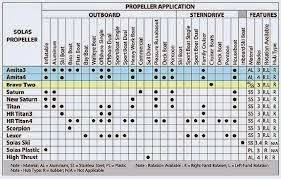
There is a mass amount of science to prop construction, materials, and selections. This article was simply to cover basic information, to create a basic understanding. A duo prop drive has one prop turning right and one turning left, so a single duo prop will not have the natural pull to the left or right. Duo prop provides a more stabile steering and control platform. IPS and the new forward drive are all duo prop configurations. If you need more information on props Mercury is running information this year on this topic.

 |
Ask BNM about our new 2015 ServicesTo guarantee access to all of Boat Nut Magazine articles, pictures and featured services visit the official Boat Nut Magazine ©™ website. Be sure to reply to the Boat Nut Association registration on our site for the latest Boat Nut weekly and monthly news letters and opportunities.
|
Copyright 2015 © Boat Nut Media, Toronto, Ontario. All rights reserved. No part of this information/publications may be stored in a retrieval system, transmitted, or reproduced in any way, including but not limited to photocopy, magnetic, or other record, without prior agreement and written permission of the publisher, Boat Nuts Media ©™ No liability is assumed with respect to the information provided.
Copyright 2015 © Boat Nut Media, Toronto, Ontario. All rights reserved. No part of this information/publications may be stored in a retrieval system, transmitted, or reproduced in any way, including but not limited to photocopy, magnetic, or other record, without prior agreement and written permission of the publisher, Boat Nuts Media ©™ No liability is assumed with respect to the information provided.
Monday, 23 March 2015
Telemarinetech part 2 BNTN Program

http://boatnutmagazine.com/
Telemarinetech the best tool you will have as a boater, we field all questions you may have!
Please Email boatnutmedia@gmail.com to receive more information and an application
You can read over the information and look at the application before you commit to the program, There is no limit to the amount of times you use the service. Any question any time BNTN is the perfect addition to your boat ownership plan. Boat Nut Media guarantees your satisfaction or you will get a full refund. The specialists that will help you are hand selected marine technicians who can explain your answers in an easy to understand language.
You now have an expert available to you 7 days a week, Our specialists believe that any question is a good question we want you to be informed about your boat, because when a problem comes up you are usually on your own. It is rare that you have a problem with an expert on board with you. The idea for this program stems from the days when I was in the boat service business, My clients were able to call me anytime, my phone used to ring over 21 times before noon almost every day from boaters who had questions ranging from mechanical failures to what size anchor do I need. With break down questions we could get the boat running 99 percent of the time over the phone and save the boating day or trip! Telemarinetech is not trying to take the place of your marine mechanic ,we are designed to be a support program for you.
This program is ideal for New Boaters who are just starting to boat, Boaters who cruise distances, and Experienced Boaters who just need to make inquires to verify that what they are dealing with is accurate. We can take the time with you that a service technician cannot always give you
Telemarinetech/ BNTN details at boatnutmedia@gmail.com
on our blog, and on twitter @BoatNutMedia
To guarantee access to all of Boat Nut Magazine articles, pictures and featured services visit the official Boat Nut Magazine ©™ website. Be sure to reply to the Boat Nut Association registration on our site for the latest Boat Nut weekly and monthly news letters and opportunities.
Copyright 2015 © Boat Nut Media, Toronto, Ontario. All rights reserved. No part of this information/publications may be stored in a retrieval system, transmitted, or reproduced in any way, including but not limited to photocopy, magnetic, or other record, without prior agreement and written permission of the publisher, Boat Nuts Media ©™ No liability is assumed with respect to the information provided.
Sunday, 22 March 2015
TeleMarineTech

http://boatnutmagazine.com/
Your TeleMarineTech Appointment
Contact:
BoatNutMedia@gmail.com

Overview of a Marine TeleMarineTech appointment
. . . just like a regular Marine Technician service inquiry appointment
You have got to the boat on Sunday and it won't start, you are on the lake and have an alarm going off, you have a service question or need advice about the boat, your boat has broken down and you want to verify the information a service provider has given you, is the estimate for repair accurate, you are looking at buying another boat? You will meet using Boat Nut Telemarinetech Network, BNTN uses video conferencing to connect you so that you will not have to worry about were you will receive non bias assistance. This will reduce the time, cost and stress associated with a sorting out a service issue and boat ownership.
What is a TeleMarineTech visit?
Telemarinetech uses video cameras, and Skype/Zoom services to connect you to marine specialists who are not located near you, reducing the need to locate and wait for a service appointment and receive assistance the assistance you urgently need. You will be able to see, hear and talk to a certified technician or other marine repair professional. (not all marine trades are recognized with certifications, "specialist")
Telemarinetech uses video cameras, and Skype/Zoom services to connect you to marine specialists who are not located near you, reducing the need to locate and wait for a service appointment and receive assistance the assistance you urgently need. You will be able to see, hear and talk to a certified technician or other marine repair professional. (not all marine trades are recognized with certifications, "specialist")
How does a Telemarinetech service visit work?
A telemarinetech appointment is just like a regular service appointment; only the specialist you will be seeing and speaking with is on your monitor.
A telemarinetech appointment is just like a regular service appointment; only the specialist you will be seeing and speaking with is on your monitor.
Before you call, the specialist will require the hull ID number and the Serial numbers for your motors, drives, relevant information about your boat to support your telemarinetech visit. However you may be asked to provide assistance with tests for results. The video conference connection is made with the specialist at a different location and the visit begins.
The marine specialist may request your assistance or assistance with your camera to provide video, to complete the examination. The specialist on the monitor can hear an alarm, see broken parts and use your assistance to diagnose service questions the same as if he/ she were standing on the boat with you.
Is there a cost for a telemarinetech appointment?
NO, You will not be billed for this service, if you are a registered Boat Nut. It is covered under the Boat Nut Membership Benefit Program "I AM A BOAT NUT".
Is Telemarinetech private?
Just like a regular service appointment, your Telemarinetech visit will be private and confidential. It can only be seen and heard by the specialist involved.
Where can I get more information about Boat Nut Media?
If you have any questions, please speak to a boat nut representative at 1-416-418-7433. You can also visit Boat Nut Media at www.boatnutmedia.blogspot.ca or Email BoatNutMedia@gmail.com. 
BNTN BOAT NUT TELEMARINETECH NETWORK 2015
How to be a Boat Nut?
Telemarinetech Service are available for Boat Nut Members; 7 days a week 7 AM to 9PM Central Time in Canada. You will be assigned a professional to assist you with your service question(s). 2015 Membership Fee are as follows: The same price as a screw driver set at Canadian Tire, BNTN Service is the most valuable tool you will have on your boat!
One year Membership Fee $25.00 Canadian for the first 200 Members to sign up.
After the first 200 members the full fee rate will apply $55.00 "I am a Boat Nut"
Telemarinetech Services will be available starting April 7 2015, Services are only available in English.
You will receive a BNTN Membership Card and access phone number (App is being developed will be available when complete)
You will have to complete the application which will ask you basic questions Name, Address, Email, Boat ID number, Motor and Drive, and systems. We do this so we can develop base line information on your boat to make answering your questions quicker and more accurate.
To guarantee access to all of Boat Nut Magazine articles, pictures and featured services visit the official Boat Nut Magazine ©™ website. Be sure to reply to the Boat Nut Association registration on our site for the latest Boat Nut weekly and monthly news letters and opportunities.
Copyright 2015 © Boat Nut Media, Toronto, Ontario. All rights reserved. No part of this information/publications may be stored in a retrieval system, transmitted, or reproduced in any way, including but not limited to photocopy, magnetic, or other record, without prior agreement and written permission of the publisher, Boat Nuts Media ©™ No liability is assumed with respect to the information provided.
Subscribe to:
Posts (Atom)